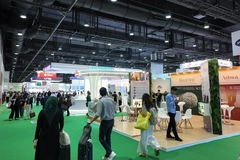




PharmaLinea sees China shifting from nutraceutical manufacturer to innovation source


Key takeaways
- According to PharmaLinea, China is shifting from a growth market to one of the most influential innovation markets in the global nutraceutical market.
- The company spots longevity, children’s nutrition, and liver health as standout categories, while the market is offering innovative delivery formats.
- Local partnerships are key to entering the market as consumer behavior, regulatory requirements, and communication channels require local expertise.

The Chinese nutraceutical market is increasingly relevant for international brands and manufacturers, says supplement manufacturer PharmaLinea. The company observes opportunities for international companies that want to expand their reach and connect with a large and increasingly health-conscious consumer base.
Citing data from Innova Market Insights, PharmaLinea notes that more than 25% of Chinese supplement users have increased their intake over the past year, while 80% purchase supplements at least once a month.
Nutrition Insight explores Chinese market developments and how brands can leverage opportunities in the country with Matevž Ambrožič, marketing director at PharmaLinea.
“China remains strategically important, but perhaps not for the reason many people assume,” he highlights. “The conventional narrative focuses on market size and growth. While those factors are still important, the more interesting story is that China is increasingly becoming one of the world’s most influential nutraceutical innovation markets.”
Ambrožič says that market growth in China has slowed down in recent years. Despite this, global brands continue to increase their commitment to the country.
“IM8, for example, highlighted China as its single largest growth opportunity in its Q2 2026 reporting. This suggests companies are looking beyond near-term growth rates and recognizing China’s strategic importance for future category development and innovation.”
International brands in China
PharmaLinea notes that trade shows such as the China International Import Expo (CIIE) and Healthplex Expo, Natural & Nutraceutical Products China (HNC), are increasingly important in the region, with major international brands using these events to introduce products and innovations.
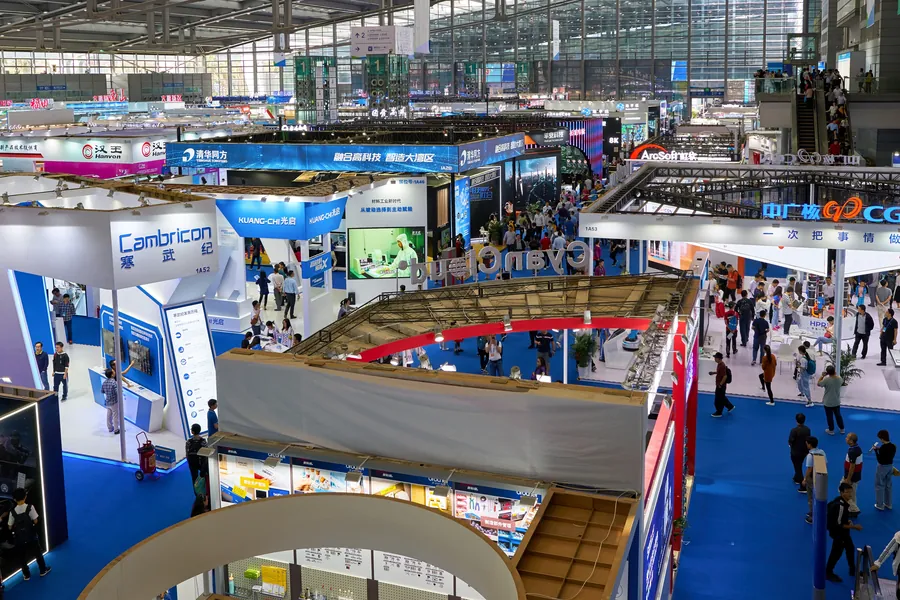 Ambrožič says international companies are recognizing China’s strategic importance for future category development and innovation.He points to the evolution of CIIE as an important indicator for the country’s strategic importance. Although this is not a nutraceutical trade show, he says that it has become a major platform for international health and nutrition companies to announce new launches and strategic partnerships in China.
“The remarkable aspect is not the products themselves. It is that so many Western brands are using the Chinese expo as a launch occasion.”
For example, he notes that at the most recent event in November 2025, Haleon introduced Centrum Overseas Pro Advanced Nutrition Pack, GNC expanded its Vitapak Pro range around age-specific precision nutrition, and Australia’s Pharmacare introduced a Nature’s Way eye health supplement for teenagers
“China’s e-commerce giants are reinforcing this trend,” adds Ambrožič. “In late 2025, JD Cross-Border announced an expansion of its National Pavilion program with plans to launch 50 additional country-themed online stores featuring thousands of imported products in 2026.”
“For us, this is a strong signal that demand for imported health products remains substantial and that China continues to actively attract overseas brands.”
Standout categories
Ambrožič points to interesting ingredient categories in the market, such as longevity, children’s health, and new product formats.
He also highlights that consumers quickly embrace emerging science-based concepts, with China being an early market for nicotinamide mononucleotide (NMN) and nicotinamide adenine dinucleotide (NAD+) products, mainly positioned for healthy aging.
“Longevity is now converging with beauty-from-within,” he adds. At HNC Shanghai this year, PharmaLinea saw widespread interest in ingredients such as NAD+, NMN, ergothioneine, PQQ (pyrroloquinoline quinone), collagen tripeptides, glutathione, and EGCG (epigallocatechin gallate) — a plant compound found in green tea.
“Many products are no longer positioned solely for beauty or appearance but increasingly for healthy aging, cellular health, and vitality,” says Ambrožič.
“Children’s health is another particularly attractive category,” he continues. “Chinese consumers place extraordinary emphasis on healthy growth and development, creating strong demand for children’s multivitamins, probiotics, omega-3 products, calcium supplements, and cognitive health solutions. The number of children’s launches announced at CIIE by international brands reflects this focus.”
 Ambrožič points to interesting ingredient categories in China, such as longevity, children’s health, and new product formats.Meanwhile, he notes that liver health is often underestimated outside China, which is “one of the most distinctive categories” in the country. For example, he says products such as Swisse Liver Detox Tonic and Cleanse have reportedly been among Swisse’s important growth drivers in the market.
“Beyond ingredients, China is becoming a major source of innovation in product formats,” he adds. “At HNC Shanghai, we routinely see technologies and delivery systems that are still relatively uncommon in Europe.”
For example, he points to advanced microencapsulation, emulsification technologies, oxidation protection systems, capsule-in-capsule formats, layered gummies, dissolvable films, liquid vials with pills in the cap, popping candy formats, and sublingual pastes.
“The level of format innovation is remarkable and increasingly influences what consumers expect globally.”
Consumer expectations
The overall Chinese consumer journey is “fundamentally different” from that of European consumers, says Ambrožič, although both markets generally place a strong emphasis on scientific substantiation and clinical evidence.
“China is arguably the world’s most advanced market for social commerce, livestream commerce, and content-driven purchasing. Product discovery, education, and purchasing often occur within the same digital ecosystem.”
Therefore, he says that companies need to think beyond efficacy. “Convenience, usability, engaging delivery formats, and digital storytelling all play critical roles.”
Ambrožič adds that China has pioneered livestream selling and creator-led commerce at a scale that remains difficult for many European companies to comprehend. “The rise of micro-dramas and ultra-short video formats further illustrates how uniquely integrated entertainment and commerce have become.”
Another difference is the speed of adoption, he continues. “Once a new concept gains credibility, Chinese consumers can embrace it extremely quickly. Categories such as NMN, NAD+, cellular health, and hydration all demonstrate how rapidly trends can scale in China compared with many European markets.”
Role of local partnerships
China is probably one of the clearest examples of a market where partnerships are essential, says Ambrožič.
 Understanding Chinese consumer behavior, e-commerce ecosystems, regulatory requirements, and communication channels requires local expertise.“The market is highly digital, highly dynamic, and culturally distinct from most Western markets. Understanding local consumer behavior, e-commerce ecosystems, regulatory requirements, and communication channels requires local expertise.”
For example, he highlights navigating China’s regulatory framework as one of the key challenges, such as registering with the General Administration of Customs of China (GACC), which is mandatory for all producers outside the country to sell their products.
“For manufacturers seeking to supply products into China, obtaining certifications such as GACC registration represents an important step,” continues Ambrožič. “The process requires preparation, documentation, and ongoing compliance, making market entry a strategic investment rather than a short-term opportunity.”
He adds that the role of partnerships is clear throughout the market, as many of the major product launches announced at the CIIE trade show involved collaborations between international brands and leading local partners.
“These partnerships increasingly go beyond distribution and include education campaigns, category development, white papers, and health awareness initiatives.”
For example, he says Haleon partnered with local company JD Health around healthy brain aging and precision nutrition.
“Made in China”
European quality remains a genuine asset on the Chinese market, as consumers associate these products with strong quality systems, scientific expertise, safety, and regulatory rigor, says Ambrožič.
He notes that this explains why European, Australian, and New Zealand brands continue to perform strongly in the market.
“At the same time, I would caution against assuming that ‘Made in EU’ alone is sufficient. One of the biggest changes I have observed over the past decade is the transformation of Chinese manufacturing and innovation capabilities.”
“For many years, ‘Made in China’ was often perceived in the West as synonymous with low-cost manufacturing,” adds Ambrožič. “Increasingly, I think that perception is becoming outdated.”
He says that the leading Chinese ingredient manufacturers and contract development and manufacturing organizations have “truly impressive plants” and are investing heavily in advanced manufacturing platforms, automation, delivery technologies, and R&D capabilities.
Ambrožič believes that, over the coming years, “Made in China” may evolve in a similar direction to what “Made in Germany” or “Made in Japan” historically represented: a signal of advanced manufacturing capability, technical expertise, and innovation.
 China is shaping development through early product adoption, delivery formats, manufacturing capabilities, digital commerce models, and commercialization.“That does not mean every manufacturer operates at the same level. Quality differences certainly remain. However, the best Chinese companies are increasingly competing on innovation and technology rather than cost alone.”
What’s next?
Ambrožič expects the biggest shift to occur in China’s impact on global nutraceutical innovation, sourcing, and product development.
“For many years, nutraceutical innovation largely flowed from the US to the rest of the world. Today, that model is becoming far more multidirectional.”
He says China is increasingly shaping global nutraceutical development through early adoption of emerging categories, novel product formats, advanced manufacturing capabilities, sophisticated digital commerce models, and rapid product commercialization.
“The NMN and NAD+ examples are a good illustration,” Ambrožič adds. “Chinese consumers embraced these concepts years before they became mainstream in many European markets.”
At the same time, he says that Chinese manufacturers are developing increasingly sophisticated technologies around bioavailability enhancement, microencapsulation, sensory optimization, and delivery systems.
“The biggest mistake Western companies can make is to view China only as a destination market for products,” Ambrožič cautions. “Increasingly, it is also becoming a source of ideas.”
“One could argue that a decade ago, many European companies visited China primarily to find manufacturing capacity. Today, they should also be visiting China to understand where the industry might be headed next.”