




January AI adds medical records and predictive glucose to health coach app


Key takeaways
- January AI’s new app update consolidates users’ clinical histories, lab results, and diagnostic data in one place.
- The app introduces Jan, an AI health coach with ongoing memory, and a photo-based predictive glucose feature that forecasts how food will impact blood sugar.
- The company’s health intelligence platform and customized product solution suite are available to health care organizations and digital health companies.
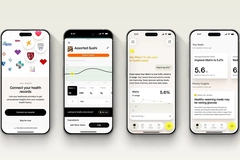 (Image credit: January AI).
January AI has unveiled a significant update to its consumer health app, making it the first free app to combine “one-tap” electronic health record (EHR) integration, AI-powered predictive glucose technology, and data from wearable devices.
The EHR integration allows users to securely import their complete clinical history from external medical systems into the January AI app in a single authorization step — including data such as microbiome test results and diagnoses.
Its AI-powered predictive glucose technology does not require a continuous glucose monitor (CGM). The photo-based food logger is marketed as the world’s first AI-powered prediction of how food will affect an individual’s blood sugar before they take a bite.
Additionally, the platform introduced its new AI health coach, Jan, which keeps a record of users’ health history and translates health data into “personalized, evolving” coaching, insights, goals, recommendations, and reports.
“Health care is not a one-time prompt,” says Noosheen Hashemi, founder and CEO of January AI. “Your health is shaped by years of lab tests, lifestyle habits, medications, diet, sleep, activity, and changing behaviors over time.”
“General-purpose AI tools were not designed to understand how health signals evolve and relate to one another over time. January AI was.”
Pocket health coaching
With the update, the company has also made its health intelligence platform and customized product solution suite to health care organizations and digital health companies looking to streamline their interactions with patients.
Users can generate health reports summarizing their progress over time, making it easier to understand changes in their health and have more informed conversations with their doctors. The app helps users understand trends through biomarker and weight trend graphs, offering perspective into how their health evolves.
The January AI app connects to medical records from more than 50,000 health care systems, consolidating years of users’ lab results, medications, diagnoses, and family health history.
 The January AI app connects to medical records from more than 50,000 health care systems.In one go, users can upload their health documents and reports, including DEXA scans, longevity assessments, microbiome test results, and other supplemental records.
When new data is added, Jan can surface insights in the context of users’ actual lab history, medications, lifestyle data, wearable data, and broader health patterns over time.
Through ongoing memory, it remembers important health information over time, such as new lab results, medication changes, or personal health goals, to provide increasingly personalized guidance.
Predictive glucose technology
For more personalized insights, users can also prompt Jan with additional health context beyond traditional medical records by tracking data such as food logs, glucose, sleep, activity, and biometric data from wearable devices and apps, including Apple Health, Libre CGM, Oura, and Whoop.
January AI is also pioneering its predictive glucose technology, which doesn’t require a CGM. Users can log meals by photo, voice, or barcode, and search across a database of more than 54 million foods.
The app’s AI-powered photo recognition speeds up meal logging while delivering “highly accurate” nutrition estimates. According to the company, nearly 200,000 people have used January AI to understand their unique metabolic responses to food.
Early adopters
Early adopters of the app include a preventative-health company, QBio, which uses it to deliver personalized patient-level insights to clinicians. January AI has also recently become a qualified solution on the Mayo Clinic Platform.
On the Mayo Clinic Platform, the app brings longitudinal nutrition and food intake insights directly into Epic workflows and offers clinicians visibility into how patients’ dietary habits relate to medications, symptoms, and outcomes over time.
In addition, January AI was selected as one of the inaugural apps in the CMS Medicare App Library, expanding access to AI-powered digital health tools for millions of Medicare beneficiaries and their caregivers.
The app is featured in the library’s “Diabetes and Obesity” category, which highlights tools that help patients manage these chronic conditions. January AI has also signed the CMS “Kill the Clipboard” pledge, a national initiative to end health data fragmentation and give patients seamless access to their own information.
Streamlining patient experiences
According to January AI, more than 40 million people worldwide now turn to AI tools daily to understand symptoms, interpret lab results, and ask questions about medications. But it stresses that healthcare data remains fragmented, disconnected, and cumbersome to assemble.
A recent US national survey found that nearly half of its citizens rely on unaccredited sources, social media, and AI-generated recommendations for nutrition advice rather than trained professionals. It flags that consumers struggle to differentiate reliable data from misinformation.
“While people can manually download and upload health data into general-purpose AI tools, those systems were not designed to organize and interpret health data longitudinally,” states January AI. “Even when users provide years of health history, most systems struggle to understand how signals evolve, interact, and change over time.”