



Menopause formulations diversify with functional probiotics and botanicals

Key takeaways
- Suppliers say that menopause formulation is shifting from single-ingredient to multi-mechanistic, symptom-specific approaches.
- Targeted probiotics and evidence-backed botanicals like ashwagandha and saffron are gaining traction as non-hormonal menopause tools.
- Women-only clinical trials and clinically substantiated dosing are increasingly the differentiator over simple label-claim positioning.

As the scientific understanding and exploration of menopausal women’s health deepens, the nutrition industry is increasingly reflecting this in creating formulations addressing more nuanced needs and investing in women-only clinical trials to back them up.
To learn which ingredients or formulation approaches are gaining the most traction for menopause products, Nutrition Insight speaks with Lallemand Bio-Ingredients, Lallemand Health Solutions, and Gnosis by Lesaffre.
In a previous interview, the three companies discussed how brands are shifting menopause support from isolated symptom relief to holistic solutions that address mood, energy, cognition, sleep, bone health, and cardiovascular resilience.

Marcia da Silva Pinto, category manager at Lallemand Bio-Ingredients, stresses that evidence-backed ingredients tested especially in clinical studies are gaining the most traction in menopause formulations.
There is growing scrutiny over study designs and efficacy tested in women-only trials across different menopause stages, she adds.
“At the same time, the market is experiencing strong growth,” she notes. “According to Innova Market Insights, new supplement launches targeting menopause support indicate a CAGR of 11.96% between 2021 and 2025, reflecting rising demand and innovation in this space.”
“Beyond individual ingredients, formulation approaches are also evolving, with key trends including more targeted, symptom-specific solutions (e.g., mood, sleep, hot flashes, cognitive health), clinically substantiated dosages, prioritizing efficacy over simple ‘label-claim’ positioning, as well as a move toward multi-mechanistic formulations, addressing the multifactorial nature of menopause.”
Probiotics and botanicals
To address the complexity of menopause symptoms, nutrition formulation strategies are moving away from single-ingredient solutions toward multi-factorial approaches, says Elodie Aragon, product manager of Women’s Health at Lallemand Health Solutions.
“Declining estrogen is associated with changes in the vaginal and gut microbiota, including a reduction in Lactobacillus species, which has positioned targeted probiotic strains as promising, non‑hormonal tools to support vaginal comfort, microbial balance, and metabolic health.”
“Probiotics are also being explored for their role in healthy aging, mental well-being, and cardiometabolic markers during midlife,” she highlights. “These microbiome‑focused approaches are often complemented by evidence‑backed botanicals, such as ashwagandha or saffron, to address stress, mood, and sleep, resulting in more holistic formulations grounded in physiological mechanisms.”
Previously, AB-Biotics shared the importance of non-hormonal solutions, such as probiotic formulations, to support women’s estrobolome to help maintain estrogen levels and support vaginal microbiome health.
 Da Silva Pinto sees evidence-backed ingredients tested, especially in clinical studies, gaining the most traction in menopause formulations.Sirio Europe is also focusing on menopause products that deliver natural support with a focus on delivery format innovations.
Vitamin K2 for stronger bones
Silvia Pisoni, global operational marketing director at Gnosis by Lesaffre, says that the company offers science-backed ingredients to help healthy menopausal women protect bones, joints, and cardiovascular function and support a stable mood.
“Several of our ingredients are well-suited for products supporting women through their late peri- and post-menopausal years,” she highlights. “Prevention of dire conditions as well as significant risk reduction is paramount for women looking to add a supplement (or two or three) to their routines for the long term, much as a multi.”
“MenaQ7 Vitamin K2 is a powerful nutrient for menopausal and post-menopausal women who want to remain mentally and physically active as they age,” she says. “By activating vitamin K-dependent proteins, osteocalcin and Matrix Gla Protein, K2 facilitates proper calcium utilization, which simultaneously protects bone and heart health.”
She explains further the mechanism by which osteocalcin binds calcium to the bone mineral matrix after being activated by vitamin K2, which leads to denser bones. Matrix Gla Protein works by preventing calcium deposits in arteries and soft tissues, helping decrease cardiovascular risks.
“This mechanism and subsequent benefits have been shown in two groundbreaking human clinical trials using MenaQ7. When supplementing with 180 mcg MenaQ7 daily for three years, women showed improved bone mineral content and density, along with an increase in elasticity and a reduction in age-related arterial stiffening. This action-benefit was confirmed in a 2020 study,” says Pisoni.
Folate: Heart health, hot flashes, & mood
Pisoni also spotlights Gnosis by Lesaffre’s Quatrefolic Active Folate, which she says supports bone and heart function in menopausal women and was tested in a cross-sectional study.
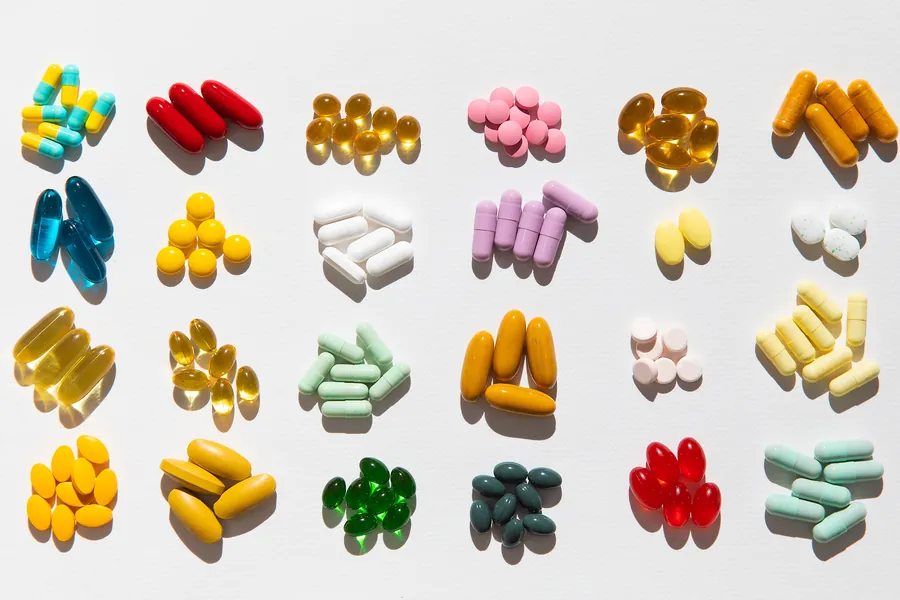 Probiotics, botanicals, vitamin K2, folate, SAMe and chondroitin are spotlighted as emerging ingredients in menopause supplements.“Clinical studies strongly suggest that folate supplementation can reduce cardiovascular risks by lowering homocysteine levels,” she details. “Supplemental active folate helps convert homocysteine to methionine. In one study, 55.8% of subjects in the Quatrefolic group reached ideal homocysteine levels, with homocysteine levels significantly higher in the folic acid supplement group.”
“These results have major relevance for menopausal women, as elevated homocysteine levels are also associated with cognitive and mood impairment, conditions that tend to plague healthy menopausal women. Studies have demonstrated a relationship between folate intake and improved mood and protection against cognitive impairment.”
Additionally, Quatrefolic might help relieve hot flashes, she adds, as it plays a role in producing norepinephrine and serotonin hormones, which are involved in hot flashes and mood swings.
“A clinical study of healthy menopausal women found 65% improvement in hot flashes in participants who consumed folic acid, compared to a 16% improvement in symptoms in the placebo group.”
SAMe, salidroside, & chondroitin
For helping balance mood and anxiety, Pisoni points to Gnosis by Lesaffre’s Adonat Premium SAMe (S-adenosyl methionine), which also supports concentration and memory among cognitive benefits.
“SAMe is critical in generating neurotransmitter synthesis, which is preferred by menopausal women, as reduced estrogen impairs neurotransmitter balance. Through its role in methylation and neurotransmitter synthesis, SAMe may help manage mood fluctuations, fatigue, and cognitive changes.”
“Emerging research suggests methylation pathways can influence estrogen metabolism and neurotransmitter balance, offering a potential mechanism for menopausal support.”
Another solution for irritability and mood swings during perimenopause is Landkind Pure Salidroside, suggests Pisoni, explaining that active women in this lifestage might experience fatigue, which worsens mood.
She highlights that in a study involving 50 adults who exercised and supplemented with Landkind Pure Salidroside, they did not experience increased fatigue-inertia or declines in positive social mood compared to the control group.
She further spotlights MyCondro Chondroitin for joint support, as healthy middle-aged women begin to feel the aging in joint tissues. This chondroitin sulfate is touted to be the first one made via sustainable fermentation, effective at almost half the dose (600 mg) compared to animal-derived chondroitin.
MyCondro has been found to reduce inflammatory markers (CRP and ESR), and two studies showed it helped relieve discomfort in osteoarthritic knees and obese adults with moderate knee osteoarthritis, shares Pisoni.
Previously, ProBiotix Health told us that women seek long-term health beyond menopause symptom support. It is backed by clinically backed ingredients like isoflavones, evening primrose oil, and probiotic strain LPLDL, which are gaining traction.