




ProBiotix Health targets long-term women’s health beyond menopause symptom support

Key takeaways
- ProBiotix Health says women seek menopausal support that goes beyond hot flash relief to long-term cardiovascular, bone, and cognitive health.
- Natural, clinically backed ingredients like isoflavones, primrose oil, and probiotic strain LPLDL are gaining traction for menopause wellness.
- The company emphasizes non-hormonal solutions with human clinical trials to address cardiometabolic risks in the 1.2 billion women entering menopause by 2030.

Women’s health research is growing, and scientists are learning that supporting consumers through menopause means going beyond addressing symptoms. Cellan Davies, head of marketing at ProBiotix Health, tells Nutrition Insight which menopause-support ingredients and formulation approaches are gaining the most traction within women’s health.
He also reveals how the company balances efficacy, safety, and credibility in this space while sharing what evidence is still missing to help menopause products move from wellness claims to mainstream nutrition solutions.
“Consumers are no longer seeking out solutions to support and manage health issues in isolation. Instead, they are looking for holistic, convenient solutions that go beyond short-term symptom relief,” says Davies.

“Increasing awareness and education around women’s health in the mainstream media has triggered a cultural shift in many countries, placing menopause firmly in the spotlight. Women are now looking beyond the symptomatic relief of hot flashes and night sweats and are proactively seeking out solutions that support long-term health in general.”
He highlights research outlining cardiovascular disease as a leading cause of death in postmenopausal women. Despite evidence of cholesterol’s impact on women’s health, consumer awareness of this is only just starting to rise.
“This evidence concludes that more targeted support around cardiovascular, metabolic, bone, and cognitive health during and after the menopause is required,” says Davies.
“Consumers are also driving the need for innovative and novel application formats that fit into busier lifestyles. As pill fatigue remains prevalent with consumers, it has seen formats such as powders and gummies boom in recent years.”
What is gaining the most traction?
Citing UK Agriculture and Horticulture Development Board data, Davies underscores that 64% of the country’s consumers prefer natural supplements over synthetic options, viewing them as safer, gentler, and better suited to long-term health goals.
 Menopause care is shifting from symptom relief to long-term heart and bone health.He adds that women are increasingly more likely to purchase from brands that are backed by research or try clinically backed options.
“Rather than just relying on conventional treatments for menopause, it means that consumers are recognizing that there are other safe, natural, and clinically backed non-hormonal solutions available to them.”
“There is a real opportunity here for formulators to start exploring newer, less traditional ingredient categories to provide more targeted support for women in this area. Emerging evidence linking the gut microbiome with wider cardiometabolic and hormonal health suggests that microbiome-based solutions that incorporate these clinically backed ingredients could offer more long-term health support for menopausal women,” comments Davies.
For instance, he points to herbal remedies, such as evening primrose oil and ginseng, and soy isoflavones, including red clover. Formulators also favor these as they have been used for years and also have clinical backing for menopause support.
“Adding isoflavones into precision-based microbiome solutions can provide comprehensive support to alleviate the symptoms of menopause while offering more long-term health support,” says Davies.
“Historically, the menopause category has focused on symptom management. However, emerging research into the gut microbiome is opening new opportunities to support both menopause symptoms and longer-term health outcomes. While this approach is in its infancy, there are clinically backed formulations that combine symptom support with positive long-term health outcomes in cardiovascular and bone health.”
ProBiotix Health’s clinically validated probiotic strain, LPLDL (Lactiplantibacillus plantarum), is spotlighted as one of those solutions. Davies explains that when it is combined with selected nutrients, it can result in a protective and preventative formulation, contributing to long-term wellness for women during and after menopause.
Balancing efficacy, safety, and credibility
According to Davies, labels such as “clean” and “natural” do not carry the same value with customers as consumers seek clinical effectiveness when buying wellness products, complemented by natural positioning.
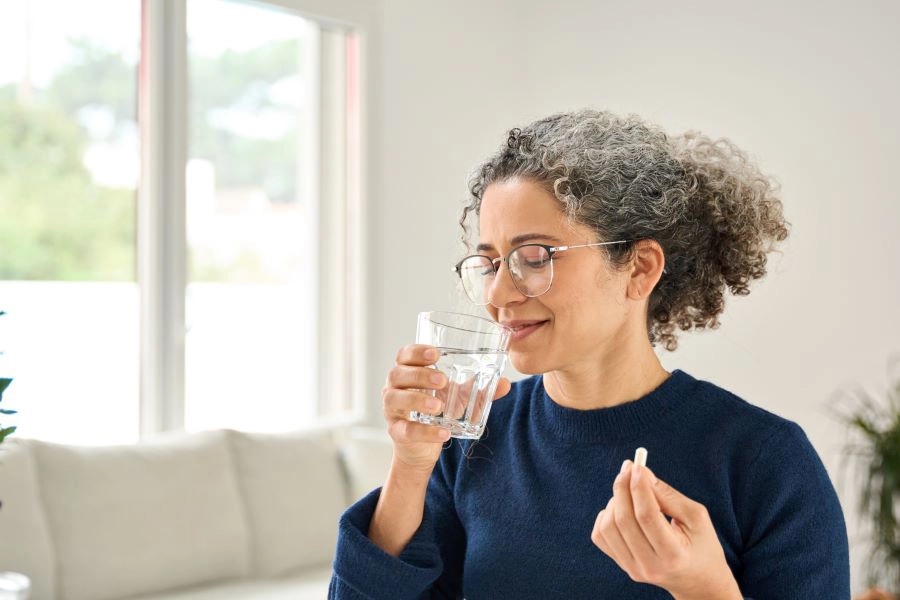 Clinically backed probiotics and isoflavones support women’s postmenopause wellness.“When clinical supported efficacy comes first, scientific credibility is naturally associated with it. Non-hormonal solutions that prioritize evidence-based data from human clinical trials and work with clearly understood mechanisms of action are well-positioned to capture consumer interest, especially given that online marketplaces bring their share of unsubstantiated claims.”
“When approximately 1.2 billion women globally will be transitioning to the menopause by 2030, clinical backing for non-hormonal solutions is simply non-negotiable for consumers. It’s also a life stage that’s marked by a sharp rise in cardiometabolic risk, driven by the rapid drop of the hormone estrogen.”
Furthermore, Davies underscores that with 77% of women aged over 45 showing high cholesterol, formulators now recognize that meaningful menopause support must include metabolic care. Previously, the focus was more on symptomatic relief. “This is why heart health is becoming central to women’s health strategies,” says Davies.
“Formulators are also acutely aware that evolving changes to legislation and increasing scrutiny amongst the cholesterol-reducing ingredient Monacolin K is a primary concern, particularly when it comes to ingredient and formulation integrity.”
“The potential upcoming ban from the European Food Safety Authority on Monacolin K is a prime example, where concerns around its pharmacological activity, safety profile, and the inability to establish a safe daily intake level are driving the need for reformulation,” he notes.
“With such advancements in the scientific community, formulators must stay well-informed to provide safe, natural solutions that can be future-proofed against changing regulations.”
Davies affirms that ProBiotix Health prioritizes clinically supported efficacy, safety, and scientific credibility.
Evidence gap
According to Davies, the scientific community has been long advocating for women’s health. But it requires more human clinical studies solely focusing on women in perimenopause, menopause, and postmenopause.
“As scientists, we need to move away from symptomatic relief in these areas and look for connections to and with cardiometabolic health and healthy aging. This calls for a greater focus and support for more clinical trials that can link menopause with cardiometabolic, bone, and cognitive health outcomes.”
“For example, while we know in the scientific community that postmenopausal women are five times more likely to suffer a heart attack, and 77% of women aged 45 and over have raised cholesterol, this knowledge isn’t necessarily known to consumers,” underscores Davies.
He believes that for the category to grow beyond wellness claims to trusted, mainstream solutions, there is a need to improve and grow knowledge about menopause and how it can ultimately affect long-term conditions in cardiometabolic, bone, and cognitive health.