

Europe calls for protein diversity for better human and planetary health


Key takeaways
- EU adults consume 80–85g of protein daily — more than needed — with 60% coming from animal-based sources, per EEA analysis.
- Livestock production accounts for over 65% of agricultural GHG in the EU.
- A coordinated shift to diverse protein sources could cut EU GHG emissions by around 5% by 2035 and boost economic opportunities, estimates the EEA.

A European Environment Agency (EEA) report has called for diversifying the region’s protein supply to boost food security and slash emissions while reducing reliance on imported feed.
The authority warns that its population is currently highly reliant on animal-based proteins. Industry experts have warned about high levels of animal-based product consumption, as they are often high in saturated fats, which can increase the risk of cardiovascular disease. They suggest consuming more plant-based proteins to cut health risks and improve fiber intake.
The “Protein diversification — strategic risks and opportunities for sustainable food systems” report finds that the average adult in the EU consumes ~80–85 g of protein daily, which is more than most population groups need. Animal-based products in this metric account for 60% of the total protein intake.
Based on these findings, the EEA stresses the need to rebalance protein sources while maintaining adequate nutrition.
Need for sustainable protein and nutrition security
The report points to a connection between proteins and sustainability issues. Animal-based proteins pose significant environmental concerns, heightened by greenhouse gas (GHG) emissions and biodiversity loss from imported feed, such as soy.
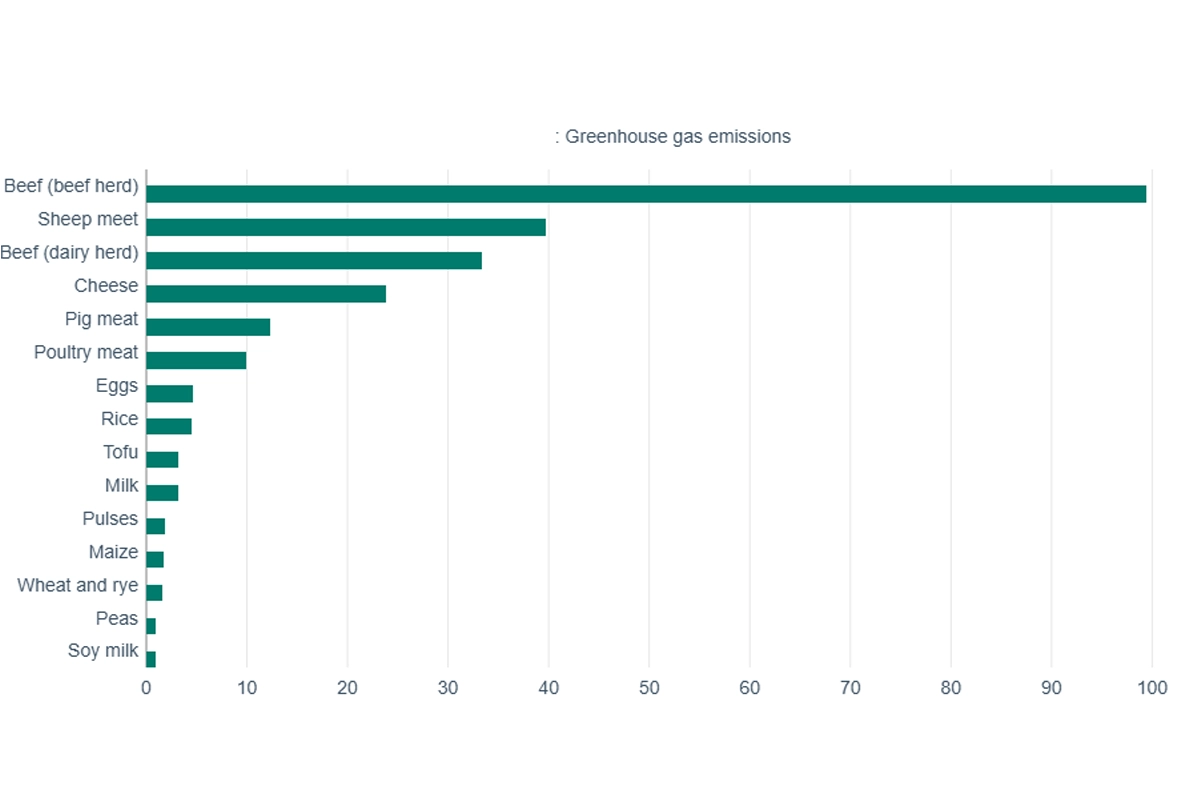 Median kilograms of GHG emissions per kilogram of food product (Image credit: EEA).Livestock production is noted to account for over 65% of agricultural GHG emissions in the EU, while grazing and feed production take over more than half of the region’s agricultural land.
Additionally, EEA flags that nitrogen linked to livestock and fertilizer leads to water pollution and eutrophication, meaning water is overly enriched with nutrients. Agriculture was found to be responsible for 94% of the EU’s ammonia emissions in 2023, which is a source of fine particulate air pollution.
Moreover, the report finds that the EU imports almost two-thirds of high-protein feed, mainly from Brazil, Argentina, and the US. Soybean imports account for around 30 million metric tons a year, mostly for animal feed. Previously, an expert advocating for increased pulse consumption urged shifting production away from using human-edible food as animal feed, as it hinders nutrition security.
Soy crops’ expansion has also been linked to deforestation and biodiversity loss in South America, notes the EEA.
An EAT-Lancet recently found that food production is driving 30% of global GHG emissions and transgressing the planetary boundaries.
Meanwhile, geopolitical tensions have caused fertilizer prices to rise, indicating supply chain vulnerabilities of foods reliant on such imports.
Diversification over replacement
As a result of the vulnerabilities of high reliance on animal-based proteins in the EU, the report urges a gradual rebalancing of protein consumption. The EEA outlines its possibility through various pathways, such as plant-based proteins, insects, biomass fermentation, precision fermentation, and cultivated meat.
The alternative protein market is projected to grow sevenfold by 2035.The EEA recognizes that not all livestock systems have the same environmental footprint, which is why the report prioritizes protein diversification over the replacement of livestock farming alone.
Plant-based proteins are currently the most environmentally friendly, advocates the EEA. Their health benefits have been linked to cutting chronic inflammaging and metabolic health benefits with dramatically reduced emissions.
The EEA points out that established production systems, mature markets, and high consumer familiarity with plant-based proteins mean significant potential to reduce GHG emissions, nitrogen pollution, and land-use pressures while creating opportunities for nature restoration.
Economic advantages
Protein diversification can also open economic opportunities, highlights the EEA report, as alternative protein consumption is expected to rise sevenfold to around 97 million metric tonnes annually by 2035. The report notes that the plant proteins market is expected to grow from ~US$24 billion in 2025 to US$35 billion by 2030. Meanwhile, fermentation-derived proteins are projected to rapidly grow from a low starting point, and cultivated meat is expected to remain a small contributor despite fast-growth projections.
The EEA underscores that Europe is well-positioned to compete in categories such as plant-based foods, fermentation-derived proteins, and more sustainable feed ingredients.
A coordinated effort to move toward more diversified protein sources could reduce reliance on imported feed and lower GHG emissions by around 5% by 2035, concludes the EEA.