



World Pulses Day 2026: How animal agriculture and meat consumption hinder nutrition security


Key takeaways
- Meat consumption in high-income countries exceeds healthy diet benchmarks, raising nutrition and sustainability concerns.
- Pulses offer a nutrient-dense, low-fat protein alternative yet remain underconsumed due to cost, culture, and convenience barriers.
- Aligning dietary guidelines with global health evidence could accelerate protein diversification and support more resilient food systems.
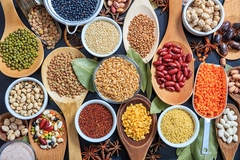
On World Pulses Day 2026, we examine the nutritional, policy, and food-systems case for this plant-based protein source as animal-source food consumption continues to exceed healthy diet benchmarks.
Francesca Gallelli, Food System policy officer at the World Federation for Animals, tells Nutrition Insight about protein diversification, gaps in dietary guidance, and the barriers holding pulses back from wider adoption.
She warns that high-income and high-mid-income countries consume animal products three times higher than the benchmark used to calculate the Healthy Diet basket.
“As highlighted also by EAT Lancet 2.0, such high levels of consumption may pose health risks. It is challenging to quantify in absolute terms the impact of dietary shifts on intensive animal agriculture; however, it is clear that reduced demand leads to reduced supply.”
“Promoting and improving access to plant-based nutrition, such as pulses, should be prioritized, and by reducing demand for intensive animal agriculture, land can be freed up for nature-positive, regenerative agriculture systems, which inherently deliver higher welfare,” she states.
Inefficient system
Gallelli argues that the industrial agricultural system, in which crops are grown to feed animals that are then eaten by humans, is inefficient.
“Animals only contribute positively to food production when they convert materials that humans cannot consume into food humans can eat, such as grass, crop residues, and unavoidable food waste. Between 36–40% of global crop calories are used as animal feed, with even higher proportions in countries with mostly industrial livestock farming.”
“For every 100 calories of human-edible cereals fed to animals, only 17-30 calories enter the human food chain. Production needs to shift away from using human-edible food as animal feed,” she underscores.
Policies that reduce the number of animals industrially farmed and make foods like pulses more affordable for human consumption are therefore necessary, adds Gallelli. Access to plant-based nutrition must be prioritized to improve dietary health while enabling significant land use for regenerative agriculture, rewilding, or afforestation.
She calls for stronger support for animal welfare, for instance, through agroecological solutions that improve food quality while boosting the productivity of food systems by enabling healthier animals.
“The EAT Lancet 2.0 report from last year referenced the potential of this food systems transformation. In particular, stating, ‘a food systems transformation following recommendations from the EAT-Lancet Commission could lead to a less resource-intensive and labor-intensive food system that can supply a healthy diet for 9.6 billion people, with modest impacts on average food costs.’”
Pulses provide affordable, nutrient-dense protein with a lower environmental footprint than animal-sourced foods.“However, such a transformation would have profound implications for what, how, and where food is produced and for people involved in these processes,” says Gallelli.
To restructure, some sectors would need a 33% reduction in ruminant meat production, and others would need a 63% increase in fruit, vegetable, and nut production compared with 2020 production levels.
Nutrition policies: Pulses versus meat
Gallelli notes that out of 100 countries that have developed national dietary guidelines with the UN Food and Agriculture Organization’s (FAO) assistance, 87% have recommended the regular consumption of pulses. However, most fail to emphasize their nutritional value and health benefits.
“For instance, only 8% mention their role in managing obesity and diabetes. At the same time, national nutritional guidelines often lack clarity on animal products’ health risks.”
“Similar shortcomings also concern national guidelines in relation to the consumption of animal products. A failure may bring serious consequences due to the potential health risks associated with uninformed consumption,” she says.
“The FAO has found that most guidelines highlight the qualitative benefits of animal-source foods as part of a healthy diet but do not propose quantitative consumption levels or address the health implications of excessive intake.”
The WHO has linked red meat to increased cancer risk and warned about saturated and ruminant trans fats commonly found in various animal products. “In January 2026, the WHO reiterated in its updated factsheet on healthy diets that these fats should not be preferred,” adds Gallelli.
She highlights that recent developments bring further concerns about state-level recommendations on the consumption of animal products. For example, the new US dietary guidelines have made the news for promoting the consumption of meat, including red meat, with commentators pointing to the influence of the meat industry in shaping the guidance.
“Such approaches contrast with the WHO’s recommendation that proteins account for 10–15% of total daily energy intake in adults, noting that replacing some animal proteins with more plant-based sources of protein may reduce the risk of diet-related noncommunicable diseases,” she continues.
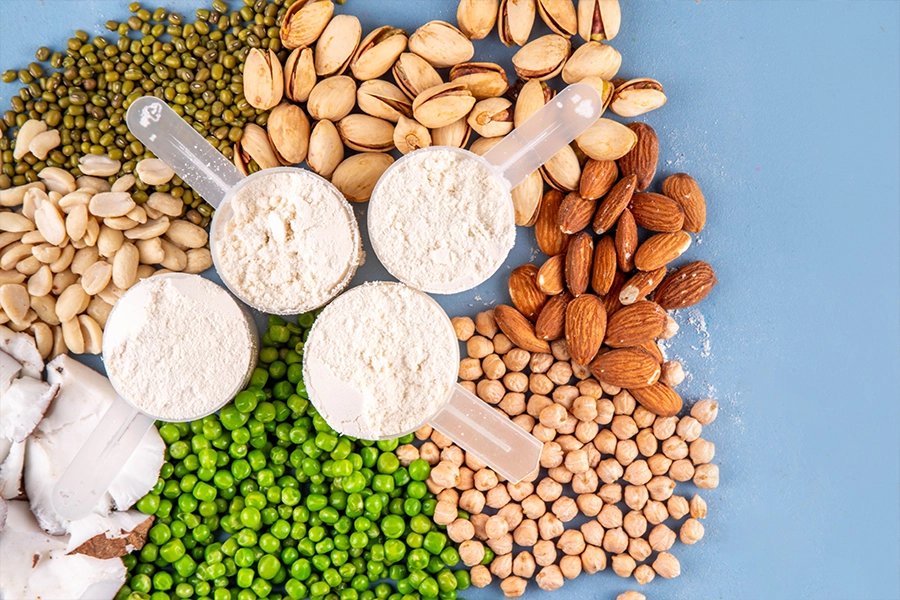 Experts say protein diversification is central to improving nutrition security and reducing pressure on intensive animal agriculture.According to Gallelli, resolving informational gaps and the political and economic factors that support animal-derived foods will be necessary to bring national policies into compliance with international recommendations.
Pulses held back
Pulses have low fat levels, almost zero cholesterol, and are beneficial for managing obesity and diabetes thanks to slow-digesting carbohydrates, notes Gallelli. Despite their healthiness, consumption levels are stagnating — global per capita intake of pulses averages only 21 g/day.
Based on a 2019 FAO examination of the global pulse economy, she explains that limited consumption is driven by a narrowing price gap with animal products, cultural factors, and long cooking times.
“Industrial farming, notably large-scale poultry and aquaculture, has cut prices of animal products. As animal-source foods become more accessible, data show a decline in pulse consumption.”
FAO and the Organisation for Economic Co-operation and Development predict a 6% increase in global per capita consumption of animal-sourced foods over the next decade. With increasing urbanization, they anticipate a 24% rise in this trend across lower- and middle-income countries.
“Furthermore, historical traditions are linked with variations in the levels at which pulses are consumed not only across regions but also across economic classes and economic groups,” says Gallelli.
“Research shows that the long preparation time required by pulses works as a deterrent for their larger adoption. Indeed, in high-income countries, precooked pulses are the most consumed product category.”
Plant-protein diversification
Gallelli suggests that companies can diversify production and invest in protein diversification, which some brands have pursued, to respond to consumers’ growing ethical and health concerns.
“For business owners in the pulses sector, it is crucial that they consider a series of actions aimed at increasing pulse cultivation and yields and meeting consumers’ needs.”
The FAO advises increased investment in R&D, underutilized varieties that are disease- and climate-resistant, and product innovation. Additionally, companies can support seed systems that increase access to local varieties and empower smallholders increasingly.
“To support consumers’ access to pulses, the FAO also recommends that companies share more information on fast-cooking and fast-soaking methods,” details Gallelli. This should also be promoted by public authorities while raising awareness of pulses’ health and increasing their availability in public distribution systems while updating recipes.
She calls for an urgent dietary shift for health and sustainability reasons: “More adequate demand and production levels could facilitate the transition toward more sustainable animal production systems, which allow for the improved management of natural resources, alongside higher animal welfare, thereby contributing to the achievement of sustainable development.”
While nutrition policies should promote sustainable and healthy diets, they should also support the transition to more sustainable and resilient production systems. “For example, integrated systems that work in harmony with nature and allow higher animal welfare, such as agroecology and agroforestry systems,” concludes Gallelli.