



Strait of Hormuz crisis: Impacts on hunger, grocery prices, and nutrition access


Key takeaways
- Strait of Hormuz closure threatens 20–30% of global fertilizer exports, hitting nutrition raw materials like soy proteins and grain fibers.
- The Gulf region depends on imports for 95% of soybeans and 89% of corn supplies via disrupted routes — potentially raising costs for nutrient ingredients down the supply chain.
- Greenpeace urges redirecting feed crops to human nutrition; ecological farming could shield nutrition supply chains from geopolitical shocks.
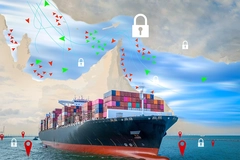
The current naval standoff in the Strait of Hormuz — a chokepoint for essential global trade — exposes a critical vulnerability for the nutrition industry: the global overreliance on synthetic fertilizers for raw materials like soy and grains. Experts are warning of knock-on inflation, not only in oil and staple foods, but also in the functional and fortified products that depend on these inputs.
This may threaten input costs for nutrition manufacturers, as Gulf fertilizer disruptions and Hormuz shipping delays spread through global commodity prices for soy, grains, and oilseeds.
The sea passage has been shut since the end of February, following Israeli and US military strikes on Iran, causing geopolitical and economic disruption in the region and abroad.
Nutrition Insight speaks with Marco Contiero, Greenpeace EU agriculture policy director, to discuss how this crisis reveals weaknesses in food systems and potential impacts on the nutrition industry.
“Industrial agribusinesses like to portray themselves as the only thing standing between the public and empty shelves. In truth, it is the highly consolidated, chemical-dependent model of industrial farming that is making our global food system so fragile in the first place.”
“Feed and food prices have shot up following the global disruptions of the COVID-19 pandemic, the Russian invasion of Ukraine, and now the US-Israeli war on Iran. How many times do we need to be taught this lesson?”
Regional food insecurity and inflation
The US-Iran war threatens to raise food prices, which have already been impacted by inflation over the years, and worsen food insecurity in countries already affected by conflict.
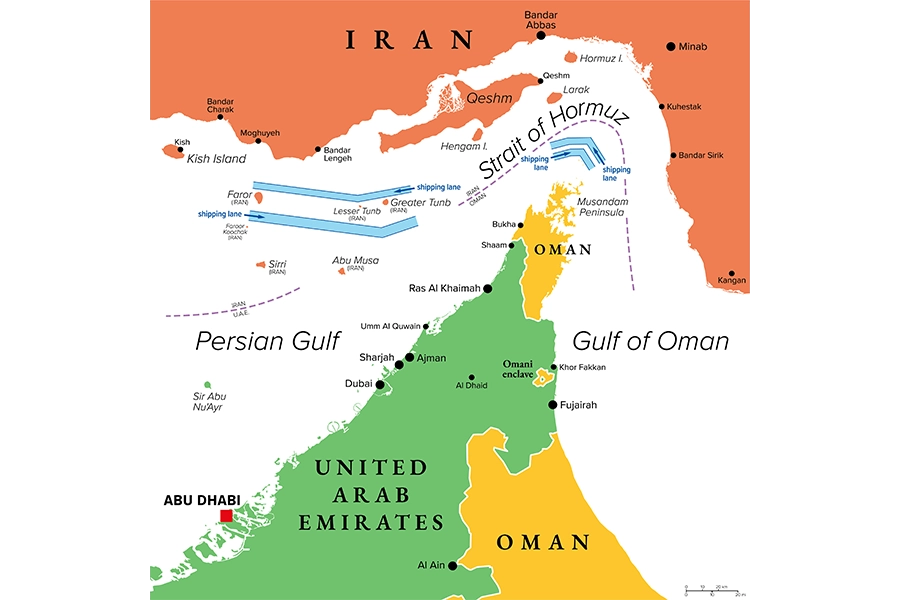 Strait of Hormuz shipping has halted amid the US-Iran war, threatening 25% of global urea exports and nutrition supply chains.The Gulf region is almost fully dependent on food imports, such as rice (77%), corn (89%), soybeans (95%), and vegetable oils (91%), according to the Institute for Public Policy Research. Sixty million people live in this region.
These commodities are central to several nutrition categories, from plant proteins and premixes to emulsifiers. Blocked imports may cause prices to rise on grocery shelves, with pressure on manufacturers to reformulate.
Michael Werz, a senior fellow at the Council on Foreign Relations, notes that food inflation in Iran has reached 40% over the past year, so any supply chain disruption will have “significant consequences.” He adds that prices for rice have increased sevenfold, and green lentils and vegetable oil threefold.
The conflict is also impacting regions that face malnutrition and starvation, according to the Phase Five Integrated Food Security Phase Classification. Action Against Hunger’s latest analysis reveals that Sudan has 24.6 million people, Yemen 16.7 million, and Syria 9.2 million who are at acute food insecurity. In Gaza, this affects 94% of the population, and in South Sudan, 56%.
Nutrition Insight previously spoke with the organization, which called for nutrition companies to collaborate with NGOs and innovate essential food distribution methods, rather than increasing production.
Local plant-based foods may protect against crisis
Industrial feed dominates fertilizer use. However, Contiero notes that redirecting animal feed crops to human nutrition — especially plant-based sources for supplements and fortified foods — reduces vulnerability to geopolitical shocks.
“In the EU, two-thirds of cereals are used to produce animal feed. There is clearly a lot of untapped potential to reduce our vulnerability by redirecting crops to feed people, not livestock.”
“A system where more people eat food that is plant-based, local, and organic is going to be significantly more resilient to events like the crisis in the Strait of Hormuz,” he says.
Francesca Gallelli, Food System policy officer at the World Federation for Animals, previously told us about inefficiencies within the industrial agricultural system, where large volumes of farmed crops are grown to feed animals for human consumption.
 Greenpeace warns the Hormuz crisis exposes chemical fertilizer addiction — plant-based nutrition offers a resilience path.“For every 100 calories of human-edible cereals fed to animals, only 17–30 calories enter the human food chain. Production needs to shift away from using human-edible food as animal feed,” she argued.
Ecological practices for nutrition security
According to Werz at the Council on Foreign Relations, the US-Iran war has placed one-third of the global fertilizer trade at risk of disruption. Fertilizer makes up 25% of agricultural production costs. He adds that natural gas shipments have dropped, affecting feedstock for nitrogenous-based fertilizers.
Werz outlines that the impacted territories of Bahrain, Oman, Qatar, and Saudi Arabia are major fertilizer exporters.
Blockades to fertilizer exports might translate to reduced availability and higher prices for crops that rely on these fertilizers, which are processed into nutrients, such as proteins, fiber, and sweeteners.
Greenpeace Aotearoa’s Amanda Larsson, Global Big Ag project lead, sees the bigger picture: geopolitical shocks hit farmers during peak springtime in the Northern Hemisphere, threatening harvests and “knock-on effects on food prices.”
The UN World Food Programme also worries of the impacts on sub-Saharan Africa as it heads into planting season. Its deputy executive director, Carl Skau, warns that the spike in global food and fuel costs “could leave millions of families priced out of staple foods, particularly in import-dependent countries, like sub-Saharan Africa and Asia.”
“If the Middle East conflict continues through June, an additional 45 million people could be pushed into acute hunger by price rises. This would take global hunger levels to an all-time record and it's a terrible, terrible prospect.”
Reflecting on the 2022 Russian invasion of Ukraine, Werz notes the war caused major trade system restructuring while 27.2 million more people were driven into poverty and 22.3 million more suffered from hunger two years following the invasion.
He warns: “The systematic weaponization of food, water, and fertilizer in a thirsty region makes this the first true twenty-first-century conflict that could unleash a slow-motion famine machine.”
Meanwhile, Greenpeace’s Contiero comments: “If we want true independence, we have to stop propping up chemical-addicted industrial farming. Local, ecological farming is the only real path to food sovereignty.”
“By working with nature to fix nutrients in the soil naturally, farmers can break the cycle of dependence. In Europe, that means an end to the current system of direct payments, which favors big landowners — primarily cereal producers — and a systemic transition that supports small farms, incentivizes agroecological practices, and favors the needed uptake of plant-based food to rebalance the intake of animal-based proteins.”