

MYCONDRO non-animal chondroitin banner promoting the whitepaper “Move better. Move more. Move longer.”
Home
Webinars
The psychobiotic era...

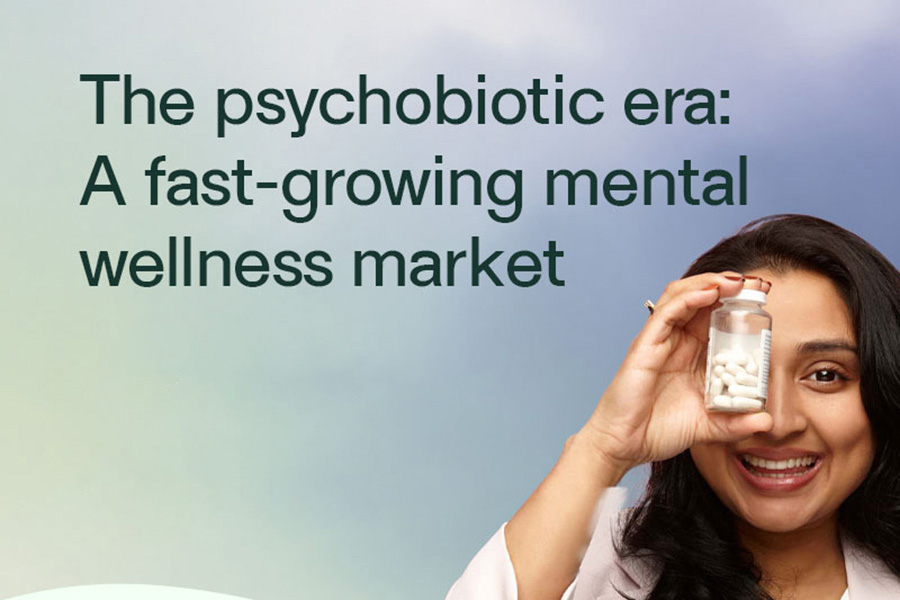
The psychobiotic era: A fast-growing mental wellness market

28 May 2024 | Novonesis
Video Background

Today's consumer choice is shifting! People are currently on a hunt for scientifically proven, safe, effective and high-quality solutions to address the multifaceted and interconnected dimensions of mental wellness.

Join this webinar "the psychobiotic era: A fast-growing mental wellness market" to hear from our panel of experts who will deep dive into some very interesting market data and consumer insights in the world of mental wellness, before sharing more scientific information about our unique psychobiotic solution containing Bifidobacterium Longum 1714™ strain: ProbioBrain™.

Hello and welcome to today's webinar, The Psychobiotic Era, a fast-growing mental wellness Market by Novanesses Human Health.

I'm Anita Sharma, editor with CNS Media, and very pleased to host today's webinar for Nutrition Insight, a world-leading B2B news and insights website.

We are joined today by our expert speakers.

Let me introduce them for you, Veronique Ruffantoin, Global Marketing and Customer engagement manager in brain health at Novanessis, Geraldine Blanc, the company's strategy and innovation lead in brain health, Ted Dinan, Emeritus Professor of Psychiatry, Principal Investigator in APC Microbiome Ireland at University College Cork.

As a former chair of neurosciences, his main research interest is in the role of the gut microbiota in stress-related disorders and is the co-author of the book entitled The Psychobiotic Revolution.

As a founder of the term psychobiotic, it's very great to have him with us here today.

We also have Laura Studente, marketing analyst at CNS Media.

In a short while, our speakers will give a presentation on market data and consumer insights in the world of mental wellness and brain health, before sharing more scientific information about ProbioBrain, a unique psychobbiotic solution from Novonesses, including the Bifidobacterium longum 1714 strain.

Before we get started, I would like to remind our listeners to please submit questions to our speakers throughout the Q&A engagement tool.

Any questions we cannot respond to during today's session will most certainly be answered by email following this presentation.

The webinar will also be available on-demand on the Nutrition Insight website.

A link to view the on-demand webinar will be emailed to you after it wraps up.

You can also have access to materials to download such as the Probiobrain brochure and the mental wellness insights report.

And with that, let's begin today's webinar with our speakers' presentations before we round off with the Q&A session.

Very pleased now to hand it over to Veronique, who will give us a quick introduction to this webinar.

Vero, take it away.

Thank you so much, Anita.

So, I think first of all, thank you so much for having us today and I wanted to say that we officially launched our Novenessis Human Health Mental Awareness Solution, Pro BioBrain last year.

And with that, we conducted different webinars to focus on educating about the complex science behind our psychobiotic strain, Byobacterium longum 1714.

So therefore we are super excited to partner today with you guys to provide also stronger market and consumer insights with the support of an external view to leverage Innova database on the amazing market of mental wellness and particularly on the next generation of powerful and targeted probiotics clinically.

Proven to address mental health conditions which are psychobiotics.

So very often we know that people use the term gut-brain axis without realizing the power of this bi-directional link between the two important organs of our body, and we will provide more clarity on this webinar.

So, today, we're going to go through different chapters and the first one is about diving into the dynamics behind the fast growing mental awareness market before diving into the consumer choice and criteria when it comes to mental awareness supplements.

Then T Ted is going to deep dive into the science of psychobiotics, going back to the basics and also talk about About the uniqueness of this Bonham 1714 strain behind Probiorain before wrapping up with our expert view and talking a bit more about the future of mental awareness as as hopefully some Q&A.

So back to you, Anita.

Sounds absolutely fascinating, Veronique.

Very much looking forward to it.

Once Again, this webinar is titled The Psychobiotic Era, a Fast-growing Mental Wellness Market.

Let's discuss what exactly is happening in this market and what is driving growth specifically.

Laura, would you be able to for us address new product developments over the last few years, please?

Yeah, thank you, Anita.

So first, looking at the no market insights data, we can confirm that 63% of global consumers say that they include mental wellness when they think about their health holistically, and 39% have done something to look after their mental health over the last 12 months, which means it's a very important part for consumers.

And when doing the research, we also conserved that supplements do play a key role within the mental wellness space, and 1 out of 5 consumers globally takes supplements to improve their mental wellness over the last year.

And this also translates into NPDs focusing on personalized approach targeted to specific needs, and that means that consumers may choose supplements that target stress or sleep versus general needs.

And this personalized approach we see in the launch of symbiosis serenitis in Europe, it contains also Bifidobacterium longon 1714 strain which combines psychobiotic strain with saffron and it targets stress.

And recent data in the supplement space also confirms that there is a growth in launches with probiotic-based ingredients that are also researched to have mental health benefits.

And in fact, the launch of new products with these ingredients has seen a 36% growth globally, and these supplements provide versatile.

Support for various dimensions of mental wellness and just take a look at some examples that we chose also from the database as just as just calm and Probio calm and as before these products also featured the unique psychobiotic strain Bifidobacterium longum 1714 strain and this strand primarily addresses stress, thereby enhancing the interrelation of mental wellness and therefore also boosting the holistic health in general.

And now we will look into regional analysis and we can see that North America and in the US particularly, 30% of consumers have taken supplements within the past year to enhance their mental wellness, and we see also this trend in East and Western Europe too with 33% of consumers.

And then finally in China, consumers display relatively a high interest to pay for functional ingredients, and 18% has chosen this option.

And finally, we see how consumer interest in natural ingredients for supplements also can unlock psychobiotic innovation, especially because preferring natural can also be personalized, and we see this precision biotics come supplement as a good example for this trend.

And thank you to you, Geraldine.

Yes, thank you very much, Laura.

The dynamics you described in terms of NPD are confirming what we observe at macro level through the preparatory research we at Novenesis have conducted with consumers worldwide.

While some market analysts were predicting that the mental wellness dynamic will stop after COVID-19, what we observe today is the contrary.

COVID-19 has been at the same time a revelator and an accelerator of trends that were already strongly anchored in our today's society.

I recently read extremely interesting reports stating that we are now moving from pandemic to minddemic, hence the title of this section.

To complete the market overview that you initiated, Laura, let's maybe start with some figures that according to me, speak for themselves when we think about mental wellness.

So first figure, 1 in 5.

This is the number of adults who, according to the World Health Organization, will experience at least 1 mental health condition this year.

Second figure 1 in 2, this is the number of people who are considered at risk of depression across the EU.

These are figures from the European Commission who just released its new commitment to support mental health as part of the European Mental Health Week, also stressing that mental distress comes at a high financial cost, representing no less than 4% of GDP.

Last but not least, 80%.

This is the percentage of people worldwide who agree with the statement, I need to do more to look after my mental -being.

As a comparison, 86% declare they are making it a priority to take care after themselves physically.

So 80%, 86%, you see, it's really not so far.

So now if we move to the other slide, what I wanted to say is that while it was long considered secondary, even sometimes taboo, we need to recognize that mental health is now top one health concern for consumers worldwide who have understood that their body and mind are extremely connected and that taking care of their mental health from the earliest age will help them living longer and healthier.

And this attention to mental wellness is truly global.

As mentioned by Laura in the example of products, there are today no, absolutely no region that is escaping the mental wellness wave.

So, of course, we can observe some differences across geographies relating, for example, to the way consumers define mental wellness and how they scale, the state of their mental wellness.

And in this regard, I would like to strongly invite you to to download the reports that you have in attachment to this webinar about the reports that we have done at Novonesis when it comes to the mental wellness report.

So here you can dig further into the geographical nuances which are extremely important to understand when developing a formulation, choosing a set of ingredients and defining the right format.

Another aspect that I wanted to mention here is that mental wellness is also now affecting all genders and also all class of age, with Gen Z now entering the segment at a level it never reached before.

And in this battle against the minddemic we have been talking about, consumers are developing an always more diversified and modern toolbox, connected beds to improve sleep, pillows with relaxing smell, wearable devices to measure stress.

Levels during the day, to monitor sleep, apps to help improve sleep quality or to meditate at home.

There are a lot of innovations flourishing in this segment to help consumers take better control of their mental health and to establish daily routine.

Supplements are one of these key tools that they are using as part of this daily routine.

And when asked by Innova Market about their tactics to improve mental wellness, 1 in 2 consumers declares.

Having purchased supplements in this in this approach.

So this is translated into a strong and largely above market double-digit growth for sleep and stress supplements.

Still, looking at consumers' consumption on mental wellness supplements, what we observe is that despite this diversified offer we have in the market, especially in terms of botanicals, vitamins and minerals that are today still driving the market growth, consumers declare being quite dissatisfied with the existing offer and looking for a natural, yet clinically proven solution to support them daily to face the challenges of their always more busy and connected life.

So with this, I think it's time for me to hand over back to you, Anita.

That is very, very fascinating.

Geraldine, thank you so much for this, and of course, thank you, Laura, for your insights as.

Geraldine, I wanna stay with you and perhaps, you can bring in Veronique on this one.

I'd like to discuss insights with respect to consumers' needs.

Could you tell us more about consumer behavior and their criteria of choice, especially when it comes to mental wellness supplements and psychobbiotics?

Sure, I'm happy to stay a little bit longer.

So, as I already referred to the Property Novenesis consumer insight, what I would like to, to do now is also to have that based on the interviews that we have conducted, we have been able to define with a certain level of granularity.

What mental wellness means to consumers and basically what we have observed is that in today's consumer's view, mental wellness is interconnected, multifaceted, and extremely personal.

This point here is highly critical.

That means that all dimensions are interlinked with a chain of reaction.

Stress can both cause and be the result of a poor sleep quality.

These two factors often contribute to the development of anxiety, low mood, and low energy levels, which at the end can also impact your gut health and habits and decisions.

Mental wellness can start anywhere on this wheel and manifest with interconnection.

With growing awareness and acceptance of mental wellness, consumers have come to a quite elaborate approach to mental wellness, and they have clearly understood that addressing one's symptoms only won't always be sufficient.

So as in many segments, and I think everyone can, I would say relate to what I'm going to say, branded and clinically supported ingredients have strong arguments for differentiation, but also for pricing premiumization.

So supplement users today state, and they are quite clear on that, that they are willing to pay a higher price for products that are a scientific proof of efficacy.

And I will say in the field of mental wellness, I will say that now, but of course Ted will tell you far more about that.

The science has opened new fields of possibilities around the so-called gut-brain axis that Vero already slightly mentioned, but also with this new generation of probiotics that is currently emerging.

The so-called psychobiotics that we will be talking a lot about today.

These are witnessing a growing interest due to their ability to meet consumers' high-level expectations in terms of science, but also naturality, sustainability, and safety, the famous clean and green, hassle-free and compromise-free imperative.

So with this, I think time has come now to hand over to Vero to talk about Probiorain.

This solution we are extremely proud of because we have developed it at Novenesis to precisely address consumers' unmet needs.

Awesome.

Thank you so much, Geraldine.

So I think what's very interesting.

In terms of what consumers are going through, as Geraldine mentioned, we know that there has been an increased awareness.

We know that there are more stressors than ever in the world, and we know that with this destigmatization of mental health, consumers have redefined what it actually means to be in good health.

So we also know that consumers have all gained greater knowledge when it comes to their own biology and how everything is connected around us.

And not only actually, it's about within, outside, and connected to the other.

In other words, we call it more like the microbiome, which is about being me.

My word and the world.

So, if we add that to the increased understanding of the role of the microbiome, I'm sure you've seen different documentaries around.

So we've seen on Netflix, there is like the twin experimentation where we can see we took two identical twins and give them different diets where they actually see the difference in the gut microbiome, but also like Hack your health, the secret to the guts.

So we can see this increase of awareness coming from the exposure we have through social media, through documentaries, and people start understanding that what they consume actually has an impact on how they feel very often.

And that has raised a lot of interest and connection when it comes to the gut and the brain.

And that's why it's very important for consumers that they understand now, you know, what's going on in terms of microbiome.

But not only actually when we look at the forefront of the science of the gut-brain axis at Novoniis Human Health, we have developed a solution.

So basically when we look at our solution internally, we have developed ProbioBrain and we know that consumers are now taking proactive care with supplements, especially the ones where they do not have any side effect or contraindication or sign of dependency, for example.

So Probiobrain with a unique Byobacterium longum 1714.

Is the first and only psychobiotic solution clinically proven to address the multifaceted and interconnected dimensions of mental awareness as mentioned by Geraldine before to help you harness the incredible power of the gut-brain axis.

In fact, we are super lucky to have T Ted today, who is the father founder of the term psychobiotic.

So what we're gonna do is we're gonna hand over to Ted who can better explain than me the definition of psychobiotic.

Thank you, Vero.

We introduced the concept of a psychobiotic about 10 years ago.

It refers to bacteria which when ingested in adequate amounts, have a positive mental health benefit.

Now, psychobbiotics, these bacteria are essentially tourists in the intestine.

We take them in through our mouths, we pass them out through our anus.

They don't actually colonize, they don't grow within us.

So if one is obtaining any benefit from a psychobbiotic, and many people do, one clearly needs to take them on a daily basis, because over a number of days they'll be simply excreted.

So, they are live bacteria.

There are some people who claim that maybe dead bacteria might in certain circumstances have benefit, but the overwhelming data relates to, to, to live bacteria.

Now, there is one point that I think is very important, and it's a point I, I, I've learned myself from working in this field for a long, long period of time.

And it's this, the overwhelming majority of probiotics do nothing from a mental health perspective.

They're a small percentage of bacteria which are probiotic, but have a mental health benefit.

So I think it's extremely important for the consumer to be aware of the fact that most probiotics do absolutely nothing from a mental health perspective, that it is only a small percentage that actually have psychobiotic action.

Vera, I'll head back to you right now.

Thank you so much, Ted.

I'm always fascinating whenever I hear, you know, you define it because actually to have a great transition to our subject right now, we know that our psychobiotic actually has proven benefits and in fact we have some very strong benefits on the Bonham 1714 psychobiotic strain.

So, we have more than 15 years of research and many strong scientific and clinical evidence behind, and we know that our psychobiotic solution in Noboness' human health behind Probiorain helped manage the psychological and physiological response to everyday stress, improve the quality of nights.

Sleeps and reduces daytime fatigue.

It does enhance energy and vitality levels to boost productivity as as helping maintain a calm state of mind, but also help balance emotion and support social functioning as as reducing feelings of low mood, and those make it an ingredient of choice for brand owners but also attractive to consumers too.

And actually also when we think about it in terms of transition, being clinically proven is more important than ever within this industry.

Because when we asked McKinsey, for example, consumers say that they are favoring clinically proven ingredients because being natural is great, but being scientifically effective is actually even better.

In fact, roughly in the UK and US consumers reported that clinical effectiveness is now the number one purchasing factor criteria whenever they look for supplements like that.

And this trend is particularly very, very strong across vitamins and supplements.

And actually if we look at China, for example, we know that consumers express an equal preference when it comes to clinical and natural.

So basically, I think being natural but also clinically studied and effective would represent what I would call the holy trinity for consumer, which is a great open door for biohealth solutions like psychobiotics.

So actually this shift is also noticeable within the scientific and academic domain where the number of scientific publications has skyrocketed when it comes to gut brain access, keywords related to psychobiotics or microbiome, microbiome or microbiota.

And actually you can see that there's been more than 3800 publications roughly, with one third referring to stress.

And actually we can see also some emerging ones when it comes to sleep, which shows the emergence of this new category of biotics.

So that's why atomis Human Health, we aim for the gold standard psychobiotics like Ted referred to in terms of psychobiotics here as key ingredients in the approach to mental wellness and mental health.

And I want everyone to remember that not all probiotics are psychobiotics and not all psychobiotics are equal.

So very soon, I'm sure Ted is going to explain a little bit more about, you know, the science of psychobiotics, what are, what makes great psychobiotics, or what is important of having in terms of defined mode of action.

And also a bit of overview of the clinical studies.

So, on this point, I will hand over to Anita.

Veronique, thank you so much for that.

Really looking forward to, hearing that portion from, TEed as that you, teed up so brilliantly.

This does allow us to transition nicely to the science part of this webinar.

Like Veronique said, it really is all about the science at the end of the day.

Ted, could you please, sir, share with us why this psychobiotic strain, Bifidobacterium longum 1714 is so unique?

Up until 20 years ago, scientists spoke about the brain gut axis, but microbes in the gut were largely ignored.

When I was a medical student, we referred to them as commensal bacteria.

In other words, we fed them.

They didn't do us any harm, but they didn't do us any good either.

Over the last 20 years, it's become clear that those bacteria in the intestine do play a very fundamental role.

In many aspects of physiology, but also in relation to brain health, so I suppose the first main question is how could microbes in the gut actually communicate with the brain?

They communicate with the brain in a variety of ways.

If you take the vagus nerve, that's a long meandering nerve connecting the brain and the gut, and it sends signals up and signals down.

Now, 80% of the signals are up and about 20% actually come from brain to gut.

But it is clear that certain microbes can only communicate with the brain when the vagus nerve is intact.

We've shown that certain bacteria cannot communicate with the brain if the vagus nerve is actually caught.

So that's an important route of communication.

Another important route of communication is undoubtedly the production of short chain fatty acids.

Now, when microbes act on fiber in the gut, they produce short chain fatty acids like butyrate, and that in particular is a very potent epigenetic regulator.

Now what do by that?

That it can regulate the way in which certain genes in the brain and other organs actually function.

Of course, another extremely important interconnection between gut microbes and the brain is the fact that gut microbes can regulate the release of cortisol.

Everyone will know that cortisol is the main stress hormone in man, and it was shown almost 20 years ago that microbes within the gut can significantly influence the way in which cortisol is released, and of course, high levels of cortisol, we know, have a damaging impact on the body.

There are circumcir circumstances, if we're doing an exam, we want high cortisols for a little while, but we want them to come back down again, but chronic high cortisol levels is bad for one's overall physiology.

Now If we look at Tryptophan.

Tryptophan is the building block of serotonin and Tryptophan, it used to be thought all of it came from the diet, and certainly a proportion of it does.

Turkey is always quoted as having the very high content of tryptophan if one eats turkey, but in fact, we now know, and it was, I think, initially a study that we published about 12 or 14 years ago, that in fact gut microbes, particularly Biffloum, is capable of producing tryptophan.

So there are two sources of tryptophan.

In our, in our, our bodies, there's that acquired from the diet, and there's that acquired from bacteria.

Now, tryptophan is extremely important because it crosses the blood-brain barrier.

It's actively transported into the brain and forms serotonin within the brain.

And of course we know that serotonin is an extremely important neurotransmitter.

It regulates mood, it regulates appetite.

It regulates sleep patterns.

So, as a neurotransmitter, interestingly enough, the cells containing serotonin are in the brainstem.

They're in neurons called the rapha neurons, and these are highly arborized, so they, they have lots of branches, these neurons, so they have a wide range of influence, and that's why they influence such a a variety of activities like mood, sleep, and, and appetite.

Now If we look at Tryptophan, as I say, it is a very important amino acid because it regulates serotonin levels, but we also know that in the periphery and indeed centrally it can have anti-inflammatory activity.

But unfortunately in certain situations, particularly if we are stressed.

Serotonin can be degraded into an inflammatory pathway called the quinolinic pathway, and this, of course, increases inflammation.

It's probably why some people who have inflammatory diseases like inflammatory bowel disease or rheumatoid disease, Their symptoms become worse when they're psychologically stressed, because tryptophan is actually shunted into an inflammatory pathway.

So, tryptophan really, under normal circumstances, is extremely important, but it also can become pathological when it's shunted into an inflammatory pathway.

Now, Bifflongha 1714 is a psychobiotic that we've been working on for a very long period of time.

I think it was about 15 or 16 years ago, we noticed, and I, I, I can't say it was something we expected, but we noted that in animals when they were fed bifflongum 1714, that they seemed less stressed and less anxious.

So we were interested in seeing if this would actually translate to humans.

Most studies, unfortunately, don't translate into humans.

You can see something in rodents and never see the same in humans, but we did a study in humans, it was a placebo controlled study where we looked at stress levels and cortisol.

So subjects took biflongham on one occasion, placebo on another.

They rated their stress responses.

They didn't know whether they were taking biflongham or 17 or placebo, and we also looked at their cortisol levels, and what we essentially found is that biflongham 1714, when the subjects took that, they reported themselves as less stressed.

And their cortisol levels were much lower, so there was a direct relationship between the perception of stress and the reduction in cortisol.

Lower cortisol levels were associated with less stress, and people perceived themselves as less stressed when they took biflongham 1714.

Of course, since then there have been numerous studies conducted with bilongham 1714.

One study that we conducted, looked at Bifflongham in terms of sleep, and again it was a placebo controlled study, and it was in students where we looked at students over two semesters, and we looked at them during the exam period.

So in one period, They received biflongum in another period, they received placebo, and what we found is that overall, their sleep duration was longer when they took the biflongum as opposed to the placebo.

That has been replicated in bigger studies by John Greger and by others.

We also now have a better handle on how this biflongham 1714 works.

It seems to be effective in stress, in milder forms of depression, in milder forms of anxiety, but I, I, we now know that for instance, when you take this biflongum, that the electrical activity in one's brain is altered.

Stress reduces certain parameters, electrophysiological parameters, and bifflong them has the capacity to normalize those parameters.

That was a study we published several years ago, but of course people have used other methods of studying brain functions since then, such as functional MRI, and reported that Biff Longha 1714 has the capacity to normalize responses in people who are suffering from, from stress.

So there is an overwhelming volume of evidence now accumulated to indicate that Biff Longum 1714 is indeed a psychobbiotic.

That is, it is effective in reducing stress levels, and of course, stress results in a variety of mental health problems, including depression and anxiety, and that it does so probably by increasing tryptophan levels in the blood, and by reducing cortisol levels.

Cortisol, of course, as I've already mentioned, is the main stress hormone.

So I'll, I'll head back to you now, Vero, if that's OK.

So, thank you so much, Ted.

I think, before we finish, we wanted to give a little bit of a wrap up in terms of things that we want to discuss in the next stage in terms of mental awareness market.

So I think the first element, which is a very important point to consider is that at least from a marketing point of view, being a marketeer.

I think that it's important to know about sources of influence when it comes to mental wellness products.

So, it's very important to know that consumers are highly rated, 1, a distribution channel.

So being in store, it's super critical for consumers nowadays when it comes to mental wellness products.

2, recommendation.

And recommendations from friends and family, and these are a trusted source for them.

And number 3, recommendations from doctors.

Now, on this point, I think it's very important to deep dive a little bit because consumers mentioned that they would go to their doctors or their healthcare practitioners for a topic related to mindfulness, sleep, or holistic health, asking for specific supplements or over the counter products.

So I think that's very important to know that because I know that we We live in an era of social media where this is the number one source of information globally.

However, it's important to remember that 50% of consumers do not trust that source.

And actually 61% of consumers trust more prints and 66% for TV.

So in the era of disinformation, consumers might not know who to trust and doctors remain actually a highly reliable and trusted source of information.

So that's very critical to understand.

But to wrap up on this webinar, what I really want people to take away from today is 3 critical points.

The first one is not all probiotics are psychobiotics.

So as mentioned before, Bydobacterium longum species is very important as a species because first, it's the first colonizer of the human gut, and two, they are also known for their brain health benefits.

And adding to the specific screening of the origin of 1714 coming from the human gut, actually it is a true resident of the human gut naturally and not just a tourist of the gut microbiome.

So second, not all psychobiotics are equal.

So being able to cross the blood-brain barrier as explained by Ted and also producing tryptophans are key success factors from a true psychobiotic strain.

So simply because, as we heard, we cannot solely get that from the diet.

So only a few psychobiotics out there in terms of solutions based on high standard clinical studies and also relying with the very sophisticated mode of action and actually involving tryptophan metabolizer are key differentiator in that market.

Finally, remember that Probiorain with the unique bifidolungu bacterium 1714 strain is the first and only psychobiotic solution clinically proven to address the multi-dimensional and interconnected dimensions of mental wellness actually through the gut-brain axis.

So we have, as Ted mentioned, more than 15 years of research.

A lot of clinical evidence behind.

We have a sophisticated mode of action that involves basically our strain Byobacterium longum 1714 producing this unique exo polysaccharide that has anti-inflammatory properties but also producing tryptophan which creates more availability for serotonin and melatonin technically.

And then actually think about the fact that It is a branded ingredient of choice for brand owners out there and it's attractive to consumers because it has a field of application in supplements but also in functional foods such as chocolate or snacks bar.

So in this era of psychobbiotic, if you want to tap into the fast growing market of mental awareness, maybe you should select psychobiotics and our sofa.

Back to you, Anita.

All right, Vero, , great information, detailed information all the way around.

What a fascinating expert panel.

A big thank you to our speakers today for their insightful presentations.

Once again, I'm Anita Sharma from Nutrition Insight, and I'm now Happy to host a Q&A session with our experts.

Some great questions already been submitted here, so let's get started.

Geraldine, I'd like to start with you.

Our first question is about the comparison between psychobbiotics and botanicals.

What's better for stress, your psychobbiotic or Ashwagandha?

Wow, that's an interesting question, huh, Anita, not easy to answer because I will say we cannot really compare apples and pears, especially when we look at the science.

So it will be a bit like the same, you know, like comparing psychobiotics and and ashfaganda.

So I will say in the same way that not all psychobiotics are created.

Equal, not all botanicals are the same.

So according to me, what is extremely important is to look at the active compound of these ingredients to measure the effectiveness and reliability.

It is better to go for those who are branded, more stable, and of course clinically studied with a specific mode of action.

And when it comes, I will say to biohealth Solutions, on our side, we make sure we go through a rigorous quality process with our strain to ensure clinical study results and ensure the efficacy and stability.

Yeah, I hope I answered the question.

Absolutely.

You did a great job there, Geraldine.

Thank you so, so much.

Let's stay with the mental wellness theme if we can for a second.

I know that was addressed, throughout the presentation today.

Why not take tryptophan supplements?

Who wants to take that one?

If I might take that one, there were a lot of trials conducted with tryptophan back in the 1980s, largely in depressed subjects, and whilst some of the studies did show some minimal activity, overall, the evidence would suggest that taking tryptophan was ineffective.

OK.

Very, very interesting.

We do have another question, a lot of them coming through here.

How will scientists design studies on psychobiotics?

Are there any specific endpoints they should aim for?

And what about the placebo effect, which also came up throughout the presentation today?

I think that whilst preliminary studies can be open and not include a placebo, in order to demonstrate definitive efficacy for any psychobiotic, you need a randomized design.

Parallel group with a placebo control.

You cannot demonstrate efficacy otherwise.

Now, if one is, if one's primary end goal is stress and one is seeing if a psychobotic is effective in treating stress, There are a number of very good rating scales out there, the one that I favor, and I think the one that many researchers in the field favor is Cohen's perceived stress scale, but I do think that it is worthwhile having biomarkers in there as.

Now, the primary biomarker is unquestionably cortisol, but you could have inflammatory cytokine markers as appropriate biomarkers, or you could have tryptophan as a biomarker as.

I would say that cortisol is probably the most appropriate biomarker because everyone accepts it is the primary stress hormone in humans.

Excellent, Ted.

Thank you so much for that.

Vera, I'd like to turn our attention towards you, if we may.

Another question coming through here.

When it comes to probiotics for mental wellness, psychobbiotics, what criteria should consumers take into account to make the right choice?

Anita, that's, that's a great question and basically we, we understand that it's not yet obvious when it comes to formulating mental wellness supplements because, you know, for a lot of people it's, you know, it's already for digestive and immune applications.

So when it comes to mental wellness.

Based on the consumer insight that we've seen, we believe the holy trinity or the holy grail is actually to respond to consumer demand such as being natural, being clinically studied and effective, and hopefully we hope that, you know, today during that webinar we demonstrated that, you know, normal is human health, proprietary documented market data, consumer insights, and our psychobiotic strain.

14, also known as Probiobrain, has everything to help pretty much brand owners win in the marketplace in terms of efficacy, but also differentiation, you know, and to include psychobetic in their formulation.

So that's pretty much what I would say in terms of response, but I think that's a marketing answer.

So I will turn to TED.

Basically like what do you think are good criteria out there for psychopathics.

I think that for the consumer it's consumer beware.

Unfortunately, I think the consumer has to look and see, is there any science behind the product, because it isn't like buying a drug.

There isn't a drug in the pharmacy that is there unless it has been licensed by the FDA or the European Medicines Agency.

Unfortunately, the same is not true for psychobbiotic bacteria or probiotics.

There is an enormous volume of product on the market that has no efficacy whatsoever, and that enormous claims are being made for.

So I think the, the consumer has got to look at the science.

I, I know that, you know, that's a a big ask, and it's, but I, but I really think it is, it is absolutely necessary because there are so many products out there for which there is no data whatsoever.

So the consumer has got to be vigilant.

All right.

Great points all the way around.

Unfortunately, that's all the time we have for this, webinar today.

I, we'd love to stay around and, and chat a bit more, but I do want to thank today's speakers, Ted, Joe.

Dean, Vera, and Laura for, wonderful insights and of course, a big thank you to all our viewers around the world for tuning in and joining us.

We're going to say goodbye for now, and we look forward to seeing you all again real soon.

Take care.

Speakers
Speaker Image

Anita Sharma

Platform Editor

Speaker Image

Geraldin Blanc

Strategy and innovation lead brain health

Speaker Image

Veronique Rufin Soumine

Global marketing and customer engagement manager

Speaker Image

Anita Sharma

Platform Editor

Speaker Image

Geraldin Blanc

Strategy and innovation lead brain health

Speaker Image

Veronique Rufin Soumine

Global marketing and customer engagement manager
More webinars

Image