




Grapes against UV damage? Clinical trial reveals daily consumption may protect skin


Key takeaways
- Consuming grapes for two weeks could boost skin resilience against UV irradiation by reducing the invisible internal damage caused by sun exposure.
- Grape consumption altered gene expression to enhance skin keratinization and cornification, which strengthens the skin’s barrier against environmental harm.
- Eating grapes led to a measurable decrease in malondialdehyde, a key marker of skin oxidative stress caused by UV exposure.
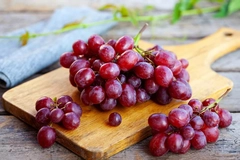
Consuming grapes for two weeks can boost skin resilience against UV irradiation by reducing the invisible internal damage caused by sun exposure, according to a small-scale clinical trial involving the results of four human participants, which was funded by the California Table Grape Commission.
The trial initially involved 29 participants, but only four had high-quality, complete sets of skin tissue that were deemed suitable for further lab analysis.
“Most of the specimens failed quality control measures,” detail the study authors. “However, complete sets of extracted nucleic acids (specimens from subjects with and without grape consumption, and with and without UV irradiation) from four of the subjects were found to be suitable.”

The trial revealed that grapes significantly lowered a key marker of cell stress, altered blood chemistry to promote a more resilient internal environment, and turned on a specific set of protective genes that naturally toughen the skin’s outer layers.
While the protocol did not reduce visible skin redness, it ultimately triggered deep cellular defenses that fortified the skin’s physical barrier against UV radiation, chemicals, and pathogens.
“We are now certain that grapes act as a superfood and mediate a nutrigenomic response in humans,” says John Pezzuto, Ph.D., professor and dean of the College of Pharmacy and Health Sciences at Western New England University, Springfield, Massachusetts, US.
“We observed this with the largest organ of the body, the skin. The changes in gene expression indicated improvements in skin health. But beyond skin, it is nearly certain that grape consumption affects gene expression in other somatic tissues of the body, such as liver, muscle, kidney, and brain.”
Enhanced skin barrier against environmental stress
In the study published in ACS Nutrition Science, researchers analyzed the skin tissue samples to identify changes in gene expression after consuming grapes.
Volunteers participating in the study began a restricted washout diet for two weeks. On day 15, the researchers performed minimal erythema dose (MED) testing. On the following day skin punch biopsies were procured from the MED site and a non-UV-exposed site on the hip.

Based on the skin samples, the researchers found evidence of enhanced skin keratinization and cornification, which are known to create a barrier against environmental damage.
For the following two weeks, the volunteers consumed the equivalent of three servings of grapes each day. MED testing was initiated on day 30 and biopsies were procured on day 31.
Based on the skin samples, the researchers found evidence of enhanced skin keratinization and cornification, which are known to create a barrier against environmental damage.
Furthermore, when they exposed subjects’ skin to a low dose of UV irradiation, measurements of malondialdehyde, a marker of oxidative stress, was lowered.
“This helps us to understand how consumption of a whole food, in this case grapes, affects our overall health,” says Pezzuto. “It’s very exciting to be working in the post-genomics era where we can finally start to employ functional genomics and actually visualize complex matrices indicative of nutrigenomic responses.”
Preliminary research
Backing these results, previous preliminary research in mice reported that eating grapes might help prevent skin cancer induced by UV exposure. Findings of that report are unpublished but reviewed by the authors of the current paper with permission.
Using the same grape surrogate as employed in the current study, six-week-old female hairless mice orally consumed the equivalent of two servings each day, five days a week, over a period of eight weeks.
Separate groups of mice were exposed to a robust dose of UV radiation (280 mJ/cm2) at different milestones: at the start, and after two, four, six, and eight weeks of eating grapes.
The simulated sunlight used in the test delivered a precise mix of 17.8 W/m2 UVA and 1.5 W/m2 UVB — the equivalent of two minimal sunburn-inducing doses for a hairless mouse.
Researchers quantified fluid retention in the skin by measuring skin fold thickness of the back of the mice’s neck immediately prior to and 24 h following UV exposure. After two weeks, a reduction of about 50% was observed. This reduction increased with time, reaching about 90% after eight weeks of grape consumption.
Previous research also found that eating grapes enhanced muscle health in mice that were fed grapes for 2.5 years, equivalent to approximately 80 years in human life.