

Boosting NAD+: Tru Niagen and US advertising board clash over supplement claims

Key takeaways
- A regulatory panel recommended that Niagen Bioscience modify its Tru Niagen advertising, concluding that its evidence of boosting NAD+ levels did not sufficiently substantiate broader health benefit claims.
- The case reflects broader debate within the supplement industry over how evidence around NAD+ should be translated into consumer-facing claims.
- Although Niagen Bioscience strongly disagrees with the decision and defends its extensive scientific research, the company has agreed to comply with the recommendations.
 (Image credit: Niagen Bioscience).
Niagen Bioscience says it rejects the logic behind a recommendation by the US National Advertising Review Board (NARB) to remove or significantly modify advertising claims for its flagship nicotinamide riboside (NR) supplement, Tru Niagen.
Although the company has agreed to comply with the board’s recommendation, it argues that the standards are restrictive and could discourage companies from communicating scientific research.
Speaking to Nutrition Insight, the company defends its clinical research portfolio, as a complaint from competitor Reus Research led to the National Advertising Division — an advertising watchdog of the US industry — reassessing whether scientific evidence that Tru Niagen boosts cellular NAD+ levels is enough to claim a product delivers real-world health and longevity benefits.

“The decision signals that marketers must be careful not to overstate what the science proves in terms of consumer experience,” Phyllis Marcus, VP of the National Advertising Division, tells us.
“The ruling also highlights that testimonials, imagery, and lifestyle messaging can materially shape the claim conveyed, especially in advertising aimed at older consumers seeking healthy aging benefits.”
Carlos Lopez, SVP and general counsel at Niagen Bioscience, says that the company is “deeply disappointed” with the decision, which it believes applies an “overly restrictive standard.”
“This is a self-regulatory proceeding, and the NARB is not an official governmental regulatory body,” he says. “This matter relates to advertising claims and does not affect product availability or our ability to sell Tru Niagen.”
Dispute over clinically proven claims
NARB reviewed an earlier decision by the National Advertising Division, which evaluated the claim “clinically proven to significantly increase NAD+ levels, and help maintain them with daily use,” and a separate claim that NAD+ levels rise within hours and show significant increases within two weeks of supplementation.
Although studies show that NR can increase NAD+ levels, the division concluded that differences in study design, populations, duration, endpoints, and conditions of use limited the extent to which the evidence supported the broad “clinically proven” claim.
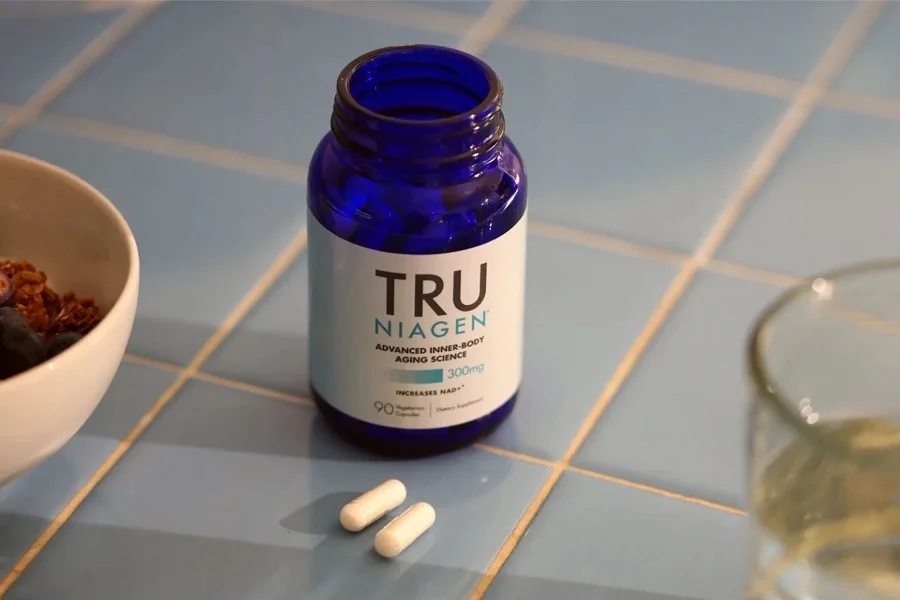 The dispute centers on whether clinical evidence showing increases in NAD+ levels can substantiate broader health benefit advertising claims (Image credit: Niagen Bioscience).
Moreover, the division said it did not find reasonably conveyed substantiated functional benefits in cardiovascular, cognitive, immune, metabolic, exercise, anti-aging, or cellular repair-related outcomes.
Agreeing with the division’s conclusion, the NARB urged Niagen Bioscience to discontinue clinically proven health-benefit claims related to healthy aging, remove consumer testimonials or lifestyle imagery implying immediate physical vitality, and modify messaging regarding heart, brain, muscle, and immune health where the context implies perceptible improvements.
Niagen Bioscience’s response
However, Lopez counters that the panel’s recommendation is inconsistent with dietary supplement law and scientific practice. He asserts that the panel “incorrectly recategorized qualified cellular and structure and function statements as broader implied claims” and evaluated studies individually rather than considering the totality of evidence.
“More than ten human clinical studies have consistently demonstrated Niagen’s ability to significantly increase NAD+ levels, and our products remain backed by one of the most extensive clinical research portfolios in the NAD+ category,” he says.
He highlights that Niagen is supported by more than 45 peer-reviewed human clinical studies, 500 published scientific studies, and 300 research collaborations.
Meanwhile, the NARB argues that evidence from this body of research does not support broader health benefit claims.
While structure/function claims are generally permitted under the US Dietary Supplement Health and Education Act of 1994, the NARB and National Advertising Division say that a product’s legal classification does not matter if the marketing still misleads consumers.
Ultimately, they say that advertisers cannot assume a cellular change, such as boosting NAD+, automatically results in real-world health benefits. The marketing can only reflect what the company’s clinical trials actually measured and proved.
Boundaries of commercial claims
Lopez underscores that the National Advertising Division considered evidence insufficient from 10 double-blind, placebo-controlled human trials showing that Niagen elevates NAD+ levels.
“The National Advertising Division and the NARB either misunderstood the science at issue in this case, or they inappropriately disregarded the science in order to use the case as a platform to make new policy about advertising dietary supplements that diverges from the actual law and the way regulators have historically applied the law,” he says.
Niagen says it supports clearer regulatory guidance to ensure “consistent and accurate messaging across the category.”
Lopez directly addresses the potential that consumers may interpret NAD+ claims as anti-aging promises. “We appreciate concerns about consumer interpretation of NAD+ claims. Our messaging is designed to be truthful and not to over-promise. We make clear that Tru Niagen supports healthy aging by increasing NAD+ levels, based on rigorous scientific research.”
He also warns the ruling could discourage companies from communicating scientific research and create greater regulatory uncertainty in the supplement industry.
“While we respectfully disagree with the recommendations, we will comply,” he adds. “We remain firmly committed to scientific rigor, regulatory compliance, transparency, and continued investment in clinical research supporting healthy aging and NAD+ science.”
Bridging the claims and outcomes gap
Lopez does not believe current US regulations clearly define the boundary between structure or function claims and perceived health outcomes.
He argues that Tru Niagen’s claims such as “supports cellular energy,” “supports heart health,” and “maintains efficient metabolism within cells” are permissible structure/function claims provided that they are substantiated by competent and reliable scientific evidence of NR’s role in the body.
“The regulatory framework has been clear for more than thirty years. It is the National Advertising Board’s inappropriate attempt to create extra-legal substantiation requirements that is the problem.”
.webp) The National Advertising Division considered evidence insufficient from 10 double-blind, placebo-controlled human trials showing that Niagen elevates NAD+ levels.He also criticizes the panel for concluding that mechanistic evidence alone cannot support claims implying measurable health improvements.
The National Advertising Division considered evidence insufficient from 10 double-blind, placebo-controlled human trials showing that Niagen elevates NAD+ levels.He also criticizes the panel for concluding that mechanistic evidence alone cannot support claims implying measurable health improvements.
“In 1994, Congress created the category of dietary supplements to allow consumers access to products that support the body’s healthy functioning and to allow companies to communicate truthful information about how their products do just that,” Lopez says.
Cautionary advice for marketers
Marcus at the National Advertising Division tells Nutrition Insight that the decision does not introduce a new standard but reinforces existing expectations around health claims.
“It is well settled both at the National Advertising Division and the Federal Trade Commission that health claims are important to consumers and generally must be supported by competent and reliable scientific evidence,” she says.
She adds that advertisers using terms such as “clinically proven” or “research shows” should expect close scrutiny of both study quality and advertising context.
The National Advertising Division concluded that when supplement advertising conveys real-world health benefits, marketers are expected to have competent and reliable scientific evidence — typically randomized controlled human clinical trials.
“We concluded that in many instances Niagen’s evidence did not constitute competent and reliable scientific evidence sufficient to support the health claims at issue,” Marcus says.