



Ultra-processed food marketing follows tobacco playbook, researchers argue

Key takeaways
- Recent US studies compare UPF marketing strategies to tobacco tactics, citing similarities driving consumption.
- Researchers argue that tobacco companies brought cigarette-style R&D, consumer testing, and profit-focused design strategies into the food industry.
- The authors argue that reversing UPF dominance would require systemic policy change and greater support for whole, fresh foods and small farms.

Two recent corresponding US studies have compared the marketing tactics and product design used for ultra-processed foods (UPFs) to those of tobacco, which the authors state show similarities in marketing distribution and product engineering strategies. For children, it targeted foods “to play with,” such as cartoon characters, and “king-sized” foods for adults, with the aim to “promote overconsumption and maximize profits.”
The authors say that tobacco companies “heavily invested” in food companies for two decades and used their “long-established business strategies directly to their food operations.”
Nutrition Insight sits down with the lead author of one of the recent studies, Tera Fazzino, Ph.D., an associate professor at the Department of Psychology at the University of Kansas, to discuss the similarities and how tobacco influenced the food industry as it is today.

“Major US tobacco companies bought into the US food industry in the 1980s and dominated US food sales from the late 1980s to mid-2000s. They owned leading US food companies and brands.”
She says research has revealed that during the time that US tobacco companies dominated the US food industry, they were significantly more likely to sell foods that were hyper-palatable and ultra-processed.
Tobacco strategies in food
The study, published in the American Journal of Public Health, reports that the tobacco companies used cigarette product design strategies and applied them directly to their food products and sold them globally.
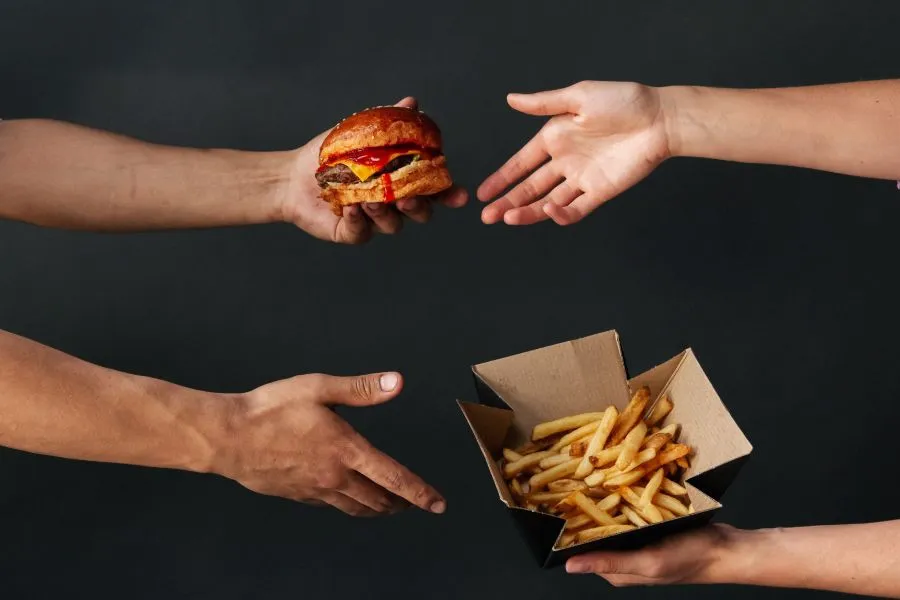 Schmidt echoes Fazzino and says that cigarette science was used to design UPFs.“For example, the tobacco companies adapted the concept of their ‘king size’ cigarettes, which were expressly designed to increase use occasions among their customers, and applied the strategy to develop and sell ‘king size’ versions of their popular food products, expressly to increase use occasions among their customers,” says Fazzino, who is also the associate director at the Cofrin Logan Center for Addiction Research and Treatment.
“Also, while they were selling ‘light’ and ‘low tar’ cigarettes, which they marketed to consumers as healthier, although they were not, they in parallel developed and sold ‘light’ and low- or reduced-fat products, for the stated goal of retaining customers who would otherwise stop using their products due to concerns about health effects.”
Nutrition Insight also speaks with Laura Schmidt, professor at the University of California, San Francisco School of Medicine’s Institute for Health Policy Studies and Department of Humanities and Social Sciences, who recently published a study in the same journal on the tobacco industry’s contribution to the development of UPFs.
Schmidt also serves as a paid expert witness for plaintiffs in necrotizing enterocolitis and infant-formula marketing litigation, often in an adversarial role against food-industry defendants. She echoes Fazzino and asserts that cigarette science was used to design UPFs.
“Science on how the brain processes flavors and what motivates consumers at the deepest levels. They used it to design UPFs. In fact, it’s the processing and flavor additives that distinguish UPFs from minimally processed foods. And that’s cigarette technology.”
Targeting specific consumer groups
The study led by Fazzino points to different marketing techniques to attract specific consumer groups, such as ready-made meals for children to play with, rather than focusing on the food itself being a nutritious choice.
“Marketing foods to children by incorporating elements that they can ‘play’ with and releasing kid-oriented advertisements, such as cartoon characters, were key marketing strategies developed by the US tobacco companies,” says Fazzino.
 Marketing foods to children include incorporating elements that they can play with, says Fazzino.Schmidt tells us: “The strategy used to design packaged foods for kids drove it to add artificial colors and flavorants, as well as extremely high levels of sugar, fat, and salt. Careful consumer testing on kids during the product design phase drove these product development decisions.”
Fazzino argues that the tobacco companies and their corresponding food companies at that time were focused on “expanding their businesses and increasing sales” with a lower priority for public health.
She states that the companies conducted extensive product testing and consumer testing to understand how to maximize food appeal and sales.
“Correspondingly, they were highly focused on production and overall business efficiencies. In order to prioritize such aspects of a business, they engaged in practices that were antithetical to nourishment and health.”
This includes the use of refined products that could be more cheaply and easily used in their food products; developing synthetic chemicals and additives instead of using whole ingredients or nutrients to flavor and color their products, she explains.
However, recent science on food additives, increased regulation, and growing consumer preference against them, are driving major reformulation strategies alongside alternative innovation.
Schmidt points out that the strategy for the food and tobacco industries was to optimize the “technical synergies.” She says: “This turned out to be a very profitable strategy for both companies, which were able to quickly develop and scale up new food product lines.”
“Promoting over-eating”
Fazzino claims that due to the focus on increasing consumer purchases and consumption of their products to maximize profits, the business model of these companies was set up to prompt overeating on a population level.
 Schmidt argues that hundreds of studies and clinical trials show that UPFs cause weight gain and a wide range of chronic diseases.“We know from extensive research that consumption of UPFs is linked to a myriad of negative health consequences. The early practices of the US tobacco-owned food companies in prompting overconsumption may be an early contributing factor in downstream obesity and negative health consequences.”
Schmidt adds: “Hundreds of observational studies and clinical trials now show that UPFs cause weight gain and a wide range of chronic diseases, including diabetes, heart disease, and some cancers.”
Fazzino says that evidence has revealed that many key practices in our food environment that promote overconsumption today originated from tobacco company practices selling cigarettes and were adapted to sell UPFs.
She argues that targeted, aggressive food advertising to children and other social groups was an original practice of US tobacco companies. “This approach was directly applied to selling their UPFs once they entered the food market.”
Earlier this year, researchers at the University of Sydney’s Faculty of Medicine and Health in Australia, called out health-harming corporate tactics as a contributor to chronic disease rising globally. However, Rocco Renaldi, secretary-general at the International Food and Beverage Alliance, told us that comparing UPFs with tobacco is “misleading and unhelpful,” as tobacco does not have a safe level of use and is created to intend harm, while some UPFs “play an important role in nutrition, safety, and affordability.”
There are currently ongoing debates about processed foods and UPFs and whether the harm is due to the ingredients or processing techniques used. Some experts have argued that UPFs have nutritional benefits.
Reverse the damage?
As to whether the impacts from the tobacco industry on the food environment could be reversed, Schmidt says it’s hard to know if and how today’s food industry could “put the genie back in the bottle” and move back to healthier alternatives.
“This would mean that they’d need to stop adding chemicals to food and stop using industrial processing practices, like extrusion, that increase the energy density of UPF. For years, some companies have been trying to substitute artificial fats and sweeteners for real fat and sugar, but populations are still becoming obese, and in clinical trials, subjects still overeat these reformulated UPF.”
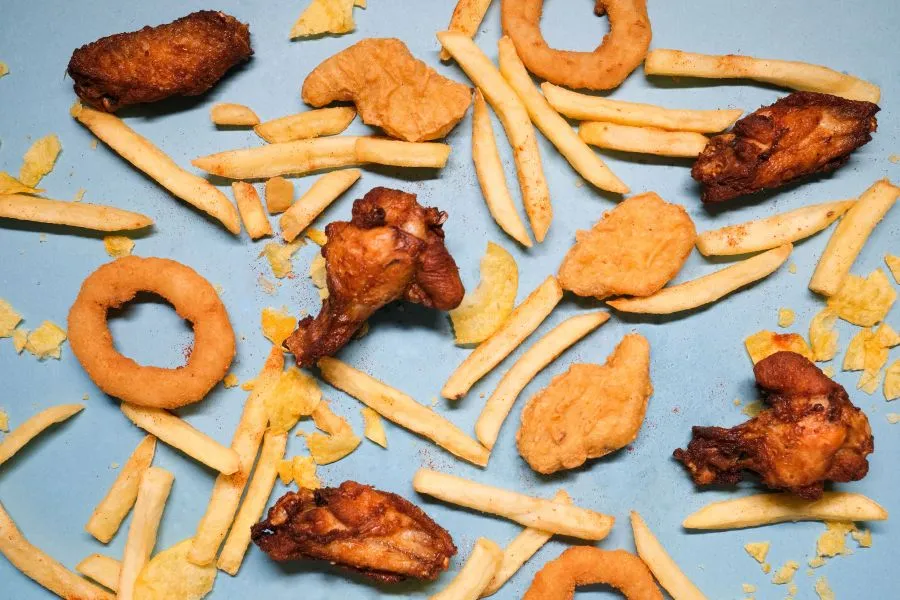 Fazzino speculates that the food industry would look different if the tobacco industry had not been involved.Fazzino speculates that the food industry would look different if the tobacco industry had not been involved.
“At this point, we are so far downstream with UPFs dominating many food environments, especially Western and higher-income, and with UPFs aggressively expanding in countries globally, we really need a paradigm shift.”
“We need a systemic shift to supporting small farms that feed our communities and to whole and fresh foods that nourish us. We need protections from UPFs at federal and policy levels to prioritize and protect public health and our environment over food company profits.”
She stresses that her publication details how tobacco companies used the ‘king size’ and ‘light’ product designs to sell UPFs, and these practices are now ubiquitous in the global food environment.
“We know that the tobacco companies sold off their food companies between 2001 and 2007, which means that their product lines, R&D, and company knowledge were then disseminated to other food companies globally.”
“Without these key aspects of the current food system that were introduced by US tobacco companies, which have now spread globally, my hypothesis is that our food environment would look quite different today.”