



Can creatine treat depression? Review reveals mixed findings


Key takeaways
- Two out of five trials found creatine beneficial for depression when combined with antidepressants or cognitive behavioral therapy, but three showed no significant effect.
- Researchers caution that the link between brain creatine and mood remains correlational, with no proven cause-and-effect established yet.
- The 238-participant review was too small and inconsistent to draw firm conclusions, with calls for larger, more balanced trials before creatine can be recommended clinically.

A scientific literature review has found mixed results in creatine monohydrate’s potential to treat major depressive disorder (MDD), suggesting it could serve as an adjunct treatment. However, the evidence is not settled.
The researchers from the University of Ottawa in Canada analyzed five randomized controlled trials conducted across Brazil, India, Israel, South Korea, and the US.
In total, the studies involved 238 participants, with 126 on creatine and 112 on placebo — their average age was 36 years old. Four of these trials studied people who had MDD, while one trial studied people who had bipolar disorder.
“At this point in time, there is no clear signal that creatine works better in women or men. However, of the trials in our review, the majority of participants were women,” corresponding author Dr. Nicholas Fabiano, M.D., a psychiatry resident at Ottawa’s Department of Psychiatry, tells Nutrition Insight.

Creatine combo with other therapies
The review in Brain Medicine finds that two trials showed benefits of creatine when combined with antidepressants, while the other three showed no significant effect.
The successful trials were from studies of women with MDD. In one trial, researchers administered 5 g of creatine daily, mixed with the participant’s antidepressant escitalopram. After eight weeks, the blend was noted to reduce symptoms more than in those taking medication with a placebo, with some participants reaching remission.
 The brain’s high energy demands make creatine’s role in rebuilding ATP a key focus for depression researchers.The other trial combined creatine with cognitive behavioral therapy, revealing a steeper drop in symptoms based on a questionnaire than therapy with a placebo.
“The current research base has looked at creatine as an adjunctive treatment either to antidepressants or therapy, not as a standalone treatment,” comments Fabiano.
“Based on the current evidence, there may be a signal for a faster and more robust response with adjunctive creatine. However, more research is needed.”
In one of the three trials, creatine doses at 5 g or 10 g had no effect among people who had already failed to respond to medicine, the review notes. A separate trial in adolescent girls tested several doses but found no difference from placebo.
The last study in bipolar participants in a depressive episode showed no treatment benefit. The review highlights that of these participants, two consuming creatine developed hypomania and mania, pointing to how the same compound can behave differently depending on the diagnosis.
Brain and mental health connection
The researchers point out that the human brain burns a lot of energy, and creatine has been found to help cells rebuild adenosine triphosphate, which is an energy-carrying molecule.
Previous studies on people with mood disorders have found changes in creatine metabolism, negatively impacting energy production, which has been proposed to be one cause of depression.
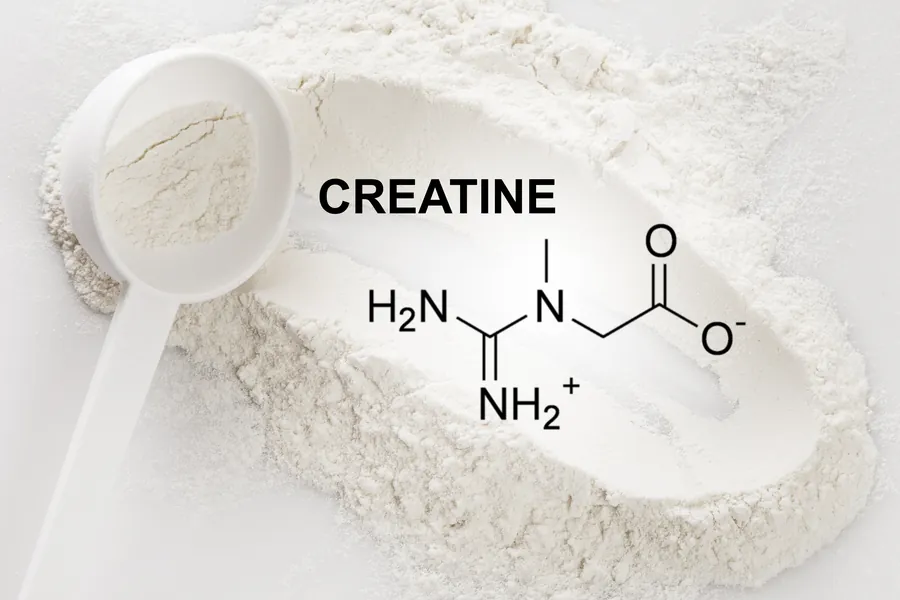 Two bipolar participants who took creatine in one trial developed hypomania or mania, highlighting how the compound can behave differently across diagnoses.The researchers also posit that creatine might influence neurotransmitter pathways, such as those controlling dopamine and serotonin, but there is insufficient evidence for changing clinical practice.
Fabiano’s previous research investigated whether the brain absorbs the creatine swallowed. He found that some studies suggest that higher doses are required to impact brain creatine levels, but it remains an emerging area of research.
Correlational relationship
While noting that the biology of depression is multifaceted, the researchers point out that the link between brain creatine and mood is correlational without proof of cause and effect.
“Creatine appears to be a safe intervention,” says Fabiano. “The adverse events we found were limited to mild gastrointestinal discomfort. We cannot yet reliably say that creatine helps with depressive symptoms or if the findings are generalizable to everyone.”
“MDD can be stratified into severity levels of mild, moderate, or severe based on the number of symptoms and impairment. Currently, there isn’t enough evidence to confidently state where creatine is most effective with regard to depression severity.”
On the question of whether creatine does something unique or fills a gap in people who are already deficient, he stresses that more research is required for a definitive answer. “The thought is that creatine may help restore brain bioenergetics in a metabolically demanding state such as depression.”
For more robust answers, the researchers urge larger and longer trials because those that they analyzed involved small-scale cohorts. They also call for more balanced studies than the previous ones, noting that two of them only enrolled women and expressed bias concerns for some trials, making results ungeneralizable.
For now, the study authors conclude that creatine is a promising lead, but not yet a proven remedy for improving mental health.
In other potential nutrition interventions against depression, a recent pilot clinical trial found that administering probiotics to older adults with moderate depression, receiving standard care, had modest yet meaningful reductions in symptoms compared to a placebo.