




British Nutrition Foundation offers food industry guidance to close the UK fiber gap


Key takeaways
- Only 4% of UK adults meet the recommended daily intake of 30 g of dietary fiber, making the general population largely fiber-deficient, according to the BNF.
- The BNF’s new report recommends a “health by stealth” approach to reformulate staple foods and increase fiber content gradually without impacting taste or texture.
- Emerging research indicates that higher fiber intake reduces the risk of serious diseases and can provide distinct cognitive, mental health, and immune system benefits.
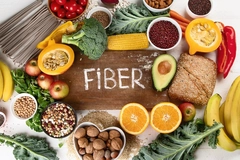
Low dietary fiber intake in the UK poses a persistent public health threat, cautions the British Nutrition Foundation (BNF). Its latest report on the fiber gap gathers the latest findings about intake levels, consumer insights, product innovation, and advice for food system upgrades to guide strategies around reformulation and brand communications.
The overview, “Dietary Fiber in 2026: An Update on Barriers and Opportunities to Fill the UK Fiber Gap,” summarizes the most significant factors that lead to low fiber intake among UK consumers, while offering practical recommendations to make changes in the food environment.
“Analysis of UK dietary data indicates that foods contributing most to fiber intake are not necessarily those highest in fiber, but are often lower fiber staple foods that are consumed in large quantities, e.g., bread and cereal products,” states the organization.
“This has important implications for interventions to increase fiber intakes, suggesting that modest improvements to the fiber content of commonly consumed foods may have a measurable impact at the population level.”
However, the BNF says this should be alongside efforts to increase intakes of foods that are naturally high in fiber, such as whole grains, beans, vegetables, fruit, nuts, and seeds.
Largely fiber-deficient population
Current UK dietary recommendations advise a fiber consumption of 30 g per day for adults, however the BNF flags that the general population intake remains substantially below this level. It highlights that around 4% of adults meet the recommendation, while intake levels are similarly low among children and adolescents.
The report’s analysis of foods and drinks available from the out-of-home sector reveals that the majority of menu items cataloged are considered low in fiber. Moreover, it states that relatively few qualify as high in fiber. The BNF urges that the out-of-home-sector could play a key role in making higher-fiber options more accessible.

Specific to the UK population, the report advises that bakery products, particularly bread, could be used to increase fiber intake because of their high consumption frequency among the population.
On the formulation front, the report highlights various factors that contribute to low fiber intake, including the sensory characteristics of food, limited consumer understanding of fiber recommendations, and practical constraints like cost, convenience, and preparation skills. Concerns related to the gastrointestinal tolerance of a high-fiber diet present another barrier.Pointing to fortification as one pathway to elevating food quality, the BNF suggests adding fiber to foods like pasta using sources such as spent grain, pectin, cellulose, oat bran, whole barley flour, and resistant starch.
In particular, it ranks pectin, beta-glucan, acacia fiber, and resistant starch as having considerable minimal sensory impacts in certain product formats. However, it cautions that it is not fully established to which extent added or isolated fibers deliver the same health effects as fibers naturally present within whole foods.
Approaching the issue from the root of the food chain, the BNF spotlights biofortification as an emerging strategy that increases endogenous fiber within crops through selection and breeding as a longer-term approach alongside reformulation.
Priorities for action
The report pinpoints several priority areas for industry, including reformulating staple foods, such as gradual “health by stealth” increases in fiber content, which should raise levels in food without sacrificing taste or texture.
It encourages product development and innovation, incorporating whole grains, pulses, and functional fibers. Additionally, it calls for clearer brand communication strategies, supported by consistent labeling and messaging.
Specific to the UK population, the report advises that bakery products, particularly bread, could be used to increase fiber intake because of their high consumption frequency among the population.
“National Diet and Nutrition Survey data report that white bread contributes around 5–6% of daily fiber intake across age groups,” underscores the BNF. “A UK modeling study estimated that increasing the fiber content of white flour by 50% and whole grain by 20% could increase total fiber intake by 1–1.4g per day in adults.”
“Partial replacement of wheat flour with pulse flour or insoluble fibers may increase fiber content with minimal impact on product and sensory profiles.”
Another key priority the report identifies is modifying food environments, which may include improvements to high-fiber food and beverage availability, placement, and default options. This could be facilitated through cross-sector collaborations spanning agriculture, manufacturing, retail, and foodservice.
“These approaches recognize that behavior change is unlikely to be achieved through information provision alone and instead requires coordinated changes across the food system,” states the BNF.
“Addressing this will require integrated action to improve both the supply of and demand for higher-fiber foods.”
Broad health impact
The BNF cites evidence indicating that higher-fiber diets are associated with reduced risk of cardiometabolic disease and colorectal cancer. Although deficiencies remain prevalent, social media has been gradually bringing the “fibermaxxing” gut health trend to the forefront among younger consumers.
Consumers are increasingly aware that fiber’s benefits extend beyond the gut. One recent 14-day pilot study revealed that the oat fiber developed by start-up One.bio may offer metabolic and mental health benefits. A separate paper highlighted that daily soluble corn fiber intake significantly improved cognition and focus in healthy middle-aged and older adults by boosting gut bacteria that may support brain function.
Another study highlighted how fiber-derived butyrate — a short-chain fatty acid — may shape immune cell development in mice.
In new product launches this year, brands have been experimenting with blending multiple types of fiber in single products for more varied benefits. For instance, Momentous launched Fiber+, a triple-action fiber supplement for gut health, metabolic balance, and whole-body recovery made from psyllium husk, rice bran, potato starch, and cinnamon bark.
Last month, Mía launched its Fiber-First Shake, a high-fiber protein shake formulated with adaptogens and digestive enzymes to synergize broad health benefits.