



Researchers call for recognizing nutrition’s existing role in One Health


Key takeaways
- Researchers argue dietitians already practice One Health principles by linking dietary advice to human, environmental, and food system health — they just don’t frame it that way.
- The proposed solution isn’t expanding dietitians’ roles but reframing existing work, like advocating sustainable diets and addressing food insecurity as explicit One Health contributions.
- The paper calls for embedding One Health into nutrition education and developing evaluation frameworks that capture environmental and social outcomes, not just clinical ones.
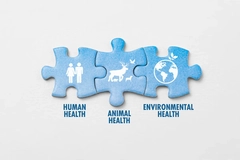
An upcoming paper remarks that nutrition is a missing link to One Health — a paradigm underscoring that human, non-human, and ecosystem health needs to be integrated to address contemporary health challenges. The publication will reveal how dietitians inherently practice this approach without realizing it through their work on sustainable diets and food insecurity.
Dr. Diogo Sousa-Catita, a researcher at the Egas Moniz Center for Interdisciplinary Research in Almada, Portugal, tells Nutrition Insight about his team’s perspective article, detailing the importance of nutritionists’ role in bringing the concept of One Health into “strategic action.”
“Dietitians routinely work across the interface between food systems, human health, and environmental sustainability, advising on dietary patterns that reduce chronic disease risk, advocating for sustainable food choices, and addressing upstream determinants of health,” he explains.
“These are precisely the objectives of One Health. However, few dietitians explicitly frame this work within the One Health paradigm. Just as nursing and medicine have been shown to harbor One Health principles long before the concept was formally defined, nutrition practice appears to embody it without naming it.”
Sousa-Catita clarifies: “The gap is not in what dietitians do. The gap is in recognizing that much of what they already do is One Health in practice.” By bridging this, dieticians can articulate their contribution and boost interdisciplinary collaboration while increasing nutrition’s visibility in the broader One Health agenda, he adds.
Making nutrition’s contributions visible
The soon-to-be-published article in Frontiers in Nutrition points out strategies to make nutrition’s contribution to One Health more visible through education, interprofessional collaboration, research, and evaluation frameworks.
“Nutrition’s contribution to One Health is particularly integrative because food connects human health, animal systems, and environmental sustainability in a single domain,” notes Sousa-Catita.
“Dietitians work across multiple levels, from supporting individuals in clinical settings to developing community programs and contributing to public health and food policy, which means their practice naturally spans the levels where One Health objectives need to be addressed simultaneously.”
Working across different fields enables dietitians not just to change health outcomes but also to have broader influences on health, he adds. Dietary choices impact population health and the sustainability of food systems, meaning that nutrition is a unique discipline that is capable of generating co-benefits across several One Health domains simultaneously.
 One Health depends on combining expertise across nutrition, medicine, nursing, veterinary medicine, and environmental science.“At the same time, One Health depends on the complementary expertise of many professions. Nutrition is not more important than medicine, nursing, veterinary medicine, or environmental sciences; it offers a distinct perspective essential to understanding how food links human, animal, and ecosystem health,” states Sousa-Catita.
Making One Health explicit in nutrition
One Health should be made explicit in everyday nutrition practice, education, and training, urges Sousa-Catita. This can enable the paradigm’s translation into sustainable action and addressing interconnected challenges, such as environmental degradation, health inequities, and long-term population well-being.
“Making One Health more visible in nutrition requires helping dietitians recognize that many aspects of their existing practice already contribute to One Health objectives. This starts with education, where One Health should be embedded throughout undergraduate and postgraduate training as a way of thinking about nutrition rather than as a standalone topic.”
“It also requires creating more opportunities for dietitians to participate in interprofessional teams and policy discussions, where their expertise on food systems and health can inform broader decisions.”
Lastly, Sousa-Catita points to a need to re-evaluate nutrition interventions, as by measuring only short-term clinical outcomes, there is a risk of overlooking environmental and social benefits that nutrition can deliver.
“Making these wider impacts visible will strengthen both the profession and the implementation of One Health. Developing evaluation frameworks that incorporate health, environmental, and social indicators would also help demonstrate the full value of nutrition interventions within One Health,” he suggests.
What is needed from nutritionists
Sousa-Catita clarifies that making One Health more explicit in nutrition does not mean dieticians need to go beyond their role — “they need to recognize how far their role already reaches.”
 Sousa-Catita calls for re-evaluating short-term nutrition interventions, as there is a risk of overlooking environmental and social benefits that nutrition can deliver.“Advocating for diets based on minimally processed foods and recommending sustainable dietary patterns directly reduces the environmental footprint of food systems,” he says. “Working in communities facing food insecurity, supporting food policy, and addressing nutritional inequities linked to social and environmental determinants are all within dietitians’ scope of practice.”
“What the article proposes is not scope expansion but intentional reframing: recognizing these everyday actions as contributions to human, animal, and ecosystem health and to health equity, not just to individual nutrition.”
The perspective article backs approaching global challenges naturally from evidence-based nutrition practice without changing the profession’s core responsibilities.
“The success of One Health will depend on how well we connect the knowledge and expertise of different professions. Making nutrition’s contribution more visible is not about elevating one profession above others; it is about ensuring that an important piece of the One Health puzzle is no longer overlooked,” Sousa-Catita concludes.
Nutrition and beyond
Nutrition is increasingly being recognized as a major influencer of sustainable food systems.
Recently, the Sustainable Foods Summit Europe in the Netherlands highlighted that many consumers globally want to eat healthier and more sustainably, yet less than 1% are following the Planetary Health Diet. Experts revealed the hurdles that consumers and companies face and what innovations and business practices could improve human and planetary health.
Previous research taking a One Health approach to nutrition science advocated using organ-on-chip models to overcome the animal testing hurdle, which has a limited capacity to capture the complex interactions among diet, gut microbiota, and human organs.