



Radicle Science CEO unpacks 20-arm Holobiome prebiotic trial for mental wellness

Key takeaways
- Radicle Science and Holobiome will test 19 prebiotic formulations against a placebo in more than 6,000 Americans to identify food-based solutions for mental wellness.
- The decentralized trial will combine microbiome sequencing, blood analysis, wearables, AI facial scanners, photo-based food diaries, and questionnaires.
- Researchers aim to identify precision prebiotic solutions and a new gut microbiome model, with initial results expected in the second half of 2027.
Radicle Science and Holobiome have opened enrollment for a two-year research initiative, Gut-Feelings, to identify prebiotics for mental wellness and build a new model of the gut microbiome.
In a randomized, decentralized trial, more than 6,000 people will test 19 prebiotic interventions against a placebo simultaneously to determine which ones can improve feelings of anxiety and in which populations. Initial results are expected in the second half of 2027.
Nutrition Insight meets with Jeff Chen, MD, MBA, co-founder and CEO of Radicle Science, to discuss the upcoming trial’s goals and setup.
In the first installment of a two-part series, he says the trial aims to identify food-based mental wellness solutions that can be ready for the market quickly, while also creating a next-generation map of the human gut microbiome.

“We have a crisis right now in people’s mental health,” he underscores. “We wanted to do a mental wellness trial on an intervention that could be readily deployed without having to wait years for US FDA drug approval, doctors’ prescriptions, and insurance reimbursement.”
“We wanted something rapidly deployable, affordable, and accessible, and we realized that food was the most efficient way to achieve that.”
Mental wellness and gut model
Chen says the gut-brain axis is a key way to use food to modulate mental health and wellness. However, he stresses that there is a knowledge gap on which foods feed which microbes, what microbial activities and metabolites these foods induce, and how those impact the human body and brain.
 The 16-week study will randomize participants to receive one of 19 proprietary food-derived prebiotic formulas from Holobiome or placebo.Instead of choosing one ingredient or food to test, the trial will include 19 formulas. Chen says the team is not aiming to identify a silver bullet out of these, suggesting that all of them may have beneficial effects for different types of people with different microbes.
“This notion of precision food for precision mental wellness is achievable when you can do 19 trials’ worth of data collection and interventions in one, with gold standard randomization, blinding, control, multiplicity corrections, validated outcomes,” he underscores.
“The other thing that we’re doing at the exact same time is creating a next-gen mapping of the human gut microbiome and how it impacts downstream both physical health and brain health,” Chen adds.
“That’s through the deep multi-omics data collection that we’re doing: ultra-deep stool sequencing, blood proteomics, as well as digital omics collection on these participants.”
He says this data collection will create a foundational new model, Mercator, that could be used to inform additional interventions and therapies, for example, in food with prebiotics or probiotics, and potentially even drugs.
Trial setup
Enrollment for the trial launched early October 2026 and will include 6,000 diverse Americans across two waves. The trial is backed by an award from the Advanced Research Projects Agency for Health, an agency within the US Department of Health and Human Services.
“We’re well on track to have American history’s largest mental wellness trial,” says Chen. “We’re on track to have the trial completed and initial results ready by end of next year.”
The 16-week study will randomize participants experiencing feelings of anxiety to receive one of 19 readily deployable proprietary food-derived prebiotic formulas or placebo, notes Radicle Science. The formulations are all developed and owned by Holobiome.
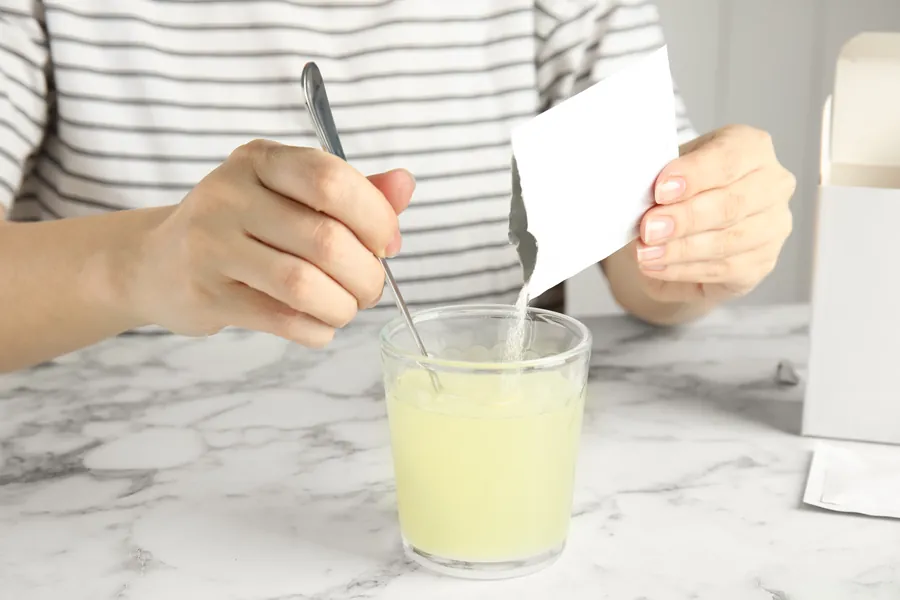
 The study will also create a new model, which will be used to understand how the gut microbiome interfaces with biology relevant for mental wellness and beyond.All interventions are blinded sachet powders. Chen says that participants are instructed consistently on how they should incorporate them into their diet, for example, mixing it into yogurt.
He explains that the trial will use a ballooned placebo control group. “The active arms will have X number of participants. The placebo control group will have a much higher number of participants because it’s a shared, extra-sized placebo group. We’re doing all the comparisons against the blinded active arm.”
The trial will have a decentralized design, where participants will take biological samples at home, which will be analyzed by Holobiome. The partners expect to collect and analyze more than 24,000 fecal samples and 12,000 blood samples.
Researchers will also collect data from participants’ wearables, validated questionnaires, and AI agents deployed in the study.
Radicle Science notes it will use its patented Reflexive Trials platform in the study, which orchestrates and automates complex, multi-arm, multi-omics trials at national scale and feeds resulting human evidence directly back into R&D, formulation, regulatory, and marketing efforts.
Holobiome partnership
Radicle Science is partnering with Holobiome on the trial. Chen says Holobiome’s teams focus on ultra-deep stool sequencing and microbiome sequencing of large numbers of diverse humans to start to understand associated health states with microbiomes.
Holobiome’s microbiome discovery platform is built around its Microbiome Vault, which Radicle Science calls the “most diverse collection of human gut bacteria,” a high-throughput human-gut simulator, and a proprietary database mapping more than 120,000 human metagenomes to specific health states.
Chen says that with these data, Holobiome can start to model the effects of someone’s microbiome as well as the impact of different foods and prebiotics, looking at metabolite production and the development of different species in the microbiome.
“Their real-world human data gives them hypotheses,” he adds. “They can then test it in preclinical but highly accurate gut simulator models, and then they can take really good predictions into trials.”
 Chen says that prebiotics may help achieve the goals of probiotics and postbiotics but in a more scalable, durable, and personalized way.He explains that the Holobiome team provided predictions on which prebiotics may be valuable for certain types of bacteria to flourish so they produce metabolites that travel to the brain and could, potentially, lower inflammation or modulate mood.
Along with its patented Reflexive Trials platform, Radicle Science brings its vertically integrated research operations and a proprietary clinical dataset from earlier trials on almost 100,000 Americans.
“We can do scaled research to maintain rigor but dramatically lower the cost, improve the speed and have real-world participants that are incredibly diverse using the products in real-world settings,” says Chen.
Prebiotics over probiotics
Rather than probiotics or postbiotics, Radicle Science and Holobiome will test prebiotics. Chen says that prebiotics allow the researchers to help microbes participants already have in their gut to flourish.
“Whereas with a probiotic, you have to hope that the probiotic can seed, that it can flourish. And in some cases, when you’re introducing exogenous probiotics, the ability for it to have a meaningful long-term, enduring effect is still a little nebulous.”
“With prebiotics we can achieve potentially the goals of probiotic supplementation as well as postbiotic supplementation, but potentially in a more scalable, durable, and personalized kind of fashion,” he notes.
Furthermore, Chen notes that it can be challenging to produce stable probiotics. He underscores that out of all the microbes that exist in the human gut, only a few dozen are commercially available.
“Because you have to isolate them and a lot of them grow in anaerobic environments. You have to figure out a culture, produce them at scale, and keep them stable in a capsule. So, what are the odds that the 30 that are commercially available are the ones that we really need for health, out of the 10,000 pool of candidates?”
Moreover, he notes that prebiotics may be added to food products more easily than probiotics. He suggests that if the trial identifies prebiotic formulations that can meaningfully improve people’s health, these could potentially be used to enrich foods, similar to vitamins and minerals.
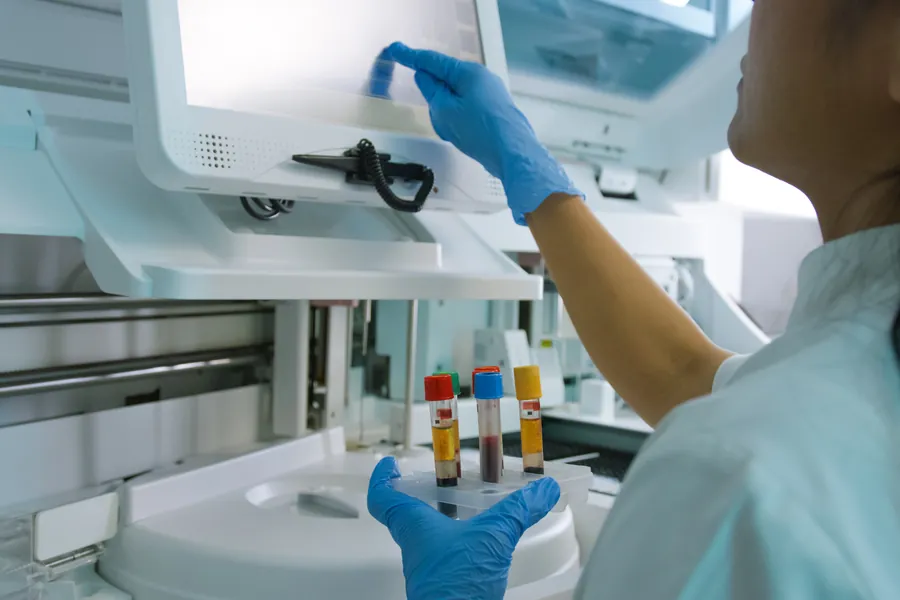 The partners expect to collect and analyze more than 24,000 fecal samples and 12,000 blood samples.At the same time, he cautions that such finished products might need additional research if they are substantially different from the prebiotic powders the trial studied.
Multi-domain data collection
The research teams will use validated surveys to measure feelings of anxiety alongside stress, mood, sleep, quality of life, flourishing, weight and waist measurements, and diet quality. Chen says that these surveys are considered the gold standard for testing these mood states.
He adds that the researchers will also collect blood and stool-based multi-omics data, which the team will pair with the participant-reported and digital data.
Chen notes that the researchers will also collect wearable data. “Participants are going to naturally have a variety of different wearables. We’re agnostic because we can integrate with all of them.”
“We’re pulling data from all of these different wearables. They’re tracking activity, sleep, and heart rate variability, etc. For those who don’t have wearables, we’re integrated with their Apple Health, so we have some basic information on pedometer steps and GPS location.”
Another aspect the researchers want to understand is whether a change in participants’ mental wellness may affect how they socialize or leave the home, he adds, as a “real-world functional measure of how someone might be thriving.”
The researchers will also employ AI-based facial scanning from IntelliProve. Chen says these scans provide vital signs, such as blood pressure, respiratory rate, heart rate, and heart rate variability proxies for those who may not have a wearable to measure heart rate variability.
“That’s a proxy for a lot of things: recovery, stress, and sympathetic autonomic nervous system activity,” he adds.
Moreover, the trial will use photo-based food diaries, using machine vision to quantify products, says Chen.
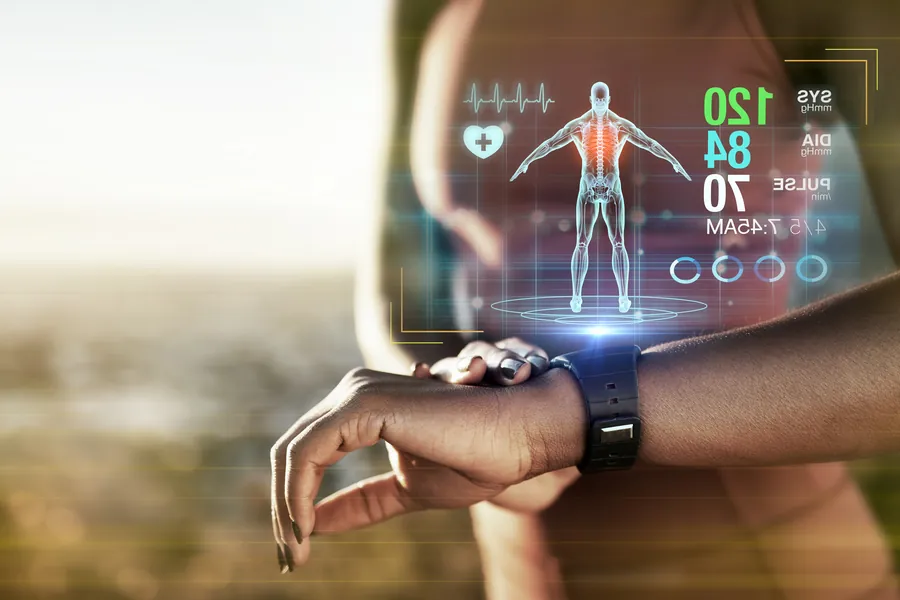 The trial will also collect data from the different wearables participants use, such as information on activity, sleep, and heart rate variability.“We are also looking at participants’ general sensory impressions, because we realize even the best medicine in the world, if it is not palatable, is going to struggle with adoption.” At the end of the study, the team will collect sensory information, for example, on willingness to purchase, taste, and smell.
Incentivizing participants
One of the ways the trial incentivizes participants is by including people who already have a certain level of feelings of anxiety, notes Chen.
“They’re interested in something that might support them,” he adds. “They like the idea that it’s a natural product, that it’s food-based, that it’s a prebiotic.”
Although participants will be informed about all the prebiotics included in the study, they won’t know what formulation they are using in the trial, notes Chen.
“At the end of the study, though, we unblind them and we give their data back in health reports. That’s how they’re incentivized to not just log data, but to log accurate data. It’s good for the scientists and it’s good for their health reports at the end.”
He also notes that many participants in Radicle Science’s trials like the idea that they’re supporting large-scale, non-pharmaceutical trials, which could have meaningful impacts for them as individuals, but also for their community and society.
“And it directly benefits them: products at no cost, free tools to track their health, and tons of free measurements that are returned to them in health reports,” says Chen.