


21st.Bio files EU Novel Food application for precision-fermented beta-lactoglobulin

Key takeaways
- 21st.Bio has filed an EU Novel Food application for BLG Essential+, a precision-fermented bovine milk protein, which received a US FDA “no questions” GRAS letter in October 2025.
- The company says the ingredient offers a scalable, resource-efficient whey alternative tailored for clinical nutrition, people on weight-loss medication, and compact food formats.
- 21st.Bio is urging European regulators to create a faster, more predictable approval pathway for nature-identical proteins to retain biotech manufacturing and investment.
 (All image credits: 21st.Bio).
21st.Bio has filed an EU Novel Food application for BLG Essential+, its bovine milk protein beta-lactoglobulin (BLG) derived from precision fermentation. According to the Danish biotech company, the product is less resource intensive than traditional dairy, which could help address supply constraints in the European whey protein market.
The application, submitted to the European Commission for safety assessment by the European Food Safety Authority, follows the US FDA’s “no questions” response to the company’s generally recognized as safe (GRAS) notice in October 2025. 21st.Bio had self-affirmed the ingredient’s GRAS status in September 2024.
“Europe has the science, the companies, and the industrial heritage in precision fermentation to lead the wave of healthy and nutritious food production,” says Thomas Schmidt, co-founder and CEO of 21st.Bio.

“What Europe still needs is a home market that allows industrially proven technology to move from laboratories into fermentation factories built in Europe. A predictable, science-based route to market can strengthen food resilience, attract industrial investment, and ensure that European innovation is commercialized in Europe.”
Applications for precision-fermented protein
21st.Bio says that demand for high-quality protein is soaring, and BLG is well-positioned to meet elderly and sick people’s needs in muscle maintenance, building, and recovery. It also caters to people on weight-loss medications seeking to maintain and build muscle while losing fat, the company adds.
It says that its product is also suited for compact nutrition formats, which can serve people on the go, in conflict zones, and potentially those traveling to Mars.
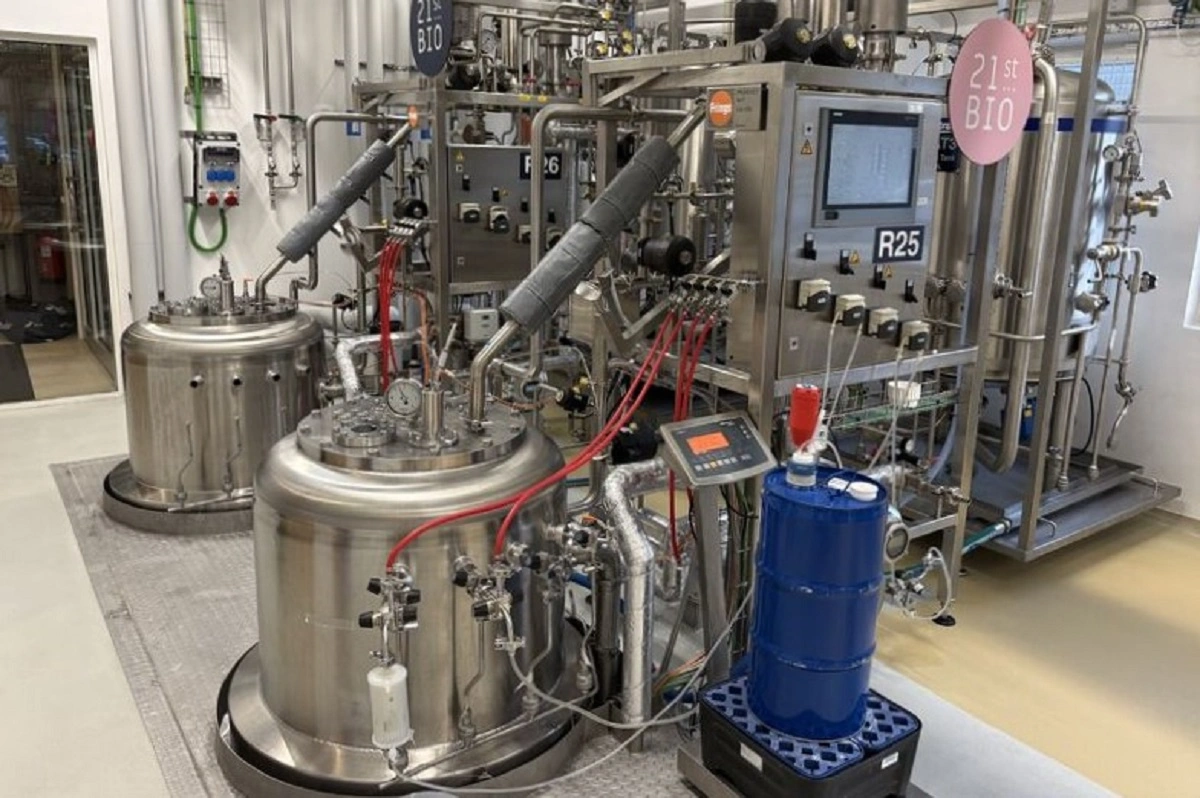 According to 21st.Bio, precision fermented BLG is less resource intensive than that sourced from traditional dairy, addressing supply constraints in the European whey market.BLG is the predominant protein in whey from milk, valued for its high-quality amino-acid profile and versatile functionality, explains the company. 21st.Bio describes its BLG as “essentially a copy of the best protein in milk produced through precision fermentation.”
“21st.Bio’s fermentation technology enables consistent cost offering and scalable protein production that can complement conventional dairy supply and strengthen regional protein supply wherever it is approved for production and sale,” the company states.
It adds that preparing a full EU dossier has required years of scientific and procedural work and significant investment from 21st.Bio, while the subsequent approval process and timeline make it tough for innovators and manufacturers to plan investments, facilities, and product launches in Europe.
European industrial biotechnology
21st.Bio produces BLG Essential+ using Aspergillus oryzae, a microorganism used for centuries in Japanese food fermentation, including soy sauce and miso. Novonesis developed and refined the production platform over decades, which 21st.Bio scaled for safe, efficient food protein production.
The company cites a 2025 peer-reviewed study in Applied Microbiology and Biotechnology, which describes the strain lineage as the first mycotoxin-free A. oryzae lineage for industrial production of alternative and novel proteins.
The paper documented the absence of known mycotoxin biosynthesis pathways in A. oryzae, while noting the fungus’ role in inactivating the penicillin G gene cluster. This is the specific set of genes responsible for producing penicillin G. This means the fungus cannot synthesize the antibiotic, which reduces the risk of antibiotic residues.
“This is a well-characterized production platform with consumer safety designed into the strain,” says study co-author José Arnau, chief of strain engineering and regulatory affairs at 21st.Bio.
“Advanced genome analyses allow regulators to assess safety at strain level with far greater precision, and for proven platforms producing proteins that match those found in nature, the regulatory requirements should be lower and the safety evaluation more straightforward and faster.”
EU future food
Precision fermentation is a technology for producing compounds that have historically been difficult to source in nature through microorganism. For instance, the UK-based company Better Dairy has developed precision-fermented lactopontin, which is typically found in dairy in small amounts and has been difficult to use as a functional ingredient.
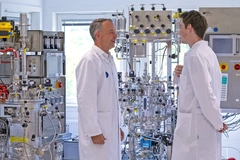
 21st.Bio co-founders Per Falholt (CSO, left) and Thomas Schmidt (CEO, right).Among other advances, Mara Renewables produces precision-fermented docosahexaenoic acid (DHA) that was found to boost breast milk levels by 26% in a trial, while Checkerspot offers microbial-sourced algal oil as a sustainable alternative to palm-derived nutritional oils.
Europe is a hub for precision fermentation, with innovation and industrial capabilities built over decades by several key players, highlights 21st.Bio.
The company says that the approval of this technology can unlock significant investment and enable the establishment of industrial production facilities across Europe, creating jobs for scientists, operators, technicians, and skilled workers, while strengthening European equipment manufacturers, process-design companies, and scientific leadership.
21st.Bio is calling for a fast-track pathway for “well-characterized, nature-identical food proteins produced using host strains and technologies with a demonstrated record of safe use.” It believes that such a pathway should preserve Europe’s high safety standards, while providing applicants and market developers with a clearer timetable.
“This is not a choice between safety and speed,” Schmidt adds. “It is an opportunity to apply the best science to achieve both. Europe can protect consumers, offer healthy and nutritious food options to Europeans, and offer nutritional self-sufficiency, industrial production, skilled jobs, and sustained technology leadership.”