



Ingredion and Holobiome map gut microbiome to unlock targeted health benefits


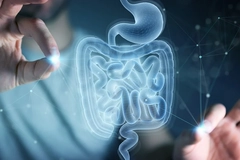
Ingredion has partnered with Holobiome to use AI and its database of two million bacterial genomes to predict how specific ingredients will interact with human health before clinical trials.
The research expands beyond digestion to explore how sweeteners, plant proteins, and texture solutions influence the gut-brain axis, including sleep and mental health.
These data-driven insights allow for “made-for-me” nutrition, accelerating the discovery of sustainable, health-forward ingredients tailored to specific consumer goals.
Ingredients supplier Ingredion has entered a partnership with biotech company Holobiome to delve into how diverse food ingredients can impact the human gut microbiome and the body’s broader health functions beyond digestive health. The collaborators aim to help R&D departments better prioritize ingredients and food matrices that are worth advancing to human testing based on their gut interactions.

The partnership leverages Holobiome’s proprietary resources, including its large-scale human cohorts, microbiome health models, bacterial strain bank, and human gut simulator.
The companies say their ongoing research into how texture solutions, sweeteners, and plant-based proteins impact the gut microbiome holds “massive potential” to accelerate preclinical trials for individual ingredients.
Nutrition Insight speaks with Eric Weisser, head of Ventures, Open Innovation, and Customer Innovation at Ingredion, alongside Dr. Philip Strandwitz, founder and CEO of Holobiome.
By studying how ingredients react in the gut microbiome, Weisser says these new insights can help researchers apply a “critical lens” to ingredient discovery research for new functional products.
“Backed by Holobiome’s microbiome profiles, researchers get a better preclinical understanding of how ingredients behave from a systems biology perspective — not just functionally,” he notes.
Mapping bacteria of 90,000 people
With a database of more than two million human gut bacterial genomes and its human gut simulator, Holobiome has mapped out how bacteria and their functions are associated with health and disease, trained on data from over 90,000 people.
“Think of this like knowing potential targets of interest within the microbiome — which we continue to improve with more data,” explains Strandwitz.
“By combining this ‘map’ with microbiome data we generate from screening ingredients in our human gut simulator model, we can inform hypotheses that will advance into human testing for validation.”
He notes that gut-health studies often rely on in vitro or in vivo screens, “if they have access to these at all.” Research methods have exponentially evolved in recent years, as supercomputing is increasingly leveraged to create individual gut microbiome maps for more focused nutrition guidance.
“Advancements in large-scale data generation will significantly unlock healthier food options. I am most excited about very large-scale, multi-omic trials,” says Strandwitz.
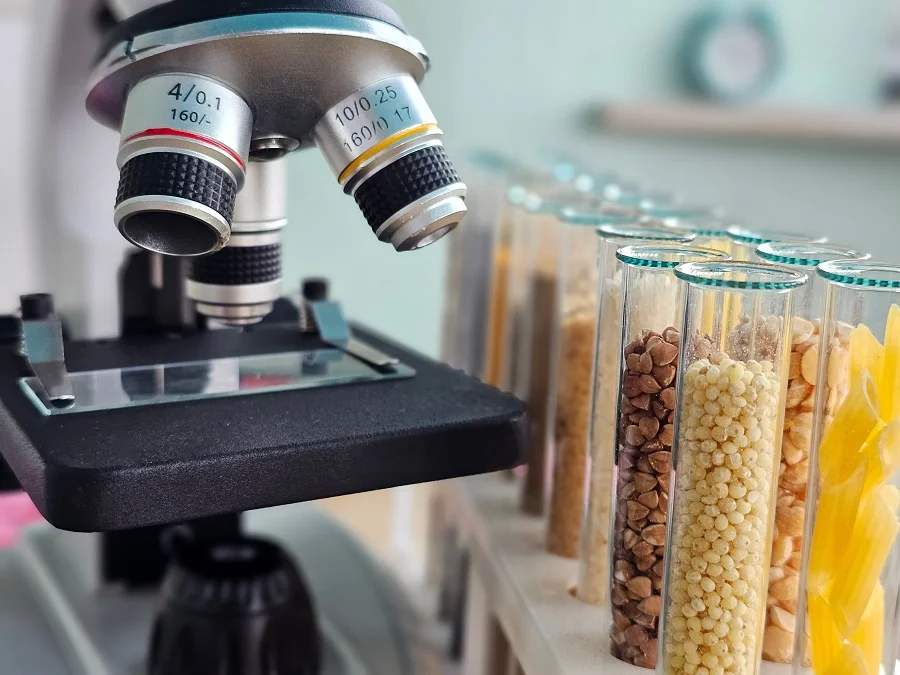 Ingredion is actively fostering food innovation partnerships to develop multifunctional ingredients, from bio-fermentation to postbiotics and fibers.Ingredion and Holobiome have explored specific microbial pathways or metabolites when linking ingredients to health outcomes, he highlights. “We have some of the common ones, like short-chain fatty acids, but many of the signatures we see are novel and informed by our large-scale human cohorts.”
“This resolution is further powered by our microbial genome database, which sits at over 2,000,000 genomes today.”
Moreover, certain ingredient categories interact particularly strongly with the microbiome. Strandwitz highlights: “We definitely see fiber having an effect, but what’s more exciting to me is that we broadly see other ingredients and ingredient categories showing strong effects — and in ways not captured by fiber alone.”
“This unlocks significant creativity for formulations, including combinations and things, which are closer to the final form of the product.”
AI for discovering functional proteins
This month, Ingredion announced a similar strategic R&D partnership to accelerate the discovery and development of AI-powered, sustainable functional proteins with Shiru. Shiru’s own proprietary AI discovery platform is touted as the industry’s broadest searchable database of functional protein ingredients, with more than 77 million natural protein sequences catalogued and analyzed.
We ask Weisser how parallel developments in microbiome science complement that approach.
“We see Shiru and Holobiome as partners in helping us solve two different parts of the same challenge,” he highlights. “Shiru’s AI discovery capabilities and Holobiome’s microbiome expertise are highly complementary in how they reshape our approach.”
“Shiru helps us explore what’s possible, using AI to identify protein-derived ingredients already existing in nature with functional potential. Holobiome adds another layer to help us understand how those ingredients interact with human health and performance.”
Weisser says that the partnerships help Ingredion connect the dots. “From identifying promising ingredients to helping us better understand how they might perform, we’re building a smarter, end-to-end ingredient discovery and functional validation process.”
Shiru recently launched uPro, a functional protein from potatoes, and OleoPro, an alternative fat that mimics animal fat. These AI-discovered natural ingredients are on the market for use in food and personal care.
Personalization potential
Microbiome-informed ingredient discovery is an important step toward more intentional and targeted nutrition. However, Strandwitz tells us this doesn’t necessarily mean Holobiome will offer personalized solutions just yet.
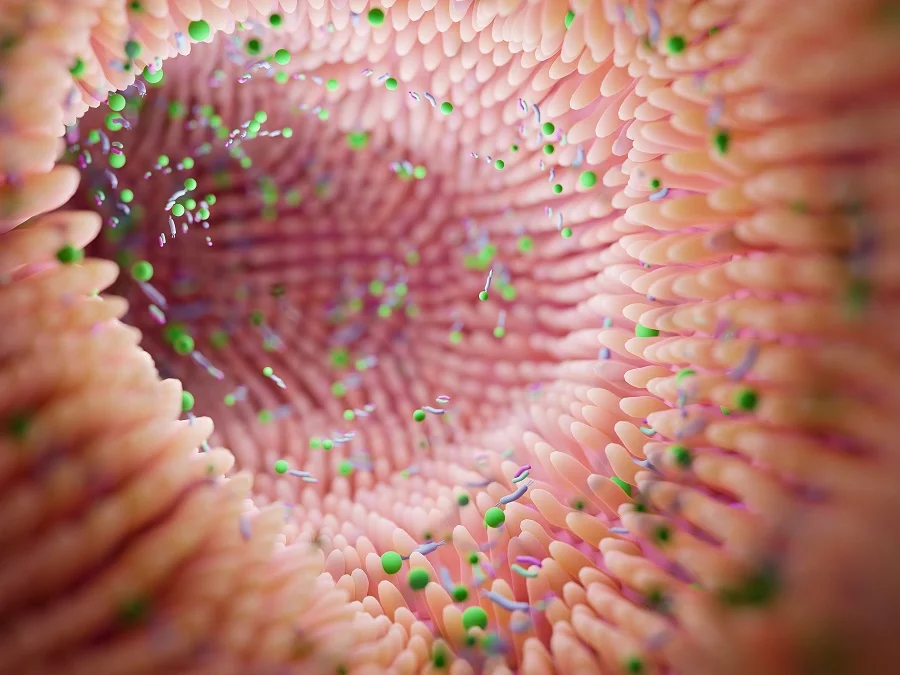 Microbiome-informed ingredient discovery is an important step toward more intentional and targeted nutrition.The insights from this partnership are likely to enable more tailored product development — like formulations designed for specific consumer needs, goals, or life stages, he notes. “It supports the broader shift toward ‘made-for-me’ nutrition, where products feel more relevant and purposeful.”
“We believe the real value lies in improving how we design ingredients and formulations from the outset, so they are better aligned with a range of consumer needs.”
The experts suggest that microbiome insights could open the door to new functional benefits beyond digestion, such as cognition or metabolic health. “Holobiome not only studies how food influences digestive health; it explores the gut-brain axis — analyzing how nutrition can support mental health, pain, sleep, and overall human health outcomes,” says Weisser.
“Our focus is on equipping our customers with deeper insights so they can explore new products aligned with evolving consumer interest in more intentional, health-forward options.”
Gut microbiome support took center stage at the recent Natural Products Expo West 2026 trade show, with target benefits spanning digestion, mood, immunity, skin health, and beyond. At the event, Nutrition Insight explored post- and probiotic innovations with experts from Cargill, Kerry, and Morinaga Nutritional Foods.
Recently, scientists have discovered a new way to differentiate healthy microbiomes from diseased ones, based on gut bacteria interactions. This has led to the development of the Ecological Network Balance Index, which assesses whether microbial communities are dominated by competition or cooperation.