





IFF weighs encapsulation limits and next-generation probiotic potential

Key takeaways
- IFF’s Ouwehand says that probiotic resilience depends on bile and acid resistance, noting that specialist strains are often difficult to scale industrially.
- Microencapsulation can improve probiotic delivery, but requires consideration of release location, material used, and formulation needs.
- Ouwehand points to the potential of next-generation probiotics and live biotherapeutic products beyond traditional probiotic use.

Probiotic development is moving beyond counting colony-forming units (CFUs), as researchers focus on strain quality, efficacy, and delivery. Dr. Arthur Ouwehand, a technical fellow at IFF, discusses probiotic survival and next-generation probiotics.
He draws on the company’s experience in the category, noting that “eight out of 10 top US probiotic supplement brands use IFF strains.” In our previous conversation, he highlighted strain specificity as a key indicator of probiotic quality.
In the second and final installment of Nutrition Insight’s series examining IFF’s research on probiotic quality, we continue our discussion to explore the resilience of specific probiotic strains, the benefits of microencapsulation, and what’s next for the industry.

Probiotics have to be alive until they are consumed, and they must deliver a health benefit, explains Ouwehand.
“We may think that survival in the intestine is important for the health benefits, but we don’t always know that, and that is also why everybody is now moving into postbiotics.”
“You could ask: if a product delivers a health benefit and it was alive in the capsule or the functional food when consumed, should I care that it actually survives the gut transit?” he suggests. “Mechanistically, it’s interesting to know whether it survives and what kind of genes come to expression, but maybe it doesn’t.”
As an example, he points to yogurt — which holds the only live-culture health claim authorized in the EU. It can carry the claim: “Live cultures in yogurt or fermented milk improve lactose digestion of the product in individuals who have difficulty digesting lactose.”
Ouwehand says that organisms in yogurt contain the enzyme beta-galactosidase. “The organisms die in the stomach and small intestine, where they are lysed by the bile acids, releasing the enzyme.”
 Ouwehand says scientists commonly look for acid and bile resistance to determine whether a probiotic strain survives passage through the gut.“That is why probiotics often do not do that so well, because they’re a bit too robust — they don’t release beta-galactosidase. Actually, in yogurt, the microbe is just the delivery vehicle of an enzyme, and the rest is irrelevant.”
Finding a resilient strain
Ouwehand explains that scientists commonly look for acid and bile resistance to determine whether a probiotic strain survives passage through the gut. He says that technology can offer solutions to problems in these areas, such as creating enteric-coated capsules.
IFF has screened many strains in search of those that do “one thing fantastically,” says Ouwehand, and found that its commercial options were generalists, not specialists. However, he also notes that the specialist strains are difficult to bring to the market, as they have no acid or bile resistance and are often difficult to culture at an industrial scale.
“We should not select for a Superman — Superman doesn’t exist, and we’re not going to find one among probiotics either. You may be better off looking for your average Joe, the generalist who performs reasonably well at most things.”
Microencapsulation benefits
Probiotics can be added to a capsule to ensure they are released at the right moment along the gastrointestinal tract, or microencapsulated with different methods, notes Ouwehand.
He explains that core shell microencapsulation technologies involve applying additional layers of materials to protect the probiotic through gastric transit or to enable survival in typically suboptimal application conditions.
“There are different levels of encapsulation,” he adds. “You can microencapsulate individual probiotic cells so that each has its own coating. They may aggregate slightly, but there would be small beads that contain a cluster of probiotic cells.”
He also highlights technologies that produce larger particles, such as those using starch. Because starch is porous, microbes can be added into the starch kernel, which is then coated to protect them.
“One thing that formulators have to bear in mind when you are coating is how much material you need,” Ouwehand adds. “For example, starch coating will result in a lot of starch but very few microbes. That means if you want to include sufficient CFU counts of microbes, volume will be high, and it may not fit in a capsule anymore.”
Although microencapsulation may help probiotic survival, Ouwehand cautions that it doesn’t solve all delivery challenges and may result in additional ones, especially when considering where the probiotic is released. If encapsulation is too robust, the microbes may be released at the back end of the small intestine, where they have less opportunity to interact with the mucosal immune system.
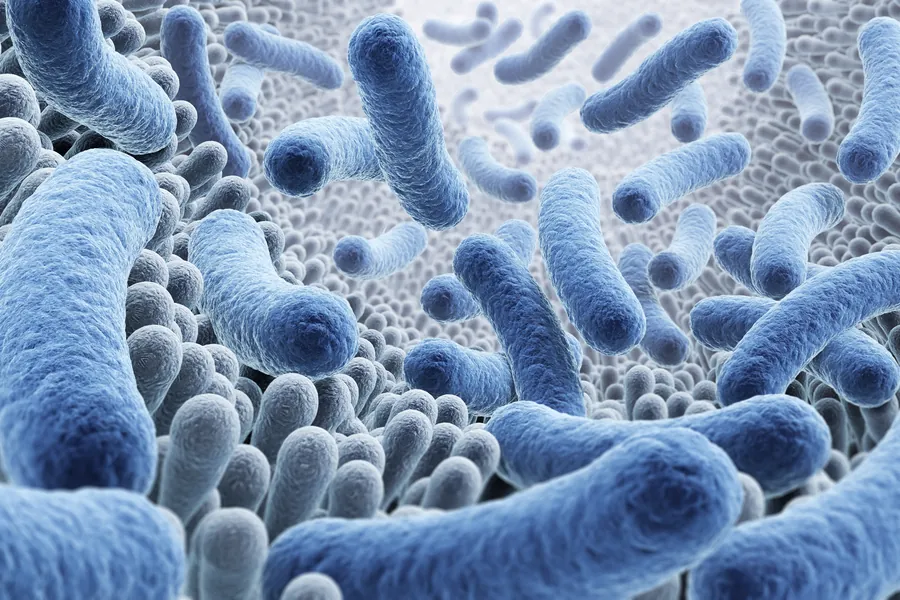 Microencapsulation can improve probiotic delivery, but requires consideration of release location, material used, and formulation needs.“Some encapsulations dissolve almost instantaneously, but if they do that, then they may not provide enough protection in the stomach,” he adds. “There are a lot of things to think about.”
He advises formulators to use microencapsulation wisely. “It’s a technology, and technologies can be very helpful on certain occasions, but they may be irrelevant or maybe even counterproductive on other occasions.”
Specialization to boost resilience
Ouwehand highlights a major knowledge gap in microbial and probiotic research. Although sequencing technologies may determine which strains people have in their gut and how many, he says, “there’s actually no one who knows what it means for your health, because we don’t understand that.”
“It may also be that a high level of certain microbes is beneficial for some people but detrimental for others with certain health conditions — all these things we don’t understand.”
Despite these complexities, specialization is still possible, he says. For example, he says there may be benefits for healthy people to take a probiotic in autumn or winter during cold season.
“It’s nothing serious, but maybe one of the best-documented benefits of probiotics is to reduce the risk and the duration of the common cold.”
 Ouwehand sees potential in live biotherapeutic products as a next-generation category of probiotics.“If you’re going to need antibiotics, it might be good to have a probiotic,” he adds. “When considering a probiotic, it shouldn’t be any probiotic — you should look for probiotics that have been investigated to reduce the risk for respiratory tract infection, antibiotic-associated diarrhea, or recurrent bacterial vaginosis.”
Next-generation probiotics
Beyond first-generation probiotics commonly based on Lactobacillus and Bifidobacterium strains, or even E. coli and Saccharomyces microbes, Ouwehand believes there are many opportunities for next-generation probiotics.
“Akkermansia muciniphila is probably the most broadly known organism. They’re very interesting but also very difficult. There’s a reason why we started with lactobacilli and bifidobacteria, because we know them technologically, especially lactobacilli — we’ve been using them as starter cultures for centuries.”
Still, he underscores that familiarity with these strains doesn’t mean these are the best potential probiotics available. “There are probably better strains, and that’s where the next-generation probiotics come in.”
However, he cautions that these strains can be difficult to work with. For example, they may have unusual growth requirements, or they’re strict anaerobes, which means that they cannot grow in the presence of oxygen. “This may be doable in a lab, but in manufacturing, that becomes more challenging.”
The path to regulatory approval is another consideration. While humans may have Akkermansia in their gut, Ouwehand says that delivering them in concentrated dietary doses requires rigorous safety testing.
Live biotherapeutic products
Although current probiotics may be used to support the immune system, Ouwehand says these are not supposed to cure, prevent, or treat disease, because that would classify them as medicines.
 Although technologies may determine which strains people have in their gut and how many, Ouwehand says it is unclear what that means for a person’s health.However, he sees potential in live biotherapeutic products as a next-generation category of probiotics. These could still be based on a Lactobacillus strain, but would be meant to cure or prevent diseases.
Moreover, he believes that genetically modified (GM) probiotics are feasible as well, especially as live biotherapeutic products, although he notes strong consumer resistance to GM probiotics.
“I think that there are opportunities there, especially when we start to understand mechanisms. It can work, and that has been shown already many years ago.”
For instance, he notes that it is very difficult to treat patients with ulcerative colitis, a type of inflammatory bowel disease.
“But there are engineered microbes that can help people produce interleukin 10 (IL-10), which suppresses the inflammatory response. Normally, you would take IL-10 as a drug. It’s expensive, difficult, and may not reach the place where it should be. GM probiotics can produce it where it’s needed.”
At the same time, he says that these organisms will have to be contained to ensure IL-10-producing microbes do not enter the natural world.
“But that can be done — you can contain these organisms. There are lots of new things that can be done, especially for the GM organisms with CRISPR/Cas gene-editing technology, which is very common.”