




Pilot study links turmeric shots to gut bacteria shifts in professional footballers
Key takeaways
- A six-month pilot study of 11 male professional footballers linked daily Raw Turmeric Original shots to higher Blautia and lower Alistipes levels.
- The overall shifts were modest, did not increase microbiome diversity, and cannot be attributed to turmeric alone because the finished beverage was tested.
- The study’s small sample size, self-selection, and limited diet tracking mean the findings are exploratory and do not prove health or anti-inflammatory benefits.

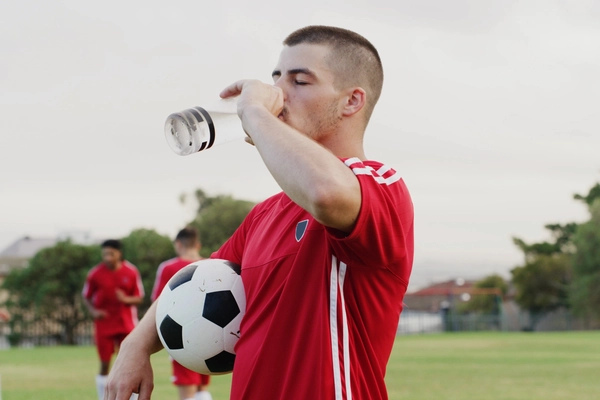
The Turmeric Co. is sharing new findings from a six-month pilot study involving 11 male professional footballers, which identified changes in specific gut bacteria associated with consumption of its Raw Turmeric Original shots.
Peer-reviewed research found an increase in Blautia and a decrease in Alistipes among participants consuming the turmeric beverage compared with a non-consuming control group.
The exploratory findings point to potential interactions between turmeric consumption and the gut microbiome, although researchers stress that the study does not demonstrate anti-inflammatory effects or improved health outcomes.
“The gut microbiome may influence metabolism, immune function, and inflammation, which makes it an important area of investigation in nutrition research,” says study co-author Dr. Loris Juett, lead research scientist at the University of Leicester, UK, and The Turmeric Co.

“The changes we observed in Blautia and Alistipes are interesting because previous research has linked these with metabolism and inflammation. This gives us specific questions to investigate next: whether these patterns are replicated in larger studies and whether they relate to measurable health effects.”
Exploring turmeric’s interaction with gut bacteria
The study published in Performance Nutrition details that, of the 11 participants, eight chose to consume two 60 ml Raw Turmeric Original shots daily, while three formed a non-consuming control group.
Fecal samples were collected at the beginning of the study, after two weeks, and after six months to investigate changes in the gut microbiome.
More detailed analyses identified increases in Blautia wexlerae and Blautia obeum, alongside decreases in Alistipes putredinis and Alistipes onderdonkii, in the turmeric beverage group compared with the control group.
.webp) Peer-reviewed research found an increase in Blautia and a decrease in Alistipes among participants consuming the turmeric beverage compared with a non-consuming control group.Previous research has linked Blautia, particularly B. wexlerae, to metabolic regulation and anti-inflammatory effects. Meanwhile, Alistipes has been associated with inflammation in some circumstances, although its role is complex and the genus is not necessarily harmful.
The researchers described the overall findings as modest microbiome changes rather than large-scale changes across the microbial community.
Curcumin, a naturally occurring compound in turmeric, is often poorly absorbed into the bloodstream when consumed. This has prompted researchers to investigate whether interactions within the gut could help explain some of its potential biological effects.
The gut microbiome, comprising the community of microorganisms living in the gut, plays a role in digestion, metabolism, and immune function.
Findings highlight need for further research
The authors describe the results as hypothesis-generating, providing questions for further investigation rather than evidence of established health benefits.
The study’s small sample size, self-selected participant groups, and limited dietary monitoring restrict the conclusions that can be drawn, the authors note. They add that the research did not establish improvements in gut health or immunity.
The findings also cannot be attributed to turmeric alone, as the researchers explain they investigated the finished beverage.
Huddersfield Town FC part-funded the gut microbiome analysis, while Innate-Essence Limited, the company behind The Turmeric Co., supplied only the beverages. The paper states that Innate-Essence had no involvement in data collection, analysis, or interpretation. Juett is employed through a Knowledge Transfer Partnership between the University of Leicester and Innate-Essence.
The published paper reports mixed responses across other bacteria and microbial pathways, considerable individual variation, and a tendency toward reduced species and functional diversity. Accordingly, the results should not be interpreted as evidence of increased microbiome diversity.
Turmeric in the spotlight
In other recent news, Curcumin C3 Reduct, Sabinsa’s standardized extract of bioactives from turmeric (Curcuma longa L.), received a positive novel food safety opinion for use in food supplements in Great Britain in September 2026. The ingredient contains tetrahydrocurcuminoids, a group of antioxidant compounds.
In March 2026, clinical data on 45 healthy participants revealed Givaudan’s patented TurmiPure Gold formulation — designed to address turmeric’s poor solubility and high-dose limits — reduces muscle soreness 72 hours after exercise while supporting muscle function and athletic performance at 24 hours.