




Manufacturers and retailers cut food waste as food banks turn to farm, GFN says

Key takeaways
- Manufacturers and retailers are cutting food waste, leaving food banks with fewer surplus donations, but GFN says this does not threaten hunger relief.
- About 1.2 billion metric tons of food are lost on farms each year, but food banks are increasingly recovering it, says GFN, whose members recovered 225 million kg of produce in 2025, up 55% .
- Scaling farm-level recovery needs more public, private, and philanthropic financing.

The Global FoodBanking Network (GFN) is seeing that manufacturers and retailers are making progress in reducing food waste. Although this means that food banks relying on surplus donations are receiving less, the NGO says this does not threaten hunger relief.
GFN notes that a large volume of food is lost at the farm level and that recovering it could bring nutritious food to hungry people. However, it says that scaling this recovery requires financing, which remains scarce.
“The private sector plays a key role in reducing food loss and waste, and we are already seeing strong progress among the world’s largest food companies,” Ana Catalina Suárez Peña, senior director of Strategy and Innovation at the GFN, tells Nutrition Insight.

“As part of the Plan to Accelerate Solutions ‘Advancing Food Security and Nutrition through Food Recovery and Food Loss & Waste Reduction,’ we aim to get the 50 largest food companies in the world to have active food loss and waste programs by 2030, and we are already 60% of the way there. IKEA was the first company in the world to cut its food waste by 50%, and several others have now reached that goal as well.”
During COP31 in Antalya, Türkiye (Nov 9–20), the IKEA Foundation announced two initiatives with partners to scale up action across five continents — Food Loss and Waste Emission Reductions for Climate-Smart Foodsheds (FLOWER) and Food Loss and Waste Action for Reducing Emissions (FLARE).
FLOWER aims to connect cities to surrounding food-producing regions in India, Indonesia, Mexico, and Uganda, while FLARE targets scaling proven solutions to reduce food waste on farms and across supply chains in Brazil, Ethiopia, India, Indonesia, Kenya, Mexico, South Africa, and across Europe.
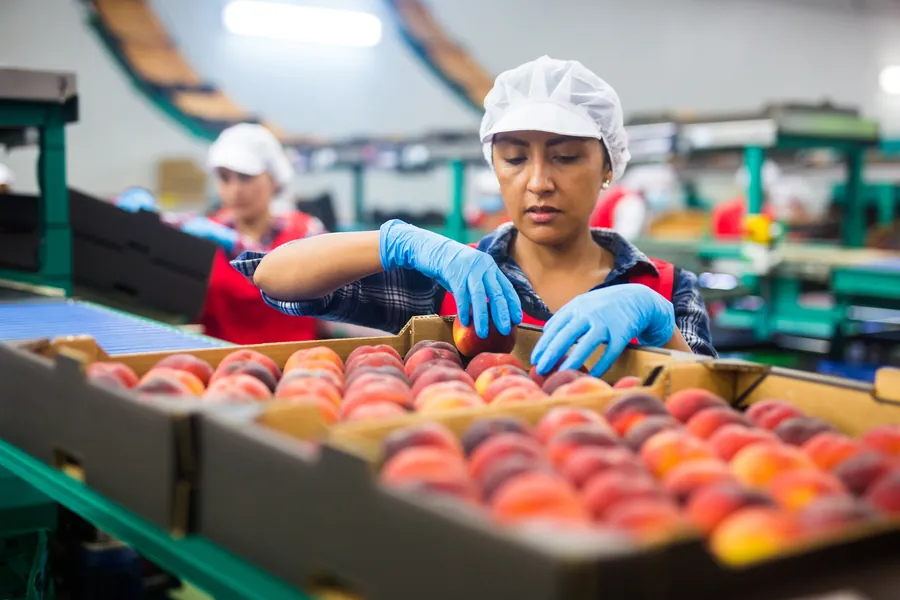 Suárez Peña says the private sector plays an “absolutely” critical role in reducing food loss and waste through efficient processes and surplus edible food donations.Suárez Peña adds that the private sector plays an “absolutely” critical role in driving global change by further reducing food loss and waste through more efficient processes and by donating surplus edible food to hunger relief efforts.
Nutrition Insight recently spoke with Suárez Peña about the Global Action Drive that has opened endorsement for the COP31 Declaration, asking governments to put food loss and waste reduction into Nationally Determined Contributions and methane strategies.
The business case
There are many policy approaches that can help reduce food waste, notes Suárez Peña, such as the EU’s revised Waste Framework Directive, which sets targets for 2030 and mandates member states to establish measures for food businesses to set up donation agreements with food banks.
“There’s no magic bullet for getting the private sector to reduce food waste, but there are many promising examples out there, so there’s no reason governments shouldn’t be exploring which approach would work best in their jurisdiction.”
Regardless of mandatory reduction targets or penalties for wasting food, Suárez Peña points to research showing that reducing food waste within companies leads to meaningful financial benefits.
“[The 2017 Champions 12.3 study] says 99% of corporations saw positive returns on their investments in reducing food loss and waste, with the median company site realizing a US$14 return for every US$1 invested. Reducing food waste is a no-brainer.”
“This is great news for our planet,” she says, “But especially for many food banks around the world, which have historically relied on donations from manufacturing and retail, the increased efficiency can result in fewer food donations and they have to look elsewhere for surplus food.”
 Progress in business efficiency do not mean an end to surplus food, says Suárez Peña, pointing to oppertunities at farms. “However, the levels of efficiency we are seeing do not mean an end to surplus food,” she asserts.
From farms to food banks
WWF finds that approximately 1.2 billion metric tons of food are lost at the farm stage every year globally, which Suárez Peña says is more than the retail and consumer sectors combined.
“There is tremendous potential for food recovery here, and a trend we have seen among food banks globally is that they are increasingly recovering food from the agricultural sector,” she says.
“In 2025, members of our network recovered 225 million kg of produce from the agricultural sector, a 55% annual increase. We expect this trend line to continue upwards (though not necessarily at this rate) and we are seeing strong agricultural recovery both in developing and advanced economies.”
Additionally, GFN’s FRAME (Food Recovery to Avoid Methane Emissions) enables food banks in its network to measure emissions they avoid and their contribution to Zero Hunger (SDG 2), says Suárez Peña.
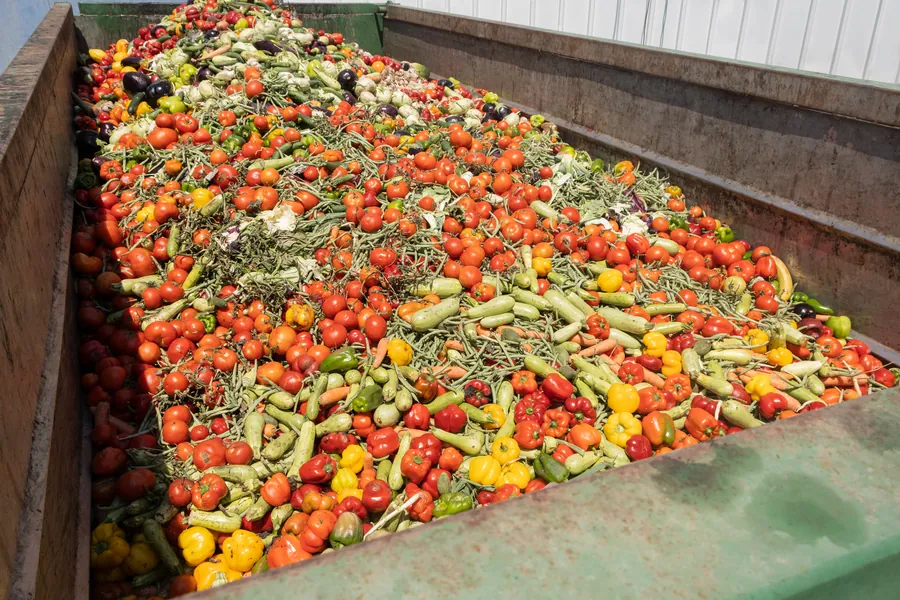 Suárez Peña says there is plenty of untapped surplus food that it will likely befor hunger relief.
Financing food recovery
Ultimately, Suárez Peña underscores that much more financing from every sector is necessary despite the encouraging but rare examples of public and private financing globally.
“The good news is that the solutions exist, they are replicable, and with financing they can be scaled to levels that result in global change. But private funding is also important. Many creative, scalable solutions to food waste are happening at food banks and food recovery organizations around the world.”
For instance, Suárez Peña points to the food rescue organization SOS Thailand, which feeds 175,000 people monthly with no warehouse, a small truck fleet, and many volunteers.
“Philanthropic efforts on food waste will continue to play a role, as they can guide government actors in successful food waste reduction efforts, and private financing can and should drive that forward. With more data and tools available — like our FRAME methodology — that prove the major climate impact of food recovery, there are also opportunities for financing through voluntary carbon markets.”
“When it comes to balancing food waste reduction targets and food security goals, there is such a tremendous amount of untapped surplus food that it will likely be a long time before we run out of surplus food for hunger relief. It’s a problem we would welcome,” concludes Suárez Peña.