




COP31 Declaration urges governments to build food loss and waste into climate plans

Key takeaways
- The Global Action Drive opens endorsement for the COP31 Declaration, asking governments to put food loss and waste reduction into NDCs and methane strategies.
- Countries such as Paraguay and Colombia are already building food recovery into NDCs and tracking it through Biennial Transparency Reports.
- Suárez Peña points to closing the funding gap while early climate finance routes for food banks emerge in Ecuador, South Africa, and Thailand.
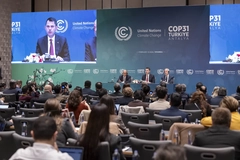 Image credit: UNclimatechange.
The world’s largest annual international climate change summit, COP31, is taking place in Antalya, Türkiye (Nov 9–20). Zero waste, food security, and dynamic and resilient health systems are among its top 10 priority areas of action on the agenda, all relevant to the nutrition industry.
Ahead of the event, a coalition of food loss and waste NGOs, the Global Action Drive, released a COP31 Declaration package advocating that reducing food loss and waste is one of the most “immediate, cost-effective, and impactful” methods to reduce methane and greenhouse gas emissions and hunger while supporting food security and resilient communities.
“Outreach to governments is under way, and endorsements will be announced as they are confirmed,” Ana Catalina Suárez Peña, senior director of Strategy and Innovation at the Global FoodBanking Network (GFN), tells Nutrition Insight. The NGO co-supports the Declaration.

She says the Declaration is also supported by the Academy of Global Food Economics and Policy, Ambition Loop, GAIA, Rethink Food Waste Through Economics and Data, Resilum, the GFN, the World Resources Institute, the Waste and Resources Action Programme, and WWF.
The Global Action Drive’s June call asked the COP31 Presidency to formally recognize the urgency and opportunity of advancing food loss and waste reductions as a climate solution. Opened for endorsement on November 6, the Declaration calls on countries to commit to this goal.
On the International Day of Awareness of Food Loss and Waste (Sep 29), Nutrition Insight spoke with the International Food Policy Research Institute and the NGO Care, who said that the most frequently lost foods are also the most nutrient-dense, driving hidden hunger even in seemingly food-secure households.
Suárez Peña explains that governments endorsing the Declaration would also incorporate the reduction measures into their Nationally Determined Contributions (NDCs) and methane strategies.
They could also report the emissions avoided through the Paris Agreement’s transparency framework and open climate finance to the food banks and other actors doing the work. She adds that several countries — from Paraguay to Colombia — have already started.
What do endorsing governments commit to
According to Suárez Peña, the governments endorsing the Declaration commit to working toward concrete actions while being mindful of national circumstances.
“These include reduction targets where appropriate and identifying the actors that implement food loss and waste reduction across the food value chain,” she says. “They also commit to keeping food out of waste management and disposal streams, including open burning, to mitigate methane emissions.”
 Suárez Peña says food loss and waste belongs in national climate plans.“They will report the emissions avoided as mitigation actions in their Biennial Transparency Reports, drawing on data from the actors that implement these measures, and will enable those actors to access climate finance for both mitigation and adaptation.”
Suárez Peña says the Global Action Drive urges governments to include food loss and waste reduction in their climate action plans, which includes NDCs, implementation plans, long-term strategies, national adaptation plans, and methane mitigation strategies.
“The measures should come with reduction targets where appropriate and clearly identify the actors that implement them,” she advises.
“As countries move from their latest NDCs to implementation, the immediate opportunity lies in the implementation plans and methane strategies that turn those commitments into action, and in the next round of NDCs.”
Leading examples
Suárez Peña cites case studies from countries that are already integrating food loss and waste into their NDCs.
“Paraguay became the first country to address hunger and climate change together through food loss and waste prevention and food recovery in its NDC, with quantified methane reduction targets and the national food bank designated as the official data provider,” she says.
“Mexico’s NDC 3.0 includes food loss and waste measures in both the agriculture and waste sectors, including the recovery and distribution of food through food banks. Colombia’s NDC 3.0 includes a food bank mitigation measure coordinated by the Association of Food Banks of Colombia (ABACO).”
Additionally, Suárez Peña notes that Chile’s NDC 3.0 committed to developing a National Strategy to Prevent and Reduce Food Loss and Waste by 2026 while acknowledging food recovery programs linking food security and climate action.
“South Africa’s NDC 3.0 identifies food loss and waste as a significant issue, citing its environmental and food security implications,” she continues.
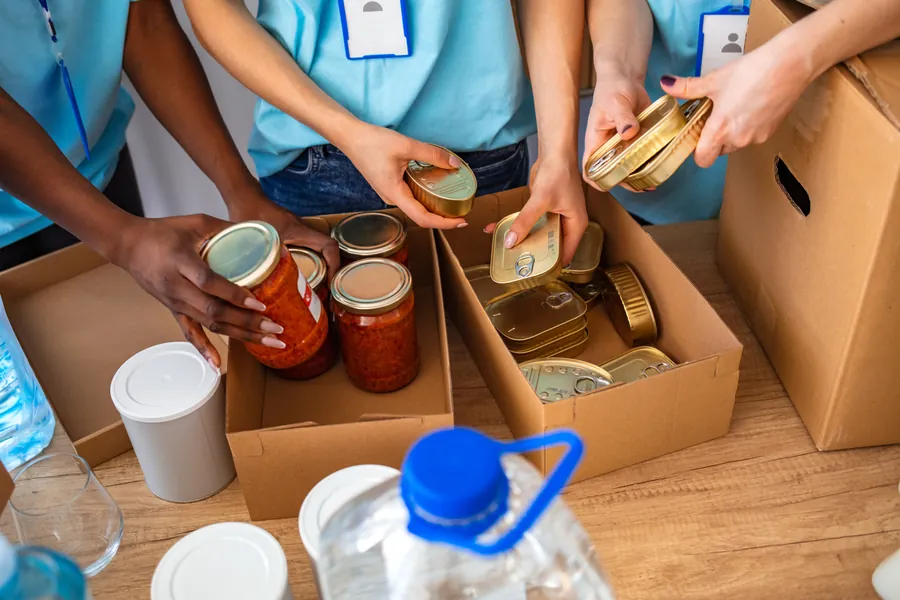 Suárez Peña sees food banks unlocking climate finance for methane cuts “In Côte d’Ivoire, the Ministry of Environment has acknowledged that the work of the national food bank is consistent with the priorities of the country’s NDC 3.0, and is moving toward formally recognizing it as an initiative that contributes to climate change mitigation and adaptation.”
How to track progress
Suárez Peña says tracking progress on food and climate goals can be done through the Paris Agreement’s transparency framework, through which governments can report how many emissions were avoided using data generated by the actors that deliver them.
“Colombia shows how this works in practice: its food bank measure is now reflected in its second Biennial Transparency Report, submitted in August 2026, with ABACO recognized as a supporting implementing entity, and the Ministry of Environment plans to quantify the avoided emissions in its next report.”
Highlighting viable measurement tools, Suárez Peña points to the GFN’s FRAME (Food Recovery to Avoid Methane Emissions) methodology. “This quantifies the methane emissions avoided by recovering food and measures its contribution to four UN Sustainable Development Goals (SDGs): Zero Hunger (SDG 2), Decent Work and Economic Growth (SDG 8), Responsible Consumption and Production (SDG 12), and Climate Action (SDG 13).”
Funding the commitments
Although measurement tools exist and countries commit to food and climate goals, Suárez Peña underscores that targets can only succeed with funding.
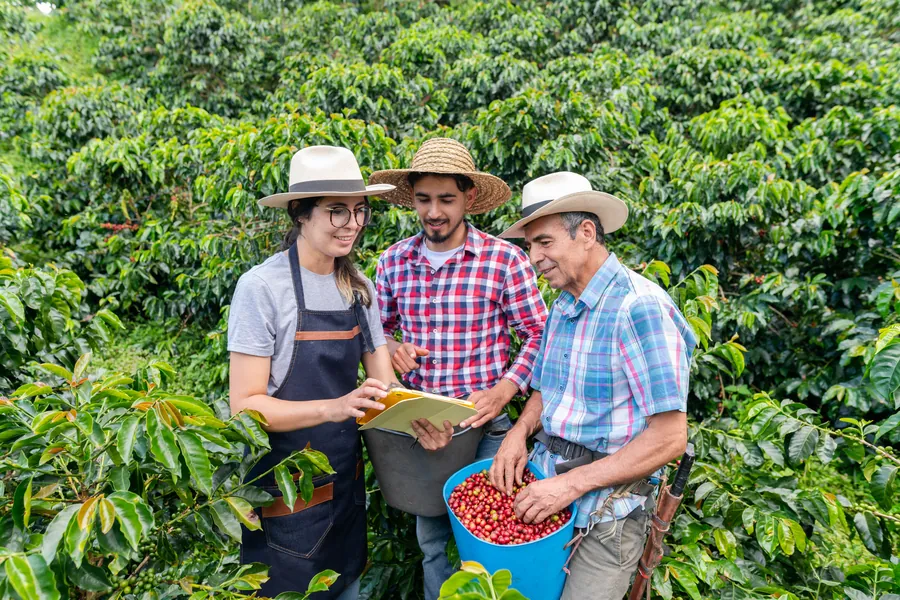 Paraguay and Colombia are early movers on combining actions in food recovery and climate change.“The Declaration asks governments to enable food loss and waste reduction activities and the actors that deliver them to access climate finance for both mitigation and adaptation, and to encourage financial institutions, development banks, climate funds, philanthropy, and the private sector to finance and scale measurable reductions,” she comments.
“Early examples are emerging. In Ecuador, the Ministry of Environment recognized the Quito Food Bank as an official climate initiative and as a conditional mitigation measure subject to financing, part of the national mitigation target in its second NDC, after validating the food bank’s climate impact data. Building on that recognition, the food bank secured UNIDO [UN Industrial Development Organization] funding to upgrade its cold chain.”
Furthermore, Suárez Peña highlights that FoodForward SA became the first food bank listed on South Africa’s Just Energy Transition Funding Platform, while Thailand, under its national voluntary emission reduction program, approved a methodology for food surplus donated for human consumption, which she says opens a way into carbon markets.
“There are so many approaches to reducing food loss and waste. National governments can implement policies and programs to reduce waste along the supply chain, and they can and should be funding those efforts,” she says. “But large, national food loss and waste programs may need substantial funding and could be good candidates for development bank funding.”
“State and provincial governments also have significant roles in waste management and food systems, meaning funding could also come from that level. Likewise, municipal and state governments have a strong influence on food waste and can fund efforts that can simultaneously reduce waste and support hunger alleviation.”
Suárez Peña says that public financing should reflect governments integrating food loss and waste into their NDCs and climate strategies. Governments with their own carbon markets can finance food loss and waste programs through that mechanism as well, she adds.
“Governments that endorse the Declaration will take stock of progress together at COP32 and toward 2030, in cooperation with the Global Action Drive.”