



Webinar preview: Morinaga Milk unpacks bifidobacteria’s role in healthy aging and immunity

Key takeaways
- Morinaga Milk’s free webinar on November 19 will explore how bifidobacteria may support healthy aging beyond gut health.
- Sayaka Ishihara, Ph.D., will present clinical findings on the pace of aging from a multimodal lifestyle intervention with yogurt containing the Human-Residential Bifidobacteria strain B. longum BB536 and cell research linking bifidobacteria to lower inflammatory responses.
- HRB may offer benefits through functions such as converting indole into ILA, which is reported to have anti-inflammatory effects, but strain-specific evidence remains essential, says Ishihara.
Morinaga Milk’s upcoming webinar will examine what bifidobacteria may mean for healthy aging beyond the gut.
The free webinar, “Bifidobacteria and Healthy Aging: New Insights into Aging and Immunity,” takes place on November 19 at 15:00 CET (14:00 UTC) and is open for registration.
“We will look at bifidobacteria and healthy aging from two angles: clinical evidence on the pace of aging and research into the mechanisms that may lie behind it,” Sayaka Ishihara, Ph.D., manager at Morinaga Milk, who will be presenting the webinar, tells Nutrition Insight.
“On the clinical side, we will present findings on the pace of aging from an intervention combining yogurt containing Bifidobacterium longum BB536 with diet and exercise guidance. We will also discuss mechanisms linked to the 12 hallmarks of aging, particularly chronic inflammation, and how bifidobacteria may influence it.”

Bifidobacteria and aging
Ishihara notes that it is not yet fully understood why bifidobacteria tend to decline with age, as many factors could be involved, including changes in diet, medication use, gut function, and the intestinal environment.
 Ishihara says that bifidobacteria may influence some of the 12 hallmarks of aging, such as dysbiosis and chronic inflammation.“Studies suggest that bifidobacteria may influence some of the 12 hallmarks of aging, such as dysbiosis and chronic inflammation,” she says. “This indicates that bifidobacteria may be relevant to healthy aging, so their decline with age is something the nutrition industry should care about.”
She notes that consuming foods or supplements containing the bacteria is a nutritional approach that can address this decline.
“These bacteria generally do not stay in the gut permanently, so regular intake helps keep them present during consumption,” says Ishihara. “It is important to select strains with evidence for the intended health benefit and to offer them in products that are easy to include in the daily diet.”
Gut microbiota link to the aging immune system
Ishihara points out that the gut microbiota and the immune system influence each other during aging. Changes in the gut microbiota and gut barrier could allow more bacterial components to enter the body, leading to inflammation.
“The immune system also helps maintain the gut microbiota and gut barrier, so age-related changes in immune function may affect the gut environment in return. These interactions are thought to contribute to age-related chronic inflammation,” she explains.
“What surprised us most came from our cell experiments. Human monocytes stimulated with bifidobacteria showed lower inflammatory responses to later bacterial stimulation, even after differentiating into dendritic cells. This was accompanied by epigenomic changes associated with inflammatory responses.”
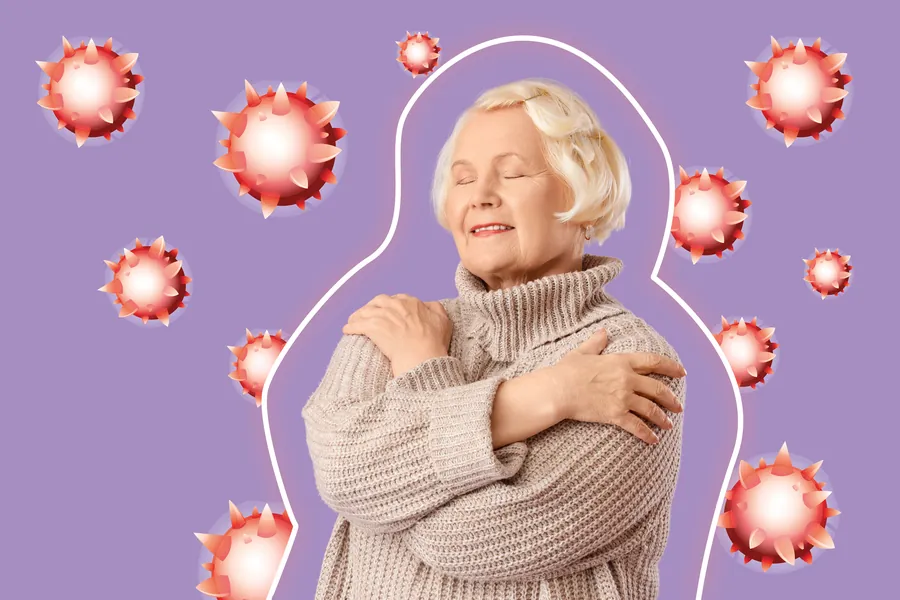 Based on cell findings, Ishihara notes that bifidobacteria could have a lasting influence on how immune cells respond to inflammatory stimuli.Based on these early-stage findings, Ishihara notes that bifidobacteria could have a lasting influence on how immune cells respond to inflammatory stimuli. Morinaga Milk believes that this clue is useful in understanding how bifidobacteria might be linked to chronic inflammation.
Why human-resident strains matter
Ishihara says that Human-Residential-Bifidobacteria (HRB) differ from bifidobacteria found in other animals.
“Research suggests that HRB has evolved alongside our ancestors for more than 15 million years. This long shared history is one reason we focus on HRB. Differences in their natural habitats may also be linked to differences in their metabolic functions. For example, certain HRB can convert indole into indole-3-lactic acid, or ILA,” she says.
“Indole is a precursor of indoxyl sulfate, a uremic toxin that has been linked to chronic inflammation, and ILA has been reported to have anti-inflammatory effects. We are interested in whether this conversion could help reduce inflammatory stimuli arising from uremic toxins.”
Knowing the strain’s origin is important when selecting probiotics for older adults, notes Ishihara. HRB’s characteristics and functions make them interesting, yet strain-specific evidence for targeted health benefits remains essential, she adds.