

Large-scale probiotic manufacturing facility highlighting high-density fermentation, centrifugation, and freeze-drying technologies with production targets.
Home
Webinars
Innovative Partnersh...

Innovative Partnerships: Exploring the Future of HMOs with UC San Diego and Novonesis

15 Apr 2025 | Novonesis

Explore the potential of industry and academia joining forces in the field of Human Milk Oligosaccharides (HMOs) at our upcoming webinar. 

Last year, Novonesis and the Human Milk Institute (HMI) at University of California San Diego (UC San Diego) joined forced to set new standards for collaboration between industry and academia and the acceleration of discoveries in the field of HMOs. 

This April, we’ll take you virtually over to UC San Diego to offer a unique look at how this partnership is unfolding. You will also get a preview of the exciting work being done by the research incubator and a chance to have a live Q&A with Professor Lars Bode, pioneer in HMO research and founding director of the HMI. 

Sign up to learn how this partnership is opening new avenues for innovation in human health and development.
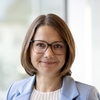
Hello everybody and welcome to this webinar, Innovative Partnerships exploring the future of HMOs with UC San Diego and Novonesses.

My name is Jannik Schonknecht and I work as scientific advisor on human milk oligosaccharides, and my name is Dina and I'm heading the Applied HMO team.

Novonesis is a global biosolutions partner.

We're interested in generating scientific data but also translating those data into applications.

That is one of the reasons why we partner up with different universities and academia groups such as with Professor Lars Border from the Human Milk Institute at UC San Diego.

Novanessis is a manufacturer and a supplier of HMOs.

We're also doing applied research to better understand what HMOs are doing for the human health, and you have maybe already seen some of our previous webinars where we have had a high focus on the science behind the HMOs.

And in our latest webinar we in particular showed data on how HMOs can affect the antibody response in a mouse vaccination model.

We demonstrated also how we can use big data or mixed data to guide us towards new mechanisms of action for the HMOs.

And finally, we also introduced you to our ongoing clinical trials called the BELEEE Study where we are testing the health benefits of our five HMO mix.

Today we will highlight the academia partnership, but we will also talk to the scientists who are doing the research and have a sneak peek into the first data and discuss their potential for the future.

At the very end of this webinar, we will be joined by our last board for a Q&A session.

So don't hesitate and submit any upcoming questions from your mind to the Q&A system within the next 30 minutes.

And for a few weeks ago we were in San Diego and we met with Lars, and here we took the opportunity to ask him some questions and therefore you will start this webinar to meet Lars Border in San Diego and he will also give some key facts about HMOs.

We will then also dive into the partnership.

What does it mean for Lars from his view and also from the Vanessa's view.

And finally we will also go into the labs and meet the researchers that are part of this partnership or the research incubator and you will hear more about what research they're doing in the labs.

Enough words for the introduction, let's get started and move over to San Diego.

And here we are.

Good morning to you, Lars.

Good morning, Stina.

Welcome to UC San Diego and the Human Milk Institute.

Guys, you're working here at the university as a professor.

You are director of the Human Milk Institute founded in 2022.

You worked with the HMO for more than 25 years, have more than 180 publications behind.

You are among the 0.1% most cited scientists in the world.

And last one of your key papers, Every Baby needs a sugar mama, has been cited for more than 2000 times.

And let's maybe talk more about that.

What are HMOs and why are they important?

Yeah, let's do it.

Human milk oligosaccharides, or short HMOs, are the third most abundant component in human milk after lactose and lipids.

And these oligosaccharides are not really digested by the baby or by the host in general, but they're making it all the way undigested into the distal parts of the intestine where they serve as prebiotics, so they're used as metabolic substrates for certain bacteria that then have benefits on the host.

But that's really only part of the story.

We know they're more than just food for bacteria.

We know that these oligosacchoids in the gut have anti-adhesive antimicrobial effects, so they really act on certain pathogens that they're not causing diseases, but they also have direct effects on epithelial cells in the gut.

They have direct effects on immune cells that are under the epithelial cells in the gut.

And then they're absorbed as.

They make it into the systemic circulation of the baby or the adult, and then has systemic effects, so they can work on the liver, on liver metabolism, potentially on the brain, on the immune system systemically, and eventually we find them intact in the urine, so we know that they make it all the way through the system.

There are more than 150 different structures.

Do they all have the same function?

They're quite different in structures, so they have different modifications, different charges, different sizes, and we believe that they all have different functions depending on their structure, so they're very structure dependent, and we see this in our research as , that some oligosacchoids do certain things and others have no effect whatsoever.

And then there's a few things, a few effects where they're interchangeable, but most of the time we see that they're structure specific.

HMOs are also a prebiotic, but also more than a prebiotic.

And if we compare to other probiotics, how are special?

So HMOs are prebiotics.

They have other functions as , but even for prebiotics, those effects are structure specific as.

So it depends highly on how these structures of prebiotics look like, so that certain bacteria can break them down.

So if bacteria have the ability to, for example, break down fucose from a molecule.

Then those molecules need to have fucos, and not all molecules that are called prebiotics have those specific components in them.

So even the effects on prebiotics are structure specific, and not every prebiotic is the same just because it's called a prebiotic.

And what about synbiotics?

Symbiotics is a combination of a prebiotic and a probiotic.

And I think traditionally we always think about the symbiotic that the prebiotic directly feeds the probiotics so that that strain is even better in growing and finding its niche and doing its magic, but the truth is I think there's a much larger opportunity here where we can take oligosaccharides, human milk oligosaccharides, and some of these oligosaccharides serve now the probiotic to grow.

But then some of the other oligosaccharides are spared, are not used by the probiotic, and then they can exert other functions on the host that are independent of the probiotics.

So I think there's lots of opportunities to study symbiotics in the future.

You've been working with HMO for more than 25 years.

Could you maybe tell a little bit about the journey?

What has been the breakthrough since you started working in this field?

Sina, I think there are two main roadblocks that we've overcome over the last few years, and one is that we're now able to analyze human mulgolious saccharides in large sets of human milk samples to really connect the human mulgoligosaccharide composition.

Two maternal factors that drive the variation of these oligosechoate compositions and then also drive associations between human milk oligosechoate concentrations and infant outcomes.

That was not feasible 25 years ago or 15 years ago, but we really looked at one sample at a time and maybe.

We could analyze 8 samples in a week, and now we can do hundreds of samples in a week.

So I think that's one of the major roadblocks that we've overcome.

And then the second one clearly is that now we have these oligosaccharides available at large scale and fairly low cost to do research, but also to use them for application.

So where do you see some gaps still?

I think the major gaps still are that we don't fully understand what all these oligosacchachoids do.

There's 150 different structures and maybe now we're working with 123, maybe 5 to 8 different oligosaccharides where we have them available.

We can do pre-clinical studies, we can eventually move into clinical applications after research.

But there's another 140 different oligosaccharides that we don't have available right now at that scale to do that kind of research, so expanding the space of oligosaccharides that are available eventually, I think that's going to be the next frontier in this field.

So last but all the science, how can we translate that into application?

You know, that's exactly the point, right?

So now we have the opportunity to take a deep dive with science and really understand what these human mulgoligosaccharites do on a deep mechanistic level, starting at the maternal infant interface where human mulgoligosaccharites are really developed to, to have a benefit, but then also taking that knowledge and leveraging it to develop therapeutics and and biosolutions for people of all ages.

Lars is really an expert in the human milks based on an HMOs.

I think it's exciting to hear from him what are HMOs, but also reflections on the journey of HMO research.

And he really also highlighted that structure matters both when it comes to HMOs alone, so how they directly interact with the immune cells or the gut cells, but also when we combine it with a probiotic and generating a symbiotic solution.

So it was nice to see that or hear him talking about all the opportunities, but we need to make sure also to let science guide us to find the right or the best solutions.

Moreover, it's super exciting to see also how technological developments drive the research now, the possibility to investigate or to analyze a huger set of samples from human milk at the same time now and also therefore have a closer look at the associations, to also be the possibility to manufacture HMOs individually at scale allows to investigate the HMOs and have some understanding of their potential mode of action and health effects.

However, and from a scientific perspective, it is also clear and nicely pointed this out, there are still a lot of research gaps today we study individual HMOs in a few numbers.

There are more than 1 in 40 additional HMOs.

What could be their benefits?

What could be the mechanisms?

And just this pure fact of having a research gap also on this huge amount of HMOs shows that the collaboration is needed from a scientific perspective to fully elucidate the potential of the HMOs for human health.

Yeah, and last year we announced the partnership with UC San Diego and we created this research incubator on HMOs and synbiotics.

And this research incubator is anchored at the Human Milk Institute, and the Human Milk Institute was, founded by Lars back in 2022, and now Lars, he is the director of the Institute and more specifically, the institute, engaged in different activities, all the way from analytical research to education and outreach, and of course all with a focus on human milk.

When we were visiting San Diego, we were joined by the leadership team of Nobunes, and we asked them for their reflections on the first year of the partnership.

Let's hear what they have to say.

We are joined by Martin Kuhn, our vice president of Science and Innovation.

Martin, can you explain a little bit for our viewership what does the partnership between Novones and the Human Milk Institute entail?

I can, Yann.

So we're delighted to be partnered with Lars, the Human Milk Institute, and the University of California at San Diego.

We've provided a seed funding to really inspire collaboration between different disciplines of scientists to build the science out on human milk oligosaccharides and really with a key focus on advancing that science.

And question to the both of you.

Academia and industry are both doing research from different perspectives.

What are the shared objectives that we have in this scientific collaboration?

I, I think one of the shared objectives is the science itself, that we're trying to do real evidence-based information gathering and knowledge gap closing around human mulgoligosacs in particular.

Yannika, I think another important aspect of this is really the inspiring the new generation of scientists to advance human milk oligosaccharides and human milk components.

To us this is really inspiring and quite a significant objective for us inside of Novanesses.

And last but not least, it's also about the translation to application because in the end, we're not just here to do science, but we want to eventually apply that to the consumer and to improve the health of, of people.

So here we have the ability to do eventually clinical studies based on that foundational work that we've done here and take this into, into real translation into the clinic and into application.

We are joined by Jacob and Linda from the senior leadership team in Organesus.

They have came out to San Diego to be part of the Human Milk Institute symposium where leading scientists of the field of HMOs and syriotics are participating.

So Jacob and Linda, can you please share what value do you see in partnering with the UMic Institute and Novanesses?

Personally I'm, I'm incredibly thrilled with our partnership that we have between UC San Diego and, and Novanesses, the ability to, to unlock the scientific capabilities in both companies.

To partner around HMOs and HMOs in combination with probiotics to bring that to life in the markets in a meaningful way, setting the industry standards for HMOs for many years to come is something which I think is truly amazing for me.

It's a very proud moment to be here at UC San Diego and meet with Lars Buddha and the researchers.

The Human Milk Institute.

We've been working together for quite some time now between Nova Ness, a world leading biosolutions company, together with the Human Milk Institute, leading the science around human milk oligosaccharides and having this scientific focus that comes naturally from both companies and from both the institute and the company and Doing research that we then at Novanessis can also turn into eventually products for consumers in the market with the capabilities that Novanessis is bringing in terms of manufacturing, upscaling, and go to market, and that's of course the dream out of this collaboration that we can take groundbreaking research and bring it into solutions for the market.

Martin and Lars, can you please share what are you most excited about in this scientific partnership?

I can, Janni.

So at Novanessis, what we're excited about with this partnership with Lars and the Human Milk Institute is the complementarity between what him and his team are doing in terms of fundamental, more basic research and how that couples with the applied work that we're doing inside of Novanessis.

Janik, I think I'm most excited about the format of the incubator itself that we bring different labs together that have different expertise that haven't really worked on oligosaccharides before or human milk for that matter, but they now bring their expertise and their their skills to human milk oligosaccharides, and that helps us uncover more of the entire space for oligosaccharides and the potential applications of.

We have heard this collaboration is unlocking the scientific capabilities of both UC San Diego and Novones from basic research to the applications.

I think this re-incubator format, it's great format to do science in a collaboration like this.

And here in the next part of the webinar we will go to the border lab and we will talk with Las Border and hear from him what is the mission and vision of this research incubator and afterwards we will also talk with some of the researchers of the incubator and we will hear more about how they're working with HMOs and also what they wanna gain from this incubator.

As you listen, please remember to think of questions to submit them to the Q&A system so that they can be answered at the very end when Lars is joining us for a live Q&A.

So now let's move into the labs.

We have talked about the partnership, but let's now go more into the details of this research incubator.

What is the purpose?

Yes, Tina, incubator, I think, is a very different way to do science, you know, traditionally we work in our own labs, closed doors, carts very close, just to have our little niche that we can work on, and then it's almost like a competition, right?

But we've learned over the years that that's not how we advance science.

The way we advance science is by working together with people that have different expertises that they bring together to work on a topic and, you know, share results, share ideas, and talk together and being in the same room, right, so we're really trying to break down those silos and bringing people together.

I always say innovation lives at the intersection of disciplines and that's exactly what we're trying to do here.

You have the expertise where people are the main experts on microbiome work, for example, or the top immunologists, the top people working on metabolic diseases.

So imagine we bring these people together because of course the body works together, you know, just the scientists that work on the different body parts.

They should also work together and that's really what we're trying to do with the incubator so getting together, you know, once a month, sharing ideas, results, and seeing, OK, your result over there that actually matches what we're doing over here.

So if we bring these two parts together we can create synergy and something that's just bigger than the individual pieces.

Yeah, I, I fully agrees this is exactly the purpose.

And how do you see that this is different or what is special with this incubator?

So here I think the special part is that we're all looking at human melancholic saccharites, right?

So that's the common denominator.

And these oligosaccharides do different things, and we need different specialists to look at these different things, right?

So some of the oligosaccharides work as prebiotics, so we bring in the microbiome experts.

Some of the oligosaccharides directly work on the immune system.

So let's bring in the top immunologists to look at this.

And and the same is for oligosacchaids that being absorbed and make it into the systemic circulation have effects on metabolism.

So let's bring in the guy that works on on metabolic disorders, and I think that's the unique part here that we're all circling around human melagoligosaccharoids and probiotics and eventually symbiotics, and we just bring different people that haven't looked at oligosaccharides before and again that's I think where we drive innovation.

Which is the whole, whole idea here, right?

It's been for too long decades that people have looked at this with the same eyes and the same expertise.

So let's get some other people in the room and, and, widen the, the scope here a little bit.

Mhm.

And lastly, we should also think about what's the vision then for this incubator.

What would be the future?

What would be the next step?

Yeah, so, so the idea right now it's a small incubator.

We have about 8 groups here that work on, on, human milk oligosaccharoids.

So the idea would be to make this programmatically and financially sustainable, right?

So ideally, you know, you can think about something and you have it at funding for a year or two, so ideally you want to have funding, ideally in perpetuity where you have something that lives, and continues to grow.

You bring in different postdocs, they stay for 34 years, and then you bring in another generation of postdocs and they work on something for 34 years because the truth is this topic.

It's so large and there are so many opportunities that we probably have to work on this a little bit longer than just a year or two, and that's where I see this going, so taking the incubator and turning it in a, in a sustainable consortium really where we bring in more people that eventually uncover the full space of what these oligosaccharides and and symbiotics are capable of doing.

Hi Shiga.

Hi Stina.

You're also part of this research incubator.

Could you tell more about what your research is about and how you're studying HMOs?

Yeah, so my lab is interested in understanding how factors in breast milk such as HMOs can impact the.

Intestinal immune cells in the developing child as as how this impact in early life can extend into adulthood impacting the immune cells as as the microbiome that is in the intestine which could potentially tell us more about optimal gut health versus what could influence susceptibility to different intestinal diseases and you're only looking at HMOs or do you also look at together with probiotics or.

Yeah, we are looking at HMOs separately individually we're also looking at HMOs in combination with symbiotics and we're looking at symbiotics themselves to look to get a whole perspective of how these different components come together to impact intestinal immune health but also individually what is their impact on intestinal immune health.

Do you already have some pilot data that you can share with us?

Yeah, so we've actually found that HMOs very early in life, in the first few days of life, can actually impact a type of immune cell called regulatory T cells which are important in preventing excessive immune responses.

So regulatory T cells or TRREGs help maintain tolerance to the thousands of microbes we have in our gut.

And we find that HMOs can impact levels of these regulatory T cells in the intestine which could inform us about how we're modulating susceptibility to intestinal infections or autoimmune conditions in in the intestine.

This is a very interestinghia so based on what you're doing now and also what you're gonna do, where do you see the potential of HMOs in the future?

Yeah, I think right now we're looking at how early life HMOs can impact optimal gut health, but I think the future could also be looking at how providing HMOs, you know, at different stages of life could impact, gut health and promote.

Ideal immune cell composition in the intestine and you know there have been several studies showing how your gut health is important for so much more than the intestine for brain health for you know exercise gut health is important for so many things and so the potential there is to look at how HMOs in early life and during different stages can impact not just optimal gut health but also overall health in in other tissues and systems as.

Yeah, thanks for sharing this.

So just the last question, so what do you hope to get out of being part of this research incubator?

Yeah, so I'm a basic science immunologist and for me it's great that HMOs have this impact but we wanna understand the mechanism so how do HMOs impact gut health and how do HMOs lead to this optimal immune cell composition so what I want to get out of this is understand the science more and know how you know HMOs are leading to differences in immune cells in the intestine to just understand the science behind it.

Hi Philip, so, you are part of the research incubator.

Could you tell a little bit more about your research and how you're studying HMOs?

Thanks Tina for having us.

Yes, so my research in general, the best way to describe my research I would say is I like to study, chronic metabolic disorders like obesity, heart disease, specifically atherosclerosis, which is this build up of like goo in your coronary arteries that gives you the heart attacks or if it's in the brain it gives you the stroke and.

When I was doing my training, I got exposed to something called the glycocalyx, which is the sugar coating of your cells, which is really important for cells to communicate with one another, to attract them to the right location to fight infectious disease.

But it can also go out of control like in chronic disorders and so my research is focusing how we can understand when things go wrong and what the role plays, what the glycans play basically in that process, and most importantly, how can we leverage.

Glycans to intervene therapeutically and resolve it because I come from a family of, of medical doctors and I'm always very interested in the translational angle because I think that's where it's at for me that's so that's a little bit, you know, my research if I have to describe it and, and how have you then integrated HMOs in that research?

Ah, that's a funny story.

So when, when I was a postdoctoral trainee, actually I was also here in UC San Diego.

I got exposed to the young Lars Boda at the time where he was like, you know, setting up his lab and explaining the type of research he was doing and his research was about human milk called eosaccharides, which to me at that point in 2011 was very new, but it was very intriguing when he talked about his work.

It became very clear that a lot of these glycans interfaced with innate and adaptive immunity.

And that's the thing that, you know, typically will go wrong in the chronic inflammatory disorders, so I started thinking, you know, my, my.

The wheels in my head were, were churning and so I came up with this idea that maybe we can leverage these, these human milk oligosaccharides as a sort of anti-inflammatory, , you know, compound and so we were on a hike, Lars and I, because we became friends over the years and I, mustered up the courage at the end of the hike.

It was potato chip mountain actually if you wanna do the hike, it's a really great hike, and I said, hey Lars, why don't we screen human milk sugars.

To basically attenuate low grade inflammation, not the acute infectious disease because you don't want to do that, but the low grade inflammation that bothers people with diabetes, obesity, and people with heart disease.

And so that's how we started working together.

He said that's a great idea.

We started at that time with a few human milk oligosaccharides that we could get, screen them, and then turned into a very successful project, and to this day I'm still exploring the role of these, you know, human milk oligosaccharides in the context of chronic inflammatory diseases, basically.

Have you already shown some interesting results on the HMOs in atherosclerosis?

Yes, yes, yes, we just, published a paper, in JCI Insights, which is a very extensive amount of work where basically that idea that I just talked about earlier, the idea that we can use these human milk oligosaccharides as actually therapeutics to, dampen the out of control low grade inflammation, and we show that we can do this, in adaptive immunity as as in a.

Immunity, but particularly in macrophages and so when we basically treat models of atherosclerosis, which is modeling heart disease, we saw that we can reduce the overall inflammation, both in a dish with cells but also in an animal model and very excitingly we were able to reduce the amount of lesion burden, which is the burden that will actually push you over the threshold to get a a cardiovascular event.

So that is a very exciting.

And the second most exciting part that came out of that is something we did not expect.

One of the risk factors for cardiovascular disease is obviously high cholesterol levels, right?

We're all taking, or a lot of us are taking, medication to lower our cholesterol.

It's not only the diet that plays a role in that, it's a genetic factor that's often the driver of high cholesterol, and we noticed that when we fed these human milk oligo.

Rights that for some reason that we're still trying to understand they lowered these cholesterol levels as so we're hitting two birds in one stone basically we're lowering that inflammation which is really nefarious, but we're also lowering one of the main risk factors, the cholesterol levels.

So yeah, that's, I think, very exciting.

It is super cool, Philip, really exciting data.

So, so coming back also to the research incubator, where do you see that going and and what do you hope that's coming out of this research incubator that you're part of?

So one of, one of the important things that the research incubator is giving us is is a lot more compounds that we can work with and we can screen now different model systems.

And I think there's a lot more other chronic inflammatory diseases that we're working on.

I think in the context of obesity, diabetes, and what you're not, and I can see, and I hope the future of what I try to do with this research incubator is drive that particular part of research.

We're really set on the the heart disease one, and I, we wanna continue with that and maybe.

Expand maybe make a combination of different human milk sugars to treat the heart disease and this is where that research incubator can also very much help because obviously the more potent we can make our cocktail to reduce, you know, risk factors for cardiovascular disease, the more interested I am in pursuing that kind of work.

Excellent thank you so much, Philip.

All right, thank you for having me it was a pleasure.

So Laura, you're working as a scientist in the applied team here in Novaness.

Tell us a bit more about your research.

What are you doing?

Yes, so as lead for the immunology platform on a day to day basis, we look at how different HMOs, both individually and in mixed formulations, can modulate immune cells, basically, so not only their function but also their phenotype as.

And what Of immune cells do you look at?

So mostly I focus on in vitro work, and that involves using human derived PCs and then we can differentiate them into dendritic cells or macrophages or even T cells and really dissect the whole innate and adaptive immune response in the body and how the HMOs can impact that.

And now you're saying you're working with many different.

Do we see the same response?

Of the individuals?

No, definitely not.

HMOs are incredibly structurally diverse, and that diversity also lends itself to diverse function.

So we see differences depending on the structure of the.

Exciting.

And how do you see this collaboration with the research incubator now?

You are a scientist and there are a lot of skilled scientists as in the research incubator.

How do you see some synergies there?

Yeah, it can take all manner of forms, so whether it be protocol sharing or, you know, just daily communication using sharing protocols and sharing ideas and data and knowledge and just keeping those channels open and just being open, yeah, transparent with what we do and how we do it and we can eventually hopefully exchange scientists as and learn from each other and yeah advance the whole field of HMOs together.

Because you're also coming from academia, you, you came to the team for half a year ago but have a long background in the academic field.

So how has it also been for you to move into the industry and doing science in the industry?

It's been a big challenge.

There's a lot of new and different things compared to academia, but I think for me it was a big move.

When you're an academic, industry is always painted as this, you know, the dark side and.

That science is not really the focus, but I, I, I really don't think that to be true.

Novanessis really has a focus on understanding the science and every day I'm working as a scientist and I, I, I find it incredibly rewarding and also to be part of this group which has this very strong collaboration with academia.

I think that really, you know, hits home just how important it is for the company that we have those strong roots in science and backed by the science.

It was so great to be on the site and meeting Shia and Philip and hearing what they're doing with the HMOs and the synbiotics and also to hear their reflection on what the potential of it and where it can go in the future and I also noticed Jenny from our last webinar you highlighted one of Philip's paper.

Where he showed that one of the HMOs could reduce low grade inflammation and atherosclerosis development in mice, and I think it's pretty cool that he's now part of our incubator.

Yes, I completely agree, and I think it was also special and exciting that Laura, our immunologist from the applied team, was also visiting San Diego and was sharing some of her research data which matched very with those findings from Philip.

And I think the data coming out of that incubator show the ambition and the potential of the HMOs to play a role for health across the entire lifespan.

And also really great to see the collaboration between the different scientists from their areas.

They're not working in silos, but we're working together and also us from Inverness is coming in and learning from these skilled scientists, and we can also share our research.

And last nicely summarized that innovation lies at the intersection of disciplines.

Absolutely, I really look forward to seeing the results from this incubator as entire Novais does.

We are now moving last time to San Diego to talk about the future of HMOs.

How do you both see the future of research on human milk bioactives such as HMOs?

Yeah, I think Yannik, you know, we're at a really interesting time in the history of human milk oligosaccharides and human milk components.

I think one of the clear developments around this is the availability of more human milk oligosaccharides.

I think that's a key aspect of this.

I think secondarily, As those molecules become available, extending them beyond the first year of life and into other applications for different life stages or for other health outcomes is also something I'm quite excited about.

The third part of this that's really exciting to me, Yannik, is that we'll continue to see outcomes and see efficacy related to human milk oligosaccharides.

This is in the first year of life, but again this could extend into other health outcome areas and other life stages.

I'm most excited about, the science behind it, really, that we're more and more finding out how these molecules actually work on a mechanistic level.

And that then the science drive the application, and really extending this beyond just human mulgolious sacs.

Of course, we're focused currently on human mulgolious saccharides, but human milk holds so many other magical components that some of them we don't even know what they are.

So I think there's a lot of opportunities to develop new solutions to the different diseases that we're facing today.

Thank you both for sharing your perspective.

Thank you.

We hope you enjoy seeing the collaboration in action and also the potential of.

Now let's transition to the Q&A session with Lars.

You can submit questions anytime until the very end.

Thank you very much for joining and seeing you at the Q&A.

Hello again, everyone.

Thank you very much for your patience and for staying online.

At this time point, Tina and I would like to warmly welcome Lars Border who joins us live from San Diego.

Lars, good morning to you.

Good morning.

Good to see you again.

We miss you over here already.

Thank you very much.

For everybody in the audience, you still have the chance to submit any questions through the Q&A system.

Within the next 15 minutes, we will direct all the questions to Lars, and we're looking forward to some good discussion.

With that in mind, let's get started.

Last, we talked a lot about the Human Milk Institute.

Can you briefly please explain what was the vision behind founding the HMI and what role does it play in advancing research of HMOs and symbiotics?

Yeah, thanks, yeah, like , so HMI Human Milk Institute really started because we have so much going on here on campus that is related to human milk.

That's the molecular discoveries that we're talking about here on HMOs, but that's so many other things as , clinical programs, education programs, rapid response for next pandemics, and, you know, technology development.

So it's a lot of stuff going on around human milk.

Our community is very strong when it comes to human milk and breastfeeding.

So at one point, we just thought it's time to form something that is an umbrella structure around everything that's going on and, and build the Human Milk Institute.

And then we learned that there is no such thing as a Human Milk Institute worldwide.

It's really the first one and, and there was a huge need for it and, and that's what we're seeing right now too, that, that there's a huge demand for research on human milk and lactation.

Thank you very much for me.

Super interesting field, the future of human milk and the human milk bioactives seems very bright.

We heard from the collaboration between Novones and HMI in those research incubators.

Can you share a little bit about the timelines, when can we expect to see the first results from this research?

Mhm.

We're seeing already the first results of the research, coming through.

It's, it's very exciting because it's a different model, right?

So it's not just individual labs working on individual projects, but different studies and different experiments being discussed and coming together and, and, and results coming out of that and, and we're seeing how that all fits together in the bigger picture.

I think it's a very new way of doing this and I'm assuming that the first publications will come out in about a year or so.

It always takes a little bit longer to get this done through the peer review, but we're seeing very very exciting results and some of that is already published that, that, that kickstarted the incubator before, Phillip's papers just came out about 6 months ago, so we see already some of the fruits, harvested there.

And you already mentioned Philip, we also heard from Shika who presented some of her research topics.

What else is being investigated in those research incubators?

So, so what other health applications, health fields are being investigated?

Mhm.

Yeah, we're currently looking at 3 different buckets really.

So it's infectious diseases, and that's viral and bacterial infections, then inflammation immunity as a central part, and last but not least, metabolism and metabolic diseases.

So we have 8 groups total and they fall in.

One or more of those buckets and and work with each other and those buckets, as you know, immune immunology and infectious diseases have an overlap, immunity and immunology and metabolic diseases have an overlap, so it's not really three discrete buckets, but they overlap to a certain extent as.

Thank you very much.

I think we already have, first questions coming in, which also Tina, we also would like us to get your opinion.

There was one question like, how does this partnership between HMI and Novoise accelerate how many HMOs are available?

I think you already discussed this also, in the part in San Diego.

Like today we're studying few HMOs.

What about the remaining HMO structures in human milk?

So, how can we decide what to study next?

Plus, if you go first, please.

Mhm.

So, so we use a two-pronged approach here.

We do study the oligosaccharoids that are currently available and, and we, we work with this partnership, but we also always use pooled human milk oligosequoids that we isolate from human milk, so you get the entire garden variety of 150+ structures that, that are known.

We test them out.

We use a multi-dimensional chromatography approach to really see which oligosaccharoids have the most effect, and then we identify other structures as.

Example, there is DSLNT for necrotizing enterocolitis that's not an oligosaccharoids that's currently in the 5 or 8 oligosaccharide mixes, but that's how we identified it originally.

And then Stina, I know you're expanding your portfolio as if, if you wanna, yes, I can for sure.

And we likely never gonna be able to produce all 150 or 200 HMOs in big scale.

So, for us, it's very important that we're very selective as.

So we, we choose the ones to produce a bigger scale, that have the most important benefits.

And, and this is also one of the reasons why we are very interested in working with Lars and his team.

To really be able to select which HMOs should we go for.

Let's science drive this.

Let's use the science to, to select the most important ones, because we, it's unlikely we can produce them all.

And I also like with this you get also some purpose and some deeper sense of actually applying the HMOs because you can translate that basic research into applications, which then also has some evidence that is backing this up and really also trying to promote human health.

In this context, we also have one more question, like, are you open for collaboration with other disciplines?

So here we show some collaboration between industry and academia.

Lars, from HMI point of view, are you open for collaboration, Tina as?

What would you say?

Absolutely, I would say we're always open for collaboration and you heard that probably in the webinar.

It's one of my key sentences that innovation lives in the intersection of disciplines.

I strongly believe that that's what HMI is all about and for HMI it's even larger because now we're talking about aspects of social science, we're talking about public health, we're talking about bringing engineering in.

So even beyond just talking about oligosaccharides, you need to work at the interdisciplinary, touch points because otherwise you will not innovate and make progress.

I strongly believe that, we have been working in silos for way too long and we're always open for collaboration.

It needs to be a fair and honest and transparent collaboration, that's very important.

Sometimes there are bad actors that try to take advantage of these things, but I, you know, I have mostly had very positive experiences with collaborating and I see the power of it.

Yeah, and I think for the incubators, many of the researchers did actually not worked with HMO in the past, right?

So they got excited and came with different expertises, and this is exactly the purpose here, right?

To bring it together.

And from our side, it's also just lovely to see the HMOs going out there and working, you know, let the signs, get some more signs on all the HMOs.

There's so much to explore.

So, yes, we are definitely open to work, with all, yeah.

Sounds super exciting to me.

One other question which I was really interested in hearing about, and this is something from my point of view, which is less often stated in scientific literature.

You talked about structure-specific effects of the HMOs, but also structure-specific prebiotic effects.

What does this mean for the symbiotic research or the, the combination of HMOs with different microbes?

Mm.

Yeah, I think, I think when we look at microbes, it's, it's important to not just think that they're like these, these things that gobble up everything they can find and turn that into energy.

They're very specific actually what they do, right?

So they have specific transporters, specific enzymes on the outside that are going after individual structures.

So we mentioned a few causalated oligosaccharides in the webinar.

The same is true for syllated oligosaccharides, right?

So some of these bacteria specifically target oligosaccharides that are sylated.

Cleave off the silic acid or transport something specifically inside their, their, their cells and then utilize it to put out either secondary metabolites or use it just for energy.

So, so it's not just that they gobble up everything that they can find and just because we call it a prebiotic, that's what they like, they're very specific actually, and, and you can imagine that there's not just one specific strain in your gut.

There is a whole community living down there.

And of course, together they can metabolize different structures and, and then it's really the concerted interaction that drives the health outcomes afterwards.

So, so that's why I think it's very important to think about prebiotics also as a structure specific function.

And then when it comes to symbiotics, take advantage of that, that you can say, some of these oligosaccharides are utilized just for energy purposes for certain bacteria so they can thrive and do their magic.

And other oligosaccharides, we don't want to utilize because they have effects on the host.

And if we utilize them, then that effect is gone.

So I think there's lots of opportunities where we go a little bit deeper with the science and really understand how these oligosaccharides are either utilized or have other effects that allow us to uncover a full potential of these, these structures and the strains that we haven't done yet.

We just feed this and hope for the best and that's just not how it works in science.

It's very specific indeed.

And I, I think another question that came in is just perfectly matching with what you said.

So some of the HMORs are not utilized, and the question is why?

What is the effect of those?

Here's one question like what non-prebiotic effects and direct interaction with human cells and receptors are you excited by?

So what interactions, what effects are there that are non-prebiotic potentially?

I'm excited by those interactions that we don't know yet.

That's the coolest part.

I think there's so much to discover because we've always thought that they're just prebiotics, they're gobbled up and, and that's the end of the story.

But, but really to do a systematic, discovery of what these oligosacchaids can do on different cell types, but also then on different receptors.

Many of the receptors that we have on our epithelial cells and immune cells are indeed glycan binding.

So all of our cells are covered by glycans, so sugars, just like our oligosacchachoids, right?

And the first interactions of cell cells is often a protein glycan interaction, sugar interaction, right?

So the oligosaccharides can, can mimic that and entertain that and bind to some of those receptors, whether it's sects or galactins or whatever it is.

I think that's something we've really neglected, over the many years because we focused so much on just the prebiotic effects.

So, Yeah, and what we saw there for the, for the work with Philip, where we see specifically macrophages targeted by individual oligosaccharoids, we still don't know exactly what the receptor is.

We excluded a few by doing knockout studies, but we don't know exactly what the receptor is, but the, the signaling effect on the macrophage on a deep cellular level is profound.

So, it's just a question of time to identify what those receptors are.

And then it might be different receptors for different immune cells or different other cell types.

I think that's really where the, the current, , curiosity is and, and where the discovery potential is.

Sounds super interesting to me but also drives my curiosity that there is so much that we still don't know and how much research we actually still need.

With respect to time, we slowly have to come to an end.

There are two questions which are touching on HMO research and applications in regular food products.

Here's an example like yo yogurt is already ongoing research for yogurt.

Another question, what about HMO potential for the adult sector?

Today, HMO research, science and applications are very strong on the infant health.

What about potential health applications or health research beyond infants?

What do you think and what direction will it go?

And plus, if you can give your opinion, Sina, as as you can give your opinion.

Mm.

So, so I think that's really, where it's going currently, not to say that we're neglecting the, the maternal infant space, but the opportunities that I see for, for the adult space or for people of all ages really.

Is immense, learning what these oligosacchoids do in the maternal infant space again on a deep mechanistic level and then coming back out to say, this particular interaction or this particular cell type, you know, slowing down a macrophage inflammation, chronic inflammation has an effect on atherosclerosis or on arthritis or on some neuro diseases, and neurocognitive diseases to really understand what they can do and then apply that to these different disease states.

That I think is the, is the, is the cool part and the potential and, and we've seen this.

Again, Philip had talked about the work that we've done together on atherosclerosis, so that's your heart attack and stroke.

We lose about 18 million people to heart, heart attack and stroke in a year.

If we can somehow Alleviate that and support people that are at risk of heart attack and stroke by giving oligosaccharoids that we know are safe because we give it to babies every 2 to 3 hours really for for multiple months during breastfeeding.

So I think there's an, there's an immense potential there.

Stina, how do you see that?

Yeah, I would say, I agree, why not?

Why not also use it in other, age groups.

We see that it has a potential, why not also let the, the, the adults benefit from HMOs, so absolutely.

The science definitely suggests that's, opportunity.

If, if I'm just allowed to add on top, I think we have amazing science.

There's a lot of scientific potential, but of course also we still need to learn way more, but also we need to educate way more about human milk ole sacre, that they really have some health potential, and they're not just something which newly came up, which we are now able to produce, but also what we have from nature, a lot of evidence and a lot of research that really shows there is huge potential for health benefits.

With that being said, there are still many open questions which we sadly don't have the time to, but we will try to reach out to the audience to also follow up on those questions.

I would like, lasts, thank you very much for your time, for giving all the insights, sharing your perspective.

Tina, from your end as , thank you very much for answering all the questions.

And to everybody out there, I think we, I hope we could show you with webinar that really collaboration is key in driving the science and also translating basic research into application, and that this partnership is really needed to drive science further.

Thank you very much for tuning in for joining the webinar, and thank you both for your participation.

Speakers
Speaker Image

Dr Stina Rikke Jensen

Head of Applied HMO Science and Innovation

Speaker Image

Dr Yannik Schonknecht

Senior Scientific Advisor

Speaker Image

Professor Lars Bode

Director of the Human Milk Institute and the Mother Milk Infant Center of Research Excellence
Speaker Image

Dr Stina Rikke Jensen

Head of Applied HMO Science and Innovation

Speaker Image

Dr Yannik Schonknecht

Senior Scientific Advisor

Speaker Image

Professor Lars Bode

Director of the Human Milk Institute and the Mother Milk Infant Center of Research Excellence
More webinars

Image