


Promotional banner with text about biosolutions for gut health, featuring a smiling person and a “See all products” call-to-action.
Home
Videos
Qina: Exploring nutr...

Qina: Exploring nutrition solutions to health inequities using ethical AI

14 May 2025 | Qina

Mariëtte Abrahams, CEO and founder of Qina, joins us to discuss the future of ethical, inclusive AI in nutrition and behavior change. Drawing from her co-authored paper on a seven-pillar ethical AI framework, she explores pressing risks such as exclusion of vulnerable communities, lack of cultural sensitivity, and the potential misuse of personalized tools. Abrahams lays out practical steps for organizations, highlights the importance of human oversight, and explains how ethical AI can complement, not compete with, public health strategies.
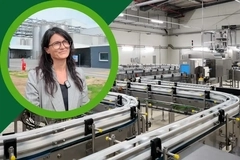

Hello and welcome to Nutrition Insights interview series.

My name is Vina Patel and I'm a senior journalist.

And today I'm joined by Mariette Abrahams, the CEO and founder of KIA, which is a platform, advancing personalized nutrition, through ethical and inclusive technology.

She's also co-authored an upcoming paper proposing a framework for ethical AI at the intersection of nutrition and behavior change.

So thank you so much for joining us, Mariette.

Yeah, and to start, could you briefly introduce yourself and what motivated you to focus on, ethics in AI driven nutrition?

Yeah, so thank you for having me.

My name is Marriott Abrahams, and like I said, CEO and founder of KIA, based in Portugal.

And I'll just say a little bit about Kina.

So we are actually a strategic innovation consultancy and platform, where we focus on the area of personalized nutrition.

And of course, because personalized nutrition affects so many other different areas, ethics is one of them.

So ethics is not the main thing that we do.

Personalized nutrition is the main thing that we do, kind of looking at, you know, market intelligence.

And providing domain expertise, but really ethics has really become such an important topic that we started to, as we worked on more projects, we realized that this is really, really becoming a key topic, especially when it comes to nutrition, and really there was very, very little out there in the literature that focuses on AI in nutrition and even Less likely was having nutrition and behavior change as a combination because essentially for all of us, we, we in Kena, we have a background in nutrition.

So all our lives, we have been trying to help people to eat better or manage their conditions, but of course, that requires behavior change.

What the difference is now, is that AI has, when we were studying, there was no AI, , and it was really kind of focused on the tech area, whereas now, as technology has been advancing, AI is now being increasingly incorporated into.

To digital solutions to help people to find products or find foods or find the meal plans and recipes that they're looking for to optimize their health, powered by AI, and that then, of course, helps people to change their behavior.

And so, Or aims to change behavior.

And so there's very little in the literature that says, OK, now, when you just apply AI or Leverage AI, this is what is going to happen, and then this is how you're going to change your behavior, because it just doesn't exist.

And so we thought, OK, actually, based on our background and our, you know, lived experience, in the clinical nutrition setting is, we need a paper.

And, and provide some kind of a framework that helps the companies kind of that we work with in health and ingredients and food to really consider how AI is really applied in nutrition to be able to change behavior.

Right.

So AI is also often praised for its potential and it's also feared because it has a lot of risks.

So in your view, what's the most urgent ethical challenge that, we face today as AI becomes even more used in nutrition and health?

Yeah, I think, for me, the biggest one, most urgent one, primary one, is the spread of misinformation.

So if we think about most individuals, Gen Z, millennials, you know, digital-first, you know, groups, they go to the World Wide Web for their health and nutrition information.

And so, if you have a lot of information that is spread, that is not accurate, that is not rooted in the science, that is then, you know, proliferating the, the amount of misinformation that has spread, especially around nutrition and behavior change, then in, in populations.

So, in effect, we need, the, the, the opportunities for AI are certainly there, because now people have their Smartphones in their hands.

So, you know, information is accessible.

Knowledge is now accessible, but how accurate is it?

Do people trust the information?

We already know that people, although they look for information, they don't trust the information.

And so that's the risk of AI is that we are just perpetuating the spread of misinformation, but also giving people, the, , an inaccurate view of how to improve their own health.

And your paper introduces this seven pillar framework to guide more ethical development.

So, for instance, if a company or organization wants to apply this framework, what are the first steps you think that they should take?

Yeah, and I, I think it's very important, depending on where you are.

So, for example, if you're a health tech company, maybe some, you know, some pillars will be more relevant to you.

If you're in breeding company, some, some, pillars will be different.

So I think the first starting point is to look at the framework and say, which of those pillars actually apply to me?

And if they then do apply, look at yourself, you know, give yourself a score out of 1 to 5, and say, where are we?

On this, do we have, you know, access to accurate information and the science?

Do we have access to experts, for example?

Do we have the real good technical foundation to actually make sure that we can interrogate or question those algorithms that are being developed?

So I think a good starting point is, is it relevant, and score yourself, and then if you see you score low on some areas, then it really needs to be an internal.

Alignment to see, does everybody see it like that, or is it OK that you just, you know, grab information there or select it, because really, the algorithms start with humans.

Yeah, it's humans that do it.

And so, how are the, how is the data selected?

How is it analyzed?

How is it presented?

How is the algorithm developed?

And, and so it's from that point of view, I think it's, it's really important that people are, are aligned in terms of where Where they are good, where they are not so good, and then seek help from experts.

They really need to have a very, very multidisciplinary team, around them, which I think is, is really, really a challenge, not for the industry, but it's, it doesn't always happen.

So I think that's really important to say, OK, this is where we are not so good, and this is where we really need help and go outside to, to seek more support.

So having the self-reflection of where you stand and then to respond where you're from.

Exactly.

Because, of course, in, in, sorry, I was just gonna add that in, in nutrition and health, it could be that, you know, the business team is very strong, or the sales team is very, or the marketing team is very strong.

And maybe the science team is not so strong.

And so there needs to be really a good alignment in terms of where in the business, are we making sure that ethics is applied or leveraged in a very ethical way that it does not cause harm or spreads misinformation.

Right.

And so my next question, you've emphasized the risk of also in the paper deepening inequalities as a result of AI.

So which groups do you think are at more risk from being excluded from AI driven nutrition tools, and how can we ensure that they're included from the start?

Yeah.

Yeah.

And I think that is a, is, is an incredibly important question, if not the most important one, because AI is advancing so rapidly, and people are starting to get used to it.

Yeah, they're starting to go there as the first, and then they believe maybe the, the answer that just pops up, it could be a single phrase.

And so, it's very important that we do not leave anybody behind.

And the people who are really, really left behind are maybe the people who do not have access to the internet, who do not have access to a smartphone or wearable devices, and therefore their data doesn't get used.

Yeah, it could be older generations who maybe don't have that digital literacy, but also the people who have, you know, , problems with literacy in terms of food and health information, because they don't know how to maybe say, is this information really for me, or is this, you know, for an influence or somebody else?

You know, and so, so we have a huge problem.

And this has been shown repeatedly with, digital literacy being a problem, not only in Europe but also wider.

And so, we risk, advancing the technology at a much faster rate than the population gets educated and, and, and AI literate, which means that they will be left behind.

And also, it means that it'll be very difficult to reverse that, coming down the line.

And so, in terms of addressing that, we need to have experts at the table.

Or at the ideation phase.

What happens at the moment is, they, they are, they are pulled into the, you know, product development phase very late in the, in the process, which means they get to check the algorithm, or they get to say, you know, OK, what do you think of this idea, when actually they should be at the beginning.

So we are talking nutrition experts, behavioral scientists.

You know, physical trained doctors, people who have the scientific background and experience and knowledge, knowing how health and nutrition plays out in the real world, so that they can then inform the developers or the, you know, the, the science team in, in a company to say this is the Risk that you are running, you know, great idea, or here's where you need to focus, here's where you're going wrong.

This is the science that needs to be based on.

And so all these experts need to be, be at the table at the ideation phase, and not at launch phase or pre-launch phase.

Yeah, that's a pretty, good, starting practical tip.

Yeah.

And, cultural sensitivity as is often, is also an afterthought.

In, in AI design.

So how can you think AI systems be built, that, that really reflects the different food cultures, especially non-Western ones?

Yes, yes.

And, and of course, we see, you know, the AI adoption of the, or the adoption of AI technologies is much faster in maybe the Western world.

However, if we talk about, you know, food and nutrition, if you are building a system, it It needs to be based on very comprehensive food databases that includes, you know, foods from other cultures, regions, you know, whatever.

But you need to be looking at what are those food databases that really reflect the local cuisine or the cultural beliefs of that, of that group or that area.

The other thing as is to And what I don't see, I always say, you know, get out of the building, is to actually go into these communities and say, look at my algorithm or look at the output.

Does this reflect how you really eat?

I want to help you to improve your heart health, but is this actually the food that you consume to then improve your heart health?

And so, it means that people need to get out of the building and go and talk to people, go and visit the communities, go and , go and visit the local, you know, grocery stores where those products may not be, in the bigger retailers.

And so it it means it needs a desk-based approach, as as a really, really social outreach to go into the communities and find, and then really then decide and or or or assess how, how accurate and reflective that is, because like you say, If we're going to make it accessible, it should be based on a very, very wide dietary intake, because, of course, AI needs to benefit all.

Mhm.

And going back on the fear around AI like how it could overshadow public health messages, how do you think personalization and, broader health guidance can serve the common good and also be balanced?

Yeah, I, I, I, I, I, I would differ there a little bit, because I think The, the personalized nutrition to us is, is, as nutrition experts, what we've always done.

Yeah.

You tailor personalized nutrition based on somebody's, you know, culture, or religious beliefs, or their health condition, or whatever the case might be.

That is, in essence, what personalized nutrition is.

So if there are AI-based solutions, they should be using the public health guidelines to be able to then build on the personalization, because sometimes people don't know what it is that they want to achieve.

Or what they should be doing.

And that's where the public health guidelines are sufficient to then say, OK, are you reaching your fiber intake?

Are you, you know, eating your fruit and vegetables?

Are you reducing alcohol?

All these different kinds of public health messages which are applicable.

But we are talking about the next level up, which means then, OK, how can we now target those messages, whether it's to pregnant women, whether it's to very active individuals, whether it's to teenagers, whether it's, and so therefore, I think Personalization is an inevitable future where AI plays a role.

And so I think the basis of all is that personalized or nutrition messages are, are, are, are, are for the common good because they exist, but we are now looking at a more personalized level of nutrition information, which can be based on groups or can be based on specific, you know, health goals that individuals want to reach, because We know that even though the messages are out there, people don't know if it's relevant to them.

They don't know how to turn that information into what they actually should be doing and how to access that information or how to, you know, access the foods.

And I, and we know that, and this is where the intersection of nutrition and behavior change go.

Just because you tell someone what to do or eat, doesn't mean that they know how to actually do it.

And so that's where personalization comes in, cause as I said, Most people now have a smartphone in their hand.

If you can make that information in real time, very relevant to that individual, and say, if they say, Shall I eat this?

Is this relevant for me, and they get an instant answer, then you have a much more engaged population who is, you know, more, more informed.

To then choose the foods that are better for their health, that fit into their lifestyle, that fit into their culture, that fit into the community, is suitable, and, and fits into their budget for their own family.

So it goes much, much wider than that.

And so I think, from a, from a, from a public health point of view, we will see AI coming in more.

And more in the public health domain, in the, you know, public nutrition domain.

And so I think this is an inevitable future, and it can only get better because then we can give targeted messages to those who need it the most, and especially for those who need it the most.

So, who would benefit the most, and that's where I think the real potential lies.

Thank you so much, Mariette for sharing your insights and helping us think more critically and also constructively about the role of AI in shaping the future of nutrition.

Thank you so much.

And do you download the article?

More videos

Image