


- Industry news
Industry news
- Category news
- Reports
- Key trends
- Multimedia
Multimedia
- Journal
- Events
- Suppliers
Suppliers
- Home
- Industry news
Industry news
- Category news
- Reports
- Key trends
- Multimedia
Multimedia
- Events
- Suppliers
Suppliers
NPEW 2024 live: American Botanical Council warns of increased adulteration risk in botanicals
16 Apr 2024 | American Botanical Council
At Natural Products Expo West (NPEW), we meet with the American Botanical Council to discuss the industry’s trends and issues. Stefan Gafner, the organization’s chief science officer, and its founder, Mark Blumenthal, underscore the need for quality control as they see a continued availability of adulterated botanicals on the market. Gafner details how supply chain constraints drive adulteration and dilution in the industry.
Hi, this is Yolanda Val from Nutrition Insights.
I'm at Expo West 2024 with the American Botanical Council with Stefan Gaffner, who is the Chief Science Officer and director of the Botanical Adulterants Program, and Mark Blumenthal, who is the organization's founder.
Thank you both for joining us today.
Can you tell us a little bit about the botanical industry in the, in the US and what trends you've seen or how companies might address those trends?
You're happy to take a stab at it.
First of all, thanks for coming and inviting us to comment.
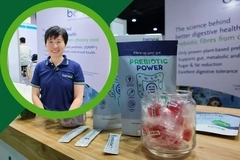
I just walked the show floor and just to try to get a little bit of an idea of what the trends are, what I saw was quite a bit of emphasis on rot, so quite a number of companies that have fiber products, which is also a reflection of what we saw in our market report that we publish every year that shows that, for example, psyllium fiber is one of the ingredients that have had a fairly steep increase in sales in the United States.
Another trend that I noticed was, fruit derived products.
Mushrooms are still very popular.
One thing that I was a little bit surprised, fruit derived products.
So dried fruit juices, it seems that quite a few companies have worked going in that direction.
So that's, from an ingredient perspective, there is.
Quite a bit of innovation also with regards to formulation where companies try to distinguish themselves away maybe from pills or gummies.
They are very, very popular.
I see also single packages with liquids that seem to increase in popularity.
So just from my walk through the booth, that's what I would say.
Yeah, and I also want to reiterate my thanks and gratitude for including us in your reporting for the, for the show, from a, materials perspective, some of the trends that we're seeing.
Are enhanced, processes for absorption of liposomal-based extracts or the linkage of liposomes with botanical extracts for presumably, more bioavailability and quicker absorption, they are developing as a trend and these are materials becoming coming on the market.
Also, the production of new botanical materials.
From the laboratory, if you will, the production of cell-based or tissue culture-based botanicals to compete directly with conventionally grown or organically grown botanicals.
There's some companies that are really focusing in that area, which is an interesting challenge, you would think because of the cost factors that might be presumed to be.
Relatively higher for those that are being done by tissue cultures, but the companies claim that they can be cost competitive with items that are organically or conventionally grown for botanicals like echinacea and or other other products.
So that's an interesting area where biotech and traditional medicinal plant materials are intersecting in ways that could become very interesting because their value.
The position is that they're not contaminated with groundwater that might be contaminated with agricultural chemicals or heavy metals, etc.
This is part of the promotion anyway and materials from these companies, so how they're going to fare in the market and how these things show up and how they compare chemically and biologically with conventionally grown materials is going to be an interesting part of the conversation.
Definitely, and I'm also curious if you can highlight some of the challenges in the industry at this moment.
If I may 1 of the biggest challenges, and this is something that's not new at all, is the continued availability.
Of adulterated and fraudulent botanical material and frankly I would prefer that we did not talk about this, to talk about, you know, the growing body of clinical literature that supports the safety and benefits of botanicals, but to not mention this and not deal with this issue is kind of an awesome.
Rich like sticking your head, your head in the sand and pretending like it's not there because it is there.
And when we started the botanical Adulterant Prevention Program, which Doctor Gaffner is the director of, we started this program at the end of 2010, so it's been, almost 13 years that we've started this program.
The first.
Publication that we that we produced in Herbalgram, our peer reviewed journal, magazine style, is an article called A Brief History of the Adulteration of Herbs, Spices, and Botanical Drugs.
It was written by the late great colleague and friend Stephen Foster.
Who was a botanist and photographer and author and very knowledgeable about the botanical literature, and with this article, which is freely available to anybody in the world who wants to go to the Herbagram.org website and go to the botanical Adulphins Prevention Program page and it's right there.
Anybody can get this information for just through registration.
It's free access.
Our article on the history of adulteration goes back to Greco-Roman times 2000 years ago.
And we've documented all these case histories that are in the literature of adulteration and fraud, economically motivated adulteration, not just accident that happens as.
Sometimes poor training and inadequate information and human error creates a certain amount of adulteration which is not.
Fraud in the sense that there's no intent to deceive the customer, but all too often we see cases where materials are either substituted and or diluted with undisclosed material and or spiked with various compounds from other lower cost plants so that they're intended to actually fool the prevalent laboratory analytical systems designed to identify.
Why the material because the first job in quality control is identity.
You have to ensure the proper identity of the medicinal plant material first and then you go to purity and and strength as second and tertiary considerations all required by GMP rules.
Doctor Gaffner is the chief author of an article that we published in the Journal of Natural Products last year in 2023.
On this very subject, how how we have evidence that the adulterators, the fraudsters, those that are manipulating these extracts, let's call them what they are, the criminals.
That's what they're doing is criminal, how they are intentionally doing this in a way to offer a cheaper, lower cost product that they make money on, but they're designed to produce a false reading on the prevalent laboratory analytical methods that are being employed by industry, in-house laboratories, third party analytical laboratories, even government laboratories.
Stefan, is there anything else you want to mention on that.
Just going back to the challenges, what feeds into the issue of adulteration currently is challenges with the supply chain.
So for example, we have ingredients coming from all over the world.
We have issues, for example, at the Horn of Africa, with pirates, with attacks from Yemen and then ships will have to go around the Cape, so that increases the costs.
Inflation increases the costs, so there is more and more financial incentive for fraudsters to sell low quality diluted or adulterated ingredients that then end up in our products.
So that's something that we see as another trend that leads to an increased risk in adulteration.
And let me just say we have a paper coming out, it's in peer review right now on botanical extracts that are diluted in various ways to reduce the amount of active material that the customer doesn't realize is the case.
And again, that's another form of adulteration.
It may be the proper material as far as the identity, but the amount, the strength of it, is.
Less than what is optimal or even possibly active because the customer, the manufacturing customer may not want to pay the full price of what's necessary and so the, the seller, the the company making the extract or is actually diluting it with maltodextrin or whatever and this is this is a big problem.
It's not just.
Like switching stuff or spiking stuff, but it's diluting materials beyond a level where it would be reasonably, you couldn't reasonably anticipate some kind of beneficial physiological effect, which is the reason people take herbal products in the first place.
There's a presumption of some physiological health benefit.
And if these materials are so heavily diluted, They they may be OK from a chemistry point of view at some point, but they're not gonna be beneficial in any way that's real.
I would add another challenge to the industry, which is costs, and I've seen that.
I was at a discussion yesterday about sustainability, and obviously we need to be sustainable for this industry to have a future, but the farmers that produce sustainably produced materials, ingredients, plants.
Their costs are higher than those that are otherwise produced, so there's only a certain segment of the consumers that can actually afford buying products that are made sustainably.
So that's a challenge that we've seen, and the price pressure is really big.
We have a very fragmented industry, and there are a number of low-cost products on the market that is just very challenging to compete with.
One other aspect that I think I may raise is artificial intelligence that has had an impact on the industry.
I see it more from a scientific point of view where the concern is that AI could actually create.
Scientific publications that are very hard to distinguish from real science, and we just had a discussion this morning that in 2023, 10,000 scientific publications were retracted based on flawed or fabricated science, and I think They're not all concerning the botanical ingredient industry.
It's probably a small percentage, but still, it's something that industry members, if they have a substantiation dose, should be aware of that, they really have to read the paper and see if the science is robust.