

- Industry news
Industry news
- Category news
- Reports
- Key trends
- Multimedia
Multimedia
- Journal
- Events
- Suppliers
Suppliers
- Home
- Industry news
Industry news
- Category news
- Reports
- Key trends
- Multimedia
Multimedia
- Events
- Suppliers
Suppliers
NPEW 2024 live: Alkemist Labs dives into the future of analytical testing for nutrition
10 Apr 2024 | Alkemist Labs
Élan M. Sudberg, CEO of Alkemist Labs, details the evolution of analytical testing in the nutrition industry at the recent Natural Products Expo West (NPEW) trade show, ensuring the purity and potency of botanicals. The company recently added blockchain technology to help its clients combat adulteration and additional testing capabilities for microbiological and residual solvent testing and tetrahydrocannabinol analysis — the psychoactive compound in marijuana.

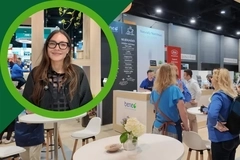
This is Yolanda from Health and Nutrition Insights.
I'm here live at Expo West in California with Alchemist Labs and the company's CEO Elon Sutberg.
Thank you for joining us today.
My pleasure.
Thank you for having me.
And I would love to hear more about the services or the new services and blockchain solutions that you're featuring at the show.
So Alchemist Labs has been around for almost 27 years.
We started with Plant identity and Fungal identity, and then we moved over.
To quantitation of phytochemicals, fungal chemicals, so potency, and basically on pressure by our clientele to add the contaminant testing, we, we added the metals, pesticides, microbiology, and residual solvents, so we weren't going to go there because it's commodity testing, but the clients asked or begged, and we went there.
The blockchain is a is a new development innovation for us.
I suppose it can be considered an honor that our CFAs, our reports, our product is actually adulterated even though we're a company designed to help people not have adulterated material.
Our product is also being adulterated in the market and so, we work with the company Health Lock and they developed, a brilliant technology, to basically map the bits of all of our catalog of CVs so it's not, they don't have our results.
They just have all the dots that make up the results and.
There are ways now that clients could basically double check their report in hand versus what's actual a real report, and it happens in seconds.
So we're hoping that will help stop the adulteration.
And I was also speaking on that, looking at what can you tell us about the challenges in the botanical industry that your services help address.
You have an orange, you can see it's an orange.
When you have a watermelon, you can see the watermelon, but when you powder those materials, it's no longer possible to see that.
You can taste it.
There's still ways to do it called organileptic, but the less data you have, the harder it is to identify.
And so our job is to make sure our customers have the correct material.
So it is in fact Saint John's wort.
It has the right quantity of chemicals in it and it's free of contaminants.
One of the biggest challenges that the FDA basically requires these tests, but they don't say exactly how.
They don't say what method to use and so we pioneer HPTLC, microscopy, HPLC, for those identity and potency tests, whereas other companies may do easier, less expensive, less nuanced testing.
So occasionally the results will be different because they use different methods, different technology to produce different results.
An example would be using a UV.
Is to quantify a chemical you get much higher numbers versus HPLC, which is the more accurate one, lower.
So when someone buys something analyzed by UVVs, they're going to come up with a big number, and when you test it with the most precise methods, it'll be a lower number.
And so one of the challenges is really convincing our clientele that we are the more knowledgeable ones on the right test to produce for our clients.
Awesome.
And with the company being around for so long, what can you tell us about the role of analytical testing and how that's changed in recent years?
It's changed because there are fewer labs.
There were many, many labs.
There are a couple of big ones buying up all the little labs, and that just kind of happens in any industry.
Also, just like, as I mentioned before, like which methods to use, but also.
Transparency, there's very little of it, and I think this industry is unfortunately plagued with misinformation that we're unregulated, which is completely false, that we are unsafe, which is completely false, and we have the best record of all FDA regulated categories, and then that we're untested, which is mostly false, and so our customers.
Are being sort of prompted to share the data with the with their customers.
They're going to sell it to either a content manufacturer or a finished products, you know, testing is expensive and it's like a marketing campaign you never launched.
So that's one of the challenges this industry needs to get over is to actually take the data out of the closet, out of the drawer of the QC professional, and share it as those marketing material.
OK, and, can you tell us a bit about where you see the industry heading?
So with this advice, where do you see it going?
You know, it's, it's, it's interesting.
There's always new ingredients, and that's always challenging, but we've been around for a while.
This is not a new industry.
It's thousands of years old.
It's just newly marketed and professionalized, if that's a word, where it's going is, you know, the newer ingredients, but, you know, I think there's a new extension of personalized medicine, a few years back.
Blood tests and things like that, genetic tests to tell you what you kind of need and now, now there's, you enter the world of AI and, amazing things are possible.
So I'm excited to see where AI will come into this industry as far as like creating a product, researching a product, some really amazing companies on the horizon of that.
So that's gonna change a lot of things, perhaps the speed to get a product from idea to shelf, and the unfortunate part is the labs are gonna have to keep up with that so.
We'll have, you know, micro encapsulated things inside things inside things, and while that's really cool and there might be some science behind the mechanisms for, for usage, they forgot about getting the labs involved in testing it.
So we'll, we'll have to figure that out when it's already on the shelf, and so you know, labs are always kind of playing catch up to innovation.
So awesome.
And for alchemist labs yourselves, how do you anticipate a response to those things that are happening in the industry we work.
With some amazing companies and you know we're we're pretty connected in the industry and being invited to play with some of those technology companies, the AI companies and and and all that, so that's that's the best chance we have to keep up with is to play along with them as a as a partner, you know, we we like to think of ourselves as kind of like the rhythm guitar to the industry for quality, so we don't make the products, we help our customers make sure that they're safe and effective and having great relationship with them helps us keep up with their technology.
Awesome, thank you so much.
My pleasure.
Thank you.