





Vitafoods Asia 2026: PhytoGaia taps tocotrienols for longevity and pet skin health

Key takeaways
- PhytoGaia is featuring STGaia at Vitafoods Asia 2026, a tocotrienol and squalene complex positioned as an “Inside-Out” and “Outside-In” approach to aging, with ongoing clinical research.
- The company points to research linking tocotrienols to telomerase and antioxidant enzyme findings and in vitro research on squalene’s impact on telomeres and skin health.
- The company will present new promising clinical research results on PetGaia for canine skin and coat health.
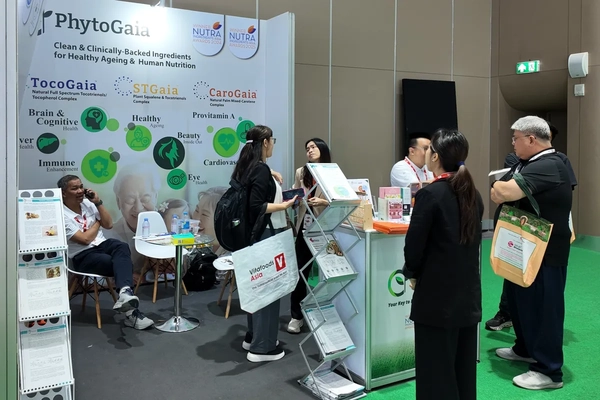
At the ongoing Vitafoods Asia 2026 trade show in Bangkok, Thailand, PhytoGaia is showcasing healthy aging and pet nutrition applications for its branded ingredients based on the natural palm phytonutrients tocotrienols and squalene.
The company’s innovations include STGaia, a complex of squalene and tocotrienol, as its next-generation approach to healthy aging, with product concepts ranging from vegetarian softgels and liquid capsules to functional jellies.
At its booth, PhytoGaia is also displaying softgels and dropper formulations with PetGaia for pets’ skin and coat health, as well as beauty concepts targeting skin, hair, and healthy aging.
Dr. Ariati Aris, scientific affairs specialist at PhytoGaia, tells Nutrition Insight that the company sees healthy aging and pet wellness as particularly important opportunity areas for its ingredients.

“Healthy aging remains a key focus because it is supported by a growing body of scientific evidence and aligns strongly with major global consumer trends around longevity, vitality, beauty-from-within, and preventive health.”
She says that research on tocotrienols and squalene has identified potential benefits across areas closely associated with healthy aging, including oxidative stress, inflammation, skin health, cellular resilience, and metabolic health.
“Our own clinical research continues to generate encouraging findings, helping to strengthen the scientific foundation for new healthy aging applications and differentiated product concepts.”
PhytoGaia is also presenting early clinical research on PetGaia at Vitafoods Asia 2026. Aris says data from its latest randomized, placebo-controlled canine clinical trial found significant improvements across multiple clinically assessed parameters of skin and coat health.
An eight-week randomized, double-blind, placebo-controlled clinical study found improvements in companion dogs in skin health — including dryness and scaling, skin redness, and overall skin score — and coat quality, such as shedding, coat smoothness, softness, and shine.
 Aris sees healthy aging and pet wellness as PhytoGaia’s strongest opportunity areas.“Looking ahead, the broader biological properties of palm phytonutrients provide opportunities to explore additional areas of pet wellness, including healthy aging, mobility, cognitive health, and overall vitality,” adds Aris. “These are potential future areas for research as we continue to build the scientific evidence.”
Inner and outer healthy aging
PhytoGaia believes healthy aging warrants a comprehensive approach, combining “Inside-Out” through biological and cellular health, and “Outside-In” through skin health and appearance.
According to Aris, the company sees the strongest combination of scientific evidence and commercial potential in areas that address these visible and non-visible aspects of aging — helping people look healthier on the outside and support the biological resilience and well-being that underpin healthier aging from within.
“Skin health is one of the most commercially attractive opportunities, particularly within the growing beauty-from-within and nutricosmetics markets,” she highlights. “At the same time, consumers are increasingly looking beyond visible appearance and seeking solutions that support their internal health, resilience, and overall well-being.”
“On the non-visible side, we are particularly interested in the scientific evidence around oxidative stress, inflammatory balance, and cellular aging, including telomerase activity,” he explains.
Hallmarks of aging
Aris points to STGaia as emblematic of this integrated “Inside-Out” and “Outside-In” approach.
“The Inside-Out approach focuses on biological processes associated with healthy aging, including oxidative stress, inflammation, lipid metabolism, and cellular maintenance, while the Outside-In approach focuses on skin health and the changes associated with skin aging.”
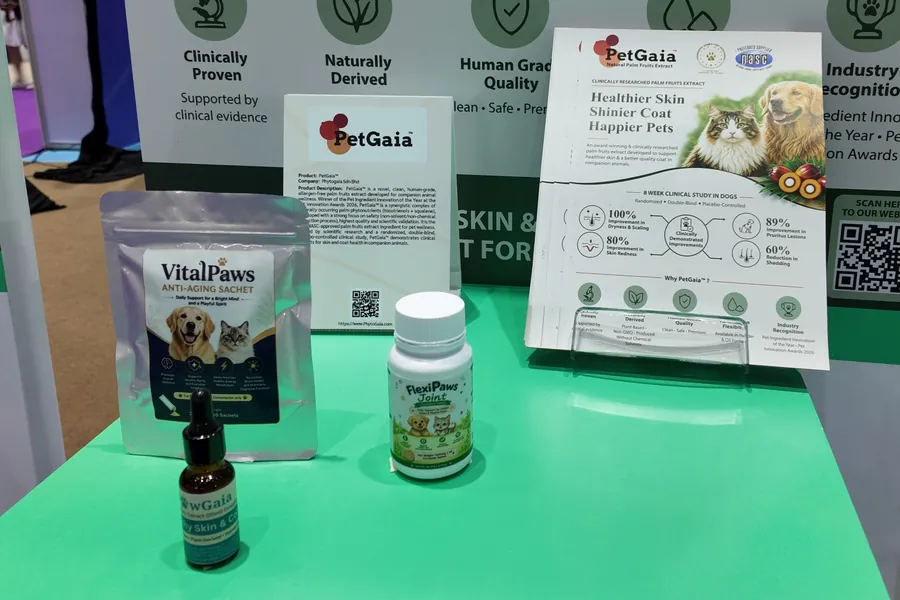 Clinical research found that PetGaia improved skin health and coat quality parameters in companion dogs over eight weeks.She explains that the ingredient targets key hallmarks of aging, including oxidative stress, chronic inflammation, genomic instability, and skin lipid loss. The ingredient offers complementary biological activities for internal and external aspects of healthy aging.
“The evidence on tocotrienols and squalene provides a scientific foundation for exploring their complementary and potentially synergistic roles in healthy aging.”
She points to a growing body of research on tocotrienols, such as recent human clinical research on tocotrienol-rich TocoGaia, showing promising effects of the compounds on markers associated with healthy aging.
“In a six-month randomized clinical trial in older adults, daily tocotrienol supplementation produced a broad systemic anti-inflammatory effect and significantly improved antioxidant enzyme activity, supporting the body’s defense against oxidative stress.”
Aris notes that telomerase activity increased significantly, which she notes is a key indicator of healthy aging and genomic maintenance. The researchers also observed improvements in the stress hormone cortisol and insulin levels, as well as in psychological well-being, measured by a validated questionnaire.
Moreover, she highlights emerging research by the National University of Malaysia, suggesting that tocotrienols may support telomere integrity by mitigating oxidative damage and enhancing DNA repair mechanisms.
She says that previous in vitro studies have demonstrated that tocotrienols could protect human skin fibroblasts from oxidative stress-induced telomere shortening and loss of telomerase activity — both critical markers of cellular aging.
Additionally, the studies found that pre-treatment significantly preserved telomere length and restored telomerase function, she explains, highlighting their potential to mitigate oxidative DNA damage and support genomic integrity.
Squalene for skin health
The other key ingredient in STGaia, squalene, provides complementary benefits for skin health, says Aris.
She notes that the naturally occurring component of skin surface lipids declines with age, explaining that it contributes to skin moisturization, barrier function, and protection against environmental stressors. “It also possesses antioxidant properties and has been investigated for its potential to modulate inflammatory pathways.”
 Aris says recent human clinical research on tocotrienol-rich TocoGaia showed promising effects of the compounds on markers associated with healthy aging.Moreover, Aris says that squalene has been reported to support collagen production, reduce skin erythema, and promote wound healing.
“Beyond skin health, clinical research has also explored the systemic benefits of squalene, including its role in lipid metabolism and cardiovascular health,” she adds.
For example, Spanish researchers have reported that dietary squalene promoted changes in high-density lipoprotein cholesterol and decreased reactive oxygen species in lipoproteins and oxidative stress markers in a mouse model.
Aris also points to a 2024 review on tocotrienol and squalene and skin health. He says this paper highlights the “synergistic roles” of tocotrienols and squalene in skin barrier support, mitochondrial protection, redox balance, and inflammation control.
Although scientific literature provides a rationale for STGaia, she notes that PhytoGaia also generates direct human evidence on the finished ingredient.
“A randomized controlled human clinical trial evaluating STGaia supplementation is currently ongoing. This study is designed to provide direct clinical evidence on the potential benefits of STGaia and will help us better understand how the complementary properties of tocotrienols and squalene translate into measurable outcomes in healthy aging.”
Clean label formulations
PhytoGaia has developed its ingredients, such as STGaia, in various forms and delivery formats to meet different application and formulation requirements, including oil-based formats, softgels, powders, beadlets, and other delivery systems.
Aris highlights several formulation and delivery challenges when working with tocotrienols and plant-derived squalene, including stability, solubility, dispersibility, bioavailability, and delivery format.
“As both are oil-soluble phytonutrients, incorporating them into different product formats — particularly water-based applications such as beverages and powders — requires careful formulation to maintain stability and support effective delivery.”
 To support clean label products, PhytoGaia’s ingredients are produced without chemical solvents, while its powder formats use gum arabic as a carrier.Moreover, Aris says that PhytoGaia’s ingredients are produced without chemical solvents. For its powder formats, the company doesn’t use maltodextrin or modified starch as carriers. “Instead, we use gum arabic, a naturally derived dietary fiber and widely accepted food ingredient, to encapsulate and protect the phytonutrients.”
“This gives our industry partners greater flexibility to develop clean label products while maintaining the stability and integrity of the bioactive ingredients,” she adds.
Innovation and claims in Asia
Aris says that regulations and consumer preferences directly influence how PhytoGaia develops its products, formulates them, and communicates their benefits, as these can vary significantly across Asian markets.
“From a regulatory perspective, our approach is to build claims around robust scientific evidence and ensure that product communication is appropriate for the requirements of each target market. We are careful not to make claims that go beyond the available evidence, and we work closely with our regulatory teams and local market partners to ensure that our ingredients are positioned responsibly and appropriately.”
She adds that Asian consumers are increasingly looking for science-backed, clean label, naturally derived, sustainable, and preventive health solutions, particularly in areas such as healthy aging, beauty-from-within, skin health, and overall wellness.
“These evolving preferences create opportunities for ingredients such as STGaia, TocoGaia, and PetGaia,” says Aris. “Our strategy is therefore to maintain a consistent scientific foundation while adapting the product positioning, formulation, and communication to the specific regulatory and consumer requirements of each market.”