


Protein restriction and longevity: EUFIC weighs the evidence for healthy aging

Key takeaways
- Animal research links total protein or specific amino acid restriction to improved metabolic health and extended lifespan, though human evidence remains unproven.
- Restricting protein in older adults risks worsening muscle loss and frailty, which adequate protein intake and exercise actively combat, warns EUFIC.
- They add that decades-long human lifespan trials are unfeasible, shifting research focus toward shorter studies on healthy aging markers and specific amino acid compositions.

A recent review outlines a potential link between restricting specific amino acids and extending lifespan. In response to this finding, the European Food Information Council (EUFIC) raises several considerations, underscoring that the reality is more nuanced than direct guidance that “less protein is better.” It instead raises questions about the role protein’s specific amino acid composition plays in healthy aging.
The review in Cell Press Blue spans human studies and experimental models involving mice, rats, flies, and yeast. It reports that restricting certain amino acids — particularly methionine, isoleucine, and valine — may improve aspects of metabolic health and even extend lifespan in several experimental organisms. Independent scientists have cautioned that the majority of studies reviewed come from rodent and insect studies, limiting conclusions about these findings for humans.

EUFIC stresses that the human studies included in the review have generally examined short-term metabolic outcomes — such as changes in blood glucose, insulin sensitivity, and body weight — instead of lifespan or long-term healthy aging.
The council also underscores that there is no established amount of protein people should restrict to increase longevity: none of the human studies in the review establish an intake level that extends human lifespan, and the organization flags remaining unknowns about the optimal levels of protein intake.
Nutrition Insight speaks to EUFIC’s nutrition expert, Laura Bosman, to unpack the findings from human and animal research, what is currently known about protein restriction and aging, where important questions remain, and why protein needs can differ depending on factors such as age and physical activity.
Why might these specific amino acids — methionine, isoleucine, and valine — have more significant effects on metabolism and aging?
Bosman: Methionine, isoleucine, and valine influence several biological processes linked to metabolism and aging, although the mechanisms differ between them and they’re not yet fully understood.
 None of the human studies in the review establish an optimal protein intake level for longevity.Methionine restriction increases FGF21, a hormone that helps coordinate the body’s response to low protein intake, and reduces activity of mTORC1, a nutrient-sensing system involved in cell growth and maintenance. Both changes have been linked to lifespan extension in experimental animals. Methionine also provides molecules needed to regulate how genes are switched on and off, so restricting it may influence aging through changes in gene regulation.
Isoleucine restriction appears to act particularly strongly on metabolism. In mice, it increases energy use, reduces body fat, and improves blood sugar control, while also changing nutrient-sensing pathways and how genes are regulated. Valine is involved in how cells produce energy, and restricting it in mice improves metabolic health and reduces the accumulation of aging or damaged cells in the liver.
It’s important to mention that these mechanisms come mainly from animal research. Other amino acids may also influence aging, and we do not yet know whether restricting these three specifically would extend lifespan in humans.
How could protein restriction affect muscle health as people age, given that adequate protein is also important for preventing sarcopenia and frailty?
Bosman: This is one of the important points in translating protein-restriction research to humans. Protein provides the amino acids needed to maintain muscle, and maintaining muscle becomes particularly important with age. The review cites evidence that older adults eating 1.2 g protein/kg body weight per day lost less muscle mass over three years compared to those eating 0.8 g/kg. Higher protein intake has also been linked with a lower risk of frailty in some observational studies.
At the same time, some animal studies suggest that protein restriction can reduce frailty even when lean mass decreases. The review also notes evidence that exercise may help offset the loss of lean mass associated with lower-protein diets.
So there’s potentially a balancing act here. We currently don’t know whether there is a level of protein intake that could provide potential metabolic benefits of restriction while still providing enough protein to protect muscle as we age. Furthermore, this balance is likely to differ between individuals according to factors such as age, nutritional status, and physical activity. For now, the evidence doesn’t support recommending protein restriction to older adults for longevity. The scientific paper specifically notes that some older people already have insufficient protein intake, and protein restriction could worsen this.
What would a strong, long-term human trial need to look like to test protein or amino acid restriction on healthy aging?
Bosman: A trial specifically designed to test whether protein or amino acid restriction extends lifespan would be extremely difficult and probably not feasible. In an ideal trial, participants would be randomly assigned to a nutritionally adequate diet with either less total protein or lower amounts of specific amino acids, or to a control diet, for example, one following standard dietary guidelines. But if lifespan is your outcome, you would potentially have to follow those people for decades.
Such a trial would be extremely costly and time-consuming. You’d have to keep people following quite different diets for a very long time. In real life, we can’t control exactly what people eat, and adherence would almost certainly become an issue.
A more realistic approach would be to run trials over several years rather than several decades and look at outcomes that can change within that timeframe. Instead of waiting to see whether participants live longer, researchers could measure aspects of healthy aging such as frailty, physical function, muscle health, and cognitive function, alongside measures of cardiometabolic health such as insulin sensitivity, blood pressure, and blood lipids.
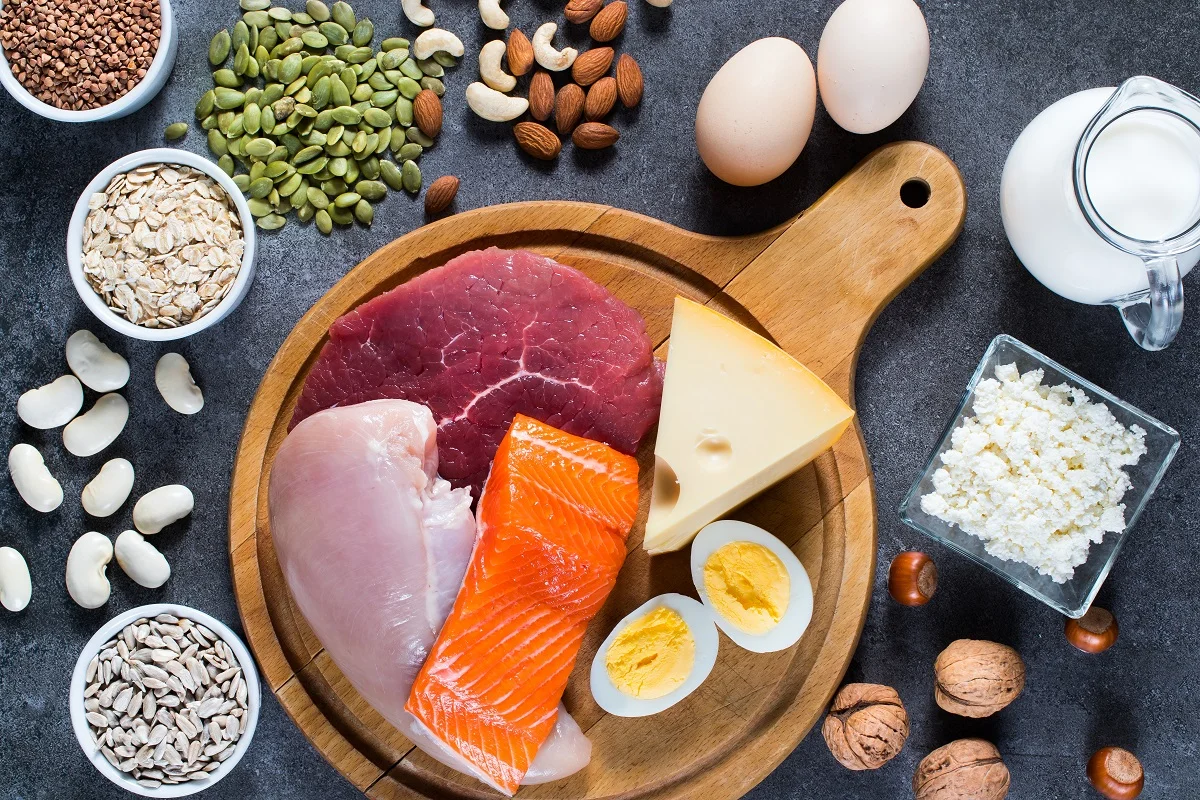 Longevity benefits may stem from reducing specific types of amino acids rather than overall protein intake.These trials still wouldn’t tell us directly whether protein restriction extends lifespan, but they could show whether it improves or harms important aspects of health as people age. Combining these findings with large observational studies, which follow people’s usual diets and mortality over much longer periods without assigning them to a specific diet, could then help build a more complete picture of the relationship between protein intake, healthy aging, and longevity.
Could the future of protein and longevity research be more about changing the amino acid composition of the diet rather than reducing protein intake?
Bosman: I think that’s one of the interesting questions coming out of this research. When you reduce total protein, you’re reducing lots of different amino acids at the same time. But what this review suggests is that some amino acids may be more important than others in driving the effects we see.
Methionine, isoleucine, and valine are good examples, because restricting these individually has produced some of the same effects on metabolism and lifespan as restricting protein overall in experimental animals.
But it’s important to remember that we’re definitely not at the point where we can translate that into dietary advice. Most of this evidence still comes from experimental animals, and we need much more human research to understand which amino acids matter, how much is optimal, and whether that differs between people.
What do you see as the biggest challenge in translating the lifespan effects seen in animals into practical dietary strategies for humans?
Bosman: I think the biggest challenge is working out whether the effects we see in animals actually translate to humans. With laboratory animals, researchers can control exactly what they eat, including the amount of protein and individual amino acids, as well as many other aspects of their environment. That makes it much easier to isolate the effect of changing one part of the diet.
Humans are obviously much more complicated. Our protein needs differ depending on things like age, physical activity, energy intake, pregnancy, growth, or recovery from injury. And particularly in older adults, there is a real balance to consider, because some already consume too little protein, and further restriction could increase the risk of muscle loss.
So, just because protein restriction extends lifespan in a mouse doesn’t mean it will do the same in humans. The real question is whether we can translate any of those potential benefits into a dietary approach that is safe and realistic over the long term, without negatively affecting other aspects of health.