



Ultra-processed foods linked to insulin spikes even when nutrients match, study finds

Key takeaways
- A study suggests that ultra-processed foods trigger higher insulin release, greater energy expenditure, and lower carbohydrate burning compared to nutritionally identical non-ultra-processed foods.
- Brain scans revealed distinct activity in reward and motivation regions corresponding to metabolic differences between the two meal types.
- The findings indicate that industrial processing methods alter human metabolic and neural responses independent of calorie, fat, protein, carbohydrate, water, and salt content.
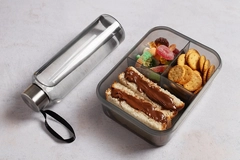
Findings from a study in healthy adults suggest that different food processing methods produce distinct metabolic outcomes, even when lesser and ultra-processed foods are standardized to identical nutrition profiles — in terms of calories, carbohydrates, fats, proteins, water, and salt.
Blood tests taken from participants before and after a meal with or without ultra-processed foods indicated that participants consuming ultra-processed meals released more insulin and expended more energy while burning less carbohydrate for fuel. The meals also evoked different responses in the part of the brain involved in motivation and reward.
The authors of the paper suggest the findings may help researchers to better understand why ultra-processed foods have been historically associated with overconsumption, while illuminating their long-term health impacts and pointing to new areas for research.

Nutrition Insight speaks to the study authors to learn how the body and brain respond to eating in ways that go beyond carbohydrates, fat, and protein.
“We purposely combined different foods and different processing techniques to investigate whether food processing as defined by the Nova classification system had an effect on metabolic response,” says corresponding author Alex DiFeliceantonio, Ph.D., a neuroscientist and associate professor at the Fralin Biomedical Research Institute at Virginia Tech, US.
“Therefore, we need to follow up on what specific technique may lead to the most metabolic differences between nutritionally similar foods.”
 The researchers note that ultra-processed foods represent more than half of the average US consumer’s daily calories.The researchers note that ultra-processed foods represent more than half of the average American’s daily calories. Diets worldwide are also shifting to include more of such foods, which are formulated to be convenient, accessible, affordable, and highly palatable, making them easy to overeat.
“If you look at that population-level data, people who consume large amounts of ultra-processed foods have higher rates of poor health outcomes — obesity, cardiac events, type 2 diabetes, and even some metrics of mental health,” says DiFeliceantonio.
“We know that the majority of ultra-processed foods are high in fat, they’re high in sugar, they’re low in fiber, and they’re low in protein. But if we artificially hold all of those things constant, is there something about the processing that leads to a different outcome?”
Metabolic diet sessions
Most nutrition science suggests that meals with the same basic nutritional profile will have the same impact on a person’s blood sugar — the Virginia Tech researchers set out to determine whether this holds true. While highly processed foods have been linked to increased disease risks, the team notes that the mechanisms linking food processing to health outcomes and overconsumption are less understood.
The study in Nature Metabolism included 32 healthy adult participants between the ages of 18 and 45 who completed both the brain functional magnetic resonance imaging (fMRI) and metabolic diet sessions.
The researchers explain that the highly processed meal included a bite of a peanut butter and jelly sandwich, deli turkey, veggie chips, a cookie, cereal, instant mashed potatoes, and water. The non-ultra-processed meal included a sliced banana, dried cranberries, cheese, and egg.
“The two meals are matched within 1% of carbs, fat, proteins, calories, water, and salt,” highlights Zach Hutelin, the study’s first author and a researcher at the Virginia Tech institute. “If these meals had a nutritional label, they would be practically identical.”
The metabolic testing took place across two separate days using a randomized crossover design, with three or more days between sessions so researchers could compare how the same individual responded to each meal type. Following an overnight fast, participants entered a metabolic chamber — a sealed, airtight room used to measure human energy expenditure and metabolism — where researchers took 50 minutes of baseline metabolic readings and drawn blood.
Participants were then given 10 minutes to consume a 300 kcal meal composed entirely of either ultra-processed foods or non-ultra-processed foods. In selecting the meals, the researchers used the Nova scale, which categorizes food into four groups based on industrial processing levels, to construct nutritionally matched profiles.
 The ultra-processed meal in the study consisted of a peanut butter and jelly sandwich, deli turkey, veggie chips, a cookie, cereal, instant mashed potatoes, and water.The researchers drew blood immediately following the meal and six more times over the next three hours, conducting continuous postprandial metabolic measurements to track insulin response, energy expenditure, and carbohydrate oxidation.
“We were shocked that every single metabolic metric differed,” says Hutelin. “What we noticed with the ultra-processed food is that insulin response was much higher and blood sugar stays a little bit higher for a little bit longer.”
Food-wired brain activity
On a separate testing day, participants looked at pictures of 28 nutritionally matched ultra-processed and non-ultra-processed foods while undergoing an fMRI. These pictures included foods served during the metabolic tests.
Participants in the MRI scanner reported how much they would be willing to pay for a type of food after viewing photos of it. The researchers discovered that participants’ subjective value of the foods corresponded with their brain activity.
There was notable brain activity in the ventral striatum and nucleus accumbens, which are regions involved in learning, motivation, and reward. The authors note that differences in how participants burned carbohydrates for energy after each type of meal were linked to differences in how their brains responded to pictures of food.
Although participants valued both food options similarly, the researchers note that brain responses correlated with food valuation are positive for non-ultra-processed foods and negative for ultra-processed ones.
In future research, DiFeliceantonio aims to examine different populations, longer time periods, bigger meals, and more pairings of less and highly processed foods. While the meals served were matched on protein, for instance, she notes that these protein sources were different and could have influenced the outcome.
Additionally, the ultra-processed meal in the study contained more additives. While the study did measure total fiber, it did not explicitly measure the physical and chemical structures of the food studied.
“We want to examine specific factors, such as commercial additives or specific processing steps, that might lead to different metabolic responses,” DiFeliceantonio concludes.