



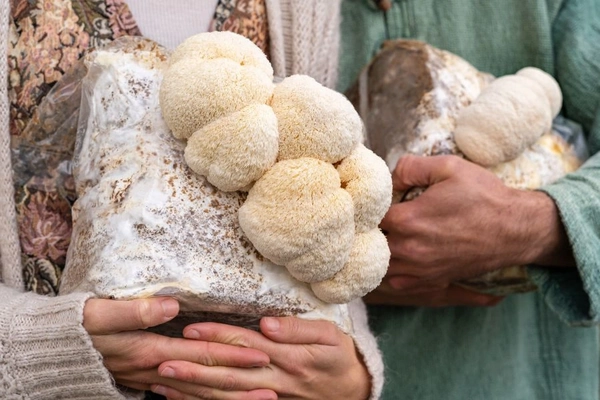
Paul Stamets explores mycology and immune health benefits of mushroom mycelium

Key takeaways
- Paul Stamets emphasizes the immune-boosting potential of mushroom mycelium, which contains more active compounds than the mushrooms themselves.
- Stamets cautions against misinformation in the rapidly growing mushroom and mycelium industries, urging suppliers to prioritize transparency and sourcing expertise.
- He highlights the importance of scientific research, recommending placebo-controlled trials to validate the health benefits of mycelium-based products.
In the growing mushroom supplements industry, there is an increased focus on mycelium’s impact on immunity and other health benefits. This root-like network of fungi consists of thread-like branches that grow underground or within substrates, while fruiting bodies (mushrooms) grow above the ground and release spores.
Nutrition Insight dives into the mycelium with mycologist Paul Stamets, founder of Fungi Perfecti and Host Defense Mushrooms and presenter on the Netflix series “Fantastic Fungi,” who highlights the benefits of mushrooms’ mycelium as “the immune system of the ecosystem.”
“Many more genes, in general, are being expressed in the mycelial state than the mushrooms from that mycelium,” he details. “The mycelium is navigating through an ecosystem, sometimes for years, and then suddenly it produces a mushroom that rots in five days.”

Highlighting their differences, he advises consumers to consume “mushrooms for dinner and mycelium for immunity.”
However, he says that most consumers don’t realize that mushrooms are made from mycelium. “The mycelium in the network is exposed to the ecosystem, so it has to constantly defend itself against pathogens. They’re also very complex messaging systems within the ecosystem, helping its survival.”
While mushrooms are dense in nutrition, they don’t produce extracellular metabolites like mycelium, which is “much more immunologically beneficial than the mushrooms.”
“Mycelium is sustainable, more pure, and has many more genes that are expressing compounds and new molecules. We can tap into the mycelium as a deep reservoir of discovery of new ways of improving human health.”
Mycelium for immunity
Stamets says mycelium’s immune benefits in healthy individuals and cognition hold the greatest scientific validation.
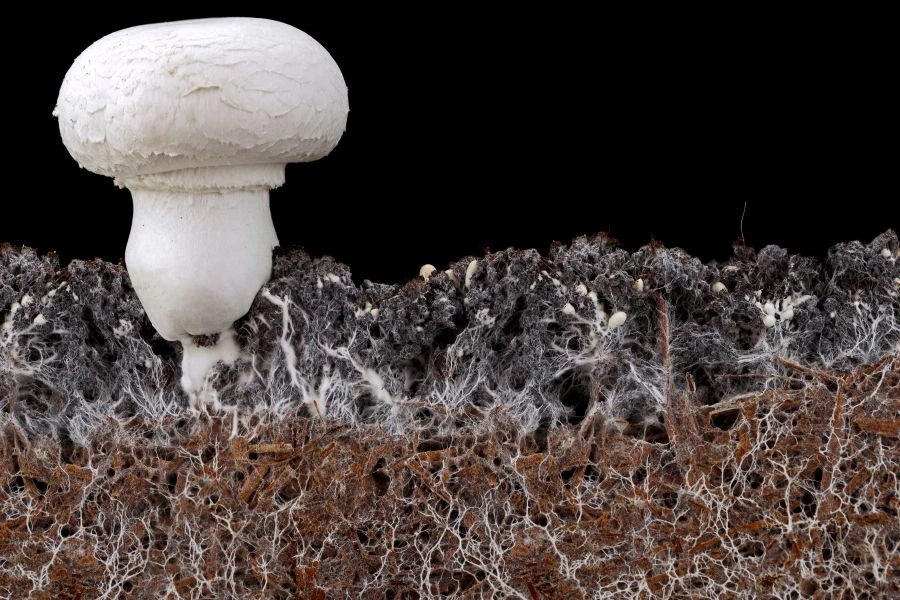 Although mushrooms are dense in nutrition, they don’t produce extracellular metabolites like mycelium, which has more immune benefits than mushrooms.“We all are suffering from neurodegeneration and immune decay, which is age-related. As you get older, your immune system and brain don’t work as well,” he details. “All of us are experiencing this or will experience this. These are the two areas where mycology comes to the forefront and offers some applicable, scalable, sustainable solutions.”
Nutrition Insight previously spoke with Stamets about recent clinical research findings that a blend of agarikon and turkey tail mycelia is an effective adjunct supplement to reduce side effects from COVID-19 vaccinations.
“This is the most significant clinical study that has been published on using mushrooms or mushroom mycelium as a category than anything that has been conducted heretofore,” he tells us.
Stamets notes that vaccines’ hyperselectivity is an advantage and a disadvantage, as virus mutations require consumers to take additional vaccines tailored to these new variations.
“Researchers in this article think that mycelia can elevate your endogenous immune system to a higher state of readiness, which can then articulate and design a defense.”
He hopes that this may prevent vaccine evasion, as having a robust immune system ensures the body can naturally fend for itself.
“More studies are needed, but we have two clinical studies. Both of these validate each other. The other clinical study is yet to be published.”
Countering misinformation
As products based on mushrooms and their mycelium have become exceedingly popular, Stamets cautions that “economic opportunists” have entered the market who lack expert knowledge.
 Mycologist Paul Stamets, founder of Fungi Perfecti and Host Defense Mushrooms.“The field of mycology is a nascent but massively complicated field of science that people need to understand. Some mushrooms are edible, some are poisonous, some you can digest, and others you can’t. Some are consumed for fragrance or flavor, some for nutrition, and others for an immune benefit.”
He adds that ingredient sourcing and transparency are key. “Make sure that your products are coming from a truly certified organic source. You should know the people who are running the company to see if they’re actually experts.”
Stamets also expresses his concerns about misinformation in the booming mushroom industry. For example, he notes a falsehood that when suppliers grow mycelium on rice, the substrate is seen as a filler. “This would be like saying milk is a filler in yogurt you are fermenting. It’s a bioreactor, a microfermentation process.”
He also cautions that some extracts are entering the market, where the mushroom is extracted with hot water, and the marc — residues that remain after extraction — is added back to the product. He has observed similar products sold as “100% extract,” which he says is a misrepresentation.
Although the whole mushrooms are nutritious, hot water extracts do not contain their lipids, as these are not water-soluble and are separated out, while compounds like soluble beta-glucans remain.
“You lose the lipids, you lose the immune benefit,” stresses Stamets.
Boosting health benefits
Stamets says that mycelium is a “wellspring of novel constituents,” noting that it is rich with potential attributes that could be used for helping human and animal health. Meanwhile, mushroom fruiting bodies are at the end of the life cycle.
“They’re designed to rot and invite insects in, which distribute the spores,” he notes. “They’re very nutritious, but not only for us. They’re nutritious for all sorts of other organisms that want to consume them.”
Nutrition Insight previously explored mycelium food applications in cultivated meat of Optimized Foods’ technology based on the root network, while examining how researchers in Germany successfully grew high-quality mycelium-based protein on food sidestreams that taste better than soy.
 Authors of a recent study on mycelia think it can elevate the endogenous immune system to a higher state of readiness, which can then articulate and design a defense.In an attempt to boost the antioxidant profile of mushrooms, some suppliers are using purple corn as substrates in fungi cultivation, instead of the more common materials like rice. However, Stamets cautions that this practice makes it more difficult to spot molds.
“It’s one thing to grow this in a beaker in a laboratory, but it’s another thing to grow tons of it,” he adds. “That’s my concern, trying to grow tons of this on a purple or dark substrate. When your biggest competitors are these green and black molds, they’re not going to be as evident or discoverable.”
“You could actually be introducing toxins because of your inability to have good quality controls, and you end up with a polyculture of mycelium and molds co-occurring, and you wouldn’t be able to see it easily,” he cautions. “That can have a dramatically negative effect on human health.”
Focus on scientific research
Stamets underscores the importance of companies building credibility by knowing the science behind mycelium and conducting studies on their own products. “Placebo-controlled, randomized clinical trials are what’s absolutely needed to be able to measure the outcomes of these products.”
He also notes that consumers are becoming more skeptical and critical, asking companies to show scientific results and whether that is research conducted on their own products or “borrowed from literature.”
“There are great suppliers of mushroom mycelium in the US and Canada,” he illustrates. “They’re authentic, they publish, and they have good controls.”
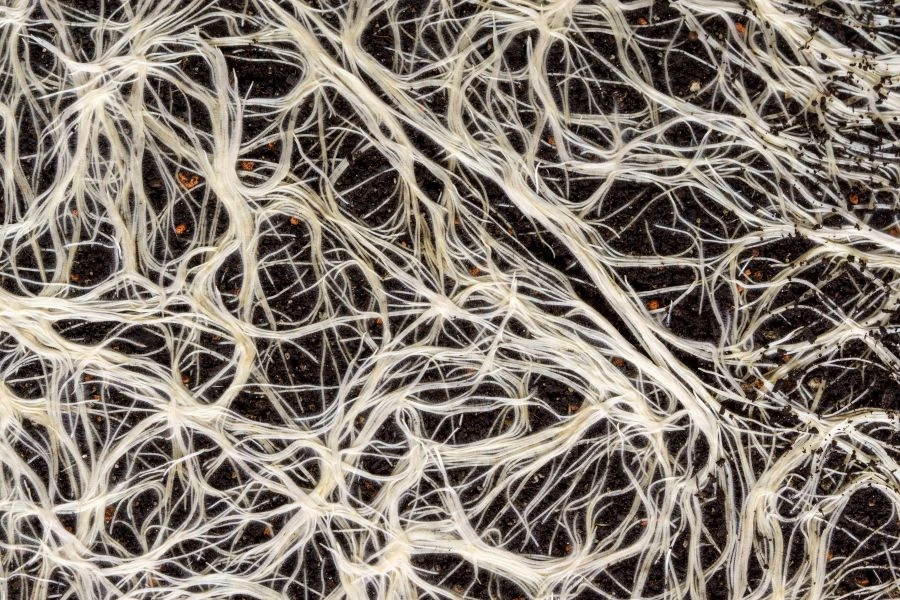 Stamets says that mycelium is a “wellspring of novel constituents,” with potential attributes that could be used for human and animal health.“As we have more scientific tools and capabilities and a deeper understanding, we have new opportunities,” he adds.
“Every tradition has benefited from advances in modern technology. From typewriters to the computer to voice recognition, from hot water extracts of mushrooms to in vitro propagation of mycelium from the mushrooms. That’s a natural evolution of the science.”
Meanwhile, Stamets underscores the importance of considering the whole mycelium or mushroom product, instead of trying to link a single active ingredient or compound to a health benefit.
“People who will go down the wormhole of one active constituent trying to explain whether a product is good or bad are missing the forest for the trees. It’s the entourage effect.”
He explains that people’s bodies have evolved in nature, immersed in the entourage of this complexity and in constant molecular communication with the ecosystem. “One molecule is not going to explain the outcome — we have spheres of active constituents represented within species.”
“Our ancestors have methodically gone through plants and mushrooms to find which ones are beneficial. That’s a pretty good selection criterion over thousands of years,” Stamets concludes.