
Sami-Sabinsa’s new India facility starts herbal ingredient production


Key takeaways
- Sami-Sabinsa has begun production at its new US$15 million facility in India, expanding its herbal ingredient manufacturing capacity.
- The strategically located site strengthens global supply capabilities, supports export growth, and underpins the company’s plans to broaden its portfolio.
- Designed with sustainability and manufacturing practices in mind, the facility features zero liquid discharge water systems and energy-efficient operations.
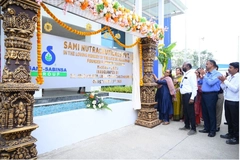 Image credit: Sami-Sabinsa
Sami-Sabinsa Group’s herbal products and ingredients manufacturing unit, located in the Pharma SEZ Industrial Area, Karnataka, India, has commenced production. The recently opened facility is worth US$15 million and is part of the company’s strategy to expand its existing ingredient portfolio with innovative products.
The new plant, the Hassan Unit-2, is the second facility the company has built in the area, with Unit-1 focusing on the production of active pharmaceutical ingredients. According to Sami-Sabinsa, the facilities’ location provides convenient access to ports on India’s east and west coasts.
“The new production facility in Hassan will strengthen our ability to serve customers worldwide with both patented and off-patent herbal products,” says Dr. Anju Majeed, Sami-Sabinsa executive group chairperson.

“It is also expected to significantly enhance the Sami-Sabinsa Group’s export performance and contribute to a strong increase in company revenue.”
In addition to the new plant, the company has reserved land for future expansion.
Sustainability initiatives
The facility has been designed with a focus on user comfort, energy efficiency, responsible water management, and biodiversity enhancement. It is compliant with current Good Manufacturing Practices standards and regulatory requirements, offering employment to approximately 250 people.
Hassan Unit-1 and Unit-2 are supported by essential utilities, including vacuum systems, cooling and chilling compressors, steam boilers, and generators that provide full power backup.
The factory also focuses on environmental sustainability goals in reducing waste and defects. The facility features separate rainwater channels and harvesting pits, enabling effective water management.
Moreover, each unit operates an independent Effluent Treatment Plant for wastewater. This is separated into different streams and collected in dedicated tanks before being treated in an evaporator system.
This process is said to allow the plants to achieve Zero Liquid Discharge. This water management system ensures no liquid wastewater is released outside a facility, recovering and reusing clean water in operations. The remaining waste is converted into solid residues that can be disposed of.
Herbal ingredients
Sami-Sabinsa Group is the parent company of Sabinsa, which offers a range of botanical and herbal extracts.
Last year, Sabinsa’s global CEO and managing director, Shaheen Majeed, told Nutrition Insight that the botanical market faces significant challenges, including quality variability, adulteration, inconsistent regulations, and consumer confusion.
He also said the market has matured from general wellness claims to targeted solutions for specific health benefits, observing a shift toward authenticity and efficacy. “Consumers now demand transparency in sourcing, sustainability practices, and clinical validation.”
Recently, research found that Sabinsa’s standardized nut grass extract, Cirpusins, supported weight loss, resulting in a reduction in body weight and body mass index within 90 days.
Another study found that the company’s beetroot extract, Sabeet, enhanced postmenopausal vascular health over 12 weeks of daily supplementation. Earlier research has found that the extract is well-tolerated in older adults.