


Binding proteins: Bactolife secures funding to elevate gut health


Key takeaways
- Bactolife has secured over €30 million in Series B funding to commercialize its precision-fermented binding proteins and advance global human clinical studies.
- The milk-inspired binding proteins offer a novel approach to gut health by selectively neutralizing harmful metabolites without disrupting beneficial microbes.
- Bactolife is preparing for US market entry in 2026 and aims to expand access to Europe, Asia, and low- and middle-income regions in the coming years.
 Image credit: Bactolife
Bactolife has raised over €30 million (US$35.1 million) in its Series B investment round, enabling the Danish biotech company to commercialize its binding proteins and execute a human study program. These milk-inspired proteins are designed to help maintain gut balance by neutralizing undesired metabolites.
Binding proteins are produced through precision fermentation. Bactolife states they represent a “transformative approach to gut health” as they combine precision gut microbiome science with accessible food and feed product applications.
With the investment, the company is set to launch its first products for human health in the US this year under the brand Helm. It will also use the funding to scale its manufacturing and supply operations.

Bactolife plans to expand its technology into Asia and Europe in the coming years, with a focus on increasing access to women and children in low- and middle-income countries.
The financing round was led by Cross Border Impact Ventures and EIFO (the Danish Export and Investment Fund), alongside support from Bactolife’s existing investors, Novo Holdings and Athos.
What are binding proteins?
In a recent interview with Nutrition Insight, Sandra Wingaard Thrane, Bactolife CSO and co-founder, told us: “The binding proteins are unique in that they emulate our own immune system — our good immunoglobulins that naturally occur in the body, or that we can supplement through products like milk-derived ingredients, especially for infants, and colostrum products.”
She detailed that Bactolife designed them to bind to another protein with high “affinity and specificity,” allowing the company to choose them for very specific actions.
“For example, they can block a toxin from interacting with gut cell receptors, thereby preventing the inflammation that would otherwise be caused.”
“It’s a passive immunity layer that can be incorporated into the daily diet — through supplements, foods, or beverages — to help shield the gut and protect beneficial microbes and healthy cells from disruption by harmful compounds many of us encounter daily.”
 We met with the Bactolife team, who explained how the company’s binding proteins help boost immunity through the gut.Liz Spence, the company’s US general manager, also told us the company sees binding proteins “becoming a vital part of gut health.”
“Until now, there haven’t been many solutions for precise, proactive defense against unwanted metabolites in the gut,” she said.
“Consumers increasingly understand it’s critical to seed the gut with good actors through probiotics, feeding those through nutrition, prebiotics, and fiber. However, there are limited ways to address dysbiosis from within using food ingredients or supplements. That’s where binding proteins come in.”
Human gut health research
The proceeds of the new funding will also help Bactolife execute a human study program across the US, EU, and Asia.
“This funding will enable us to clinically validate, scale, and commercialize our binding proteins, taking Bactolife’s solutions to a broad audience,” details Sebastian Søderberg, CEO of Bactolife. “We are ready to transform gut health with novel binding proteins.”
Wingaard Thrane also told us that the company has conducted extensive preclinical studies in gut cell models and several animal models to demonstrate the benefits of the compounds.
“In gut cell models, we’ve shown how binding proteins can block toxins, metabolites, and byproducts that can disrupt the gut,” she said.
In 2026, Bactolife aims to transition these insights into human intervention studies, alongside obtaining ingredient status, to demonstrate how people can benefit from daily supplementation with binding proteins.
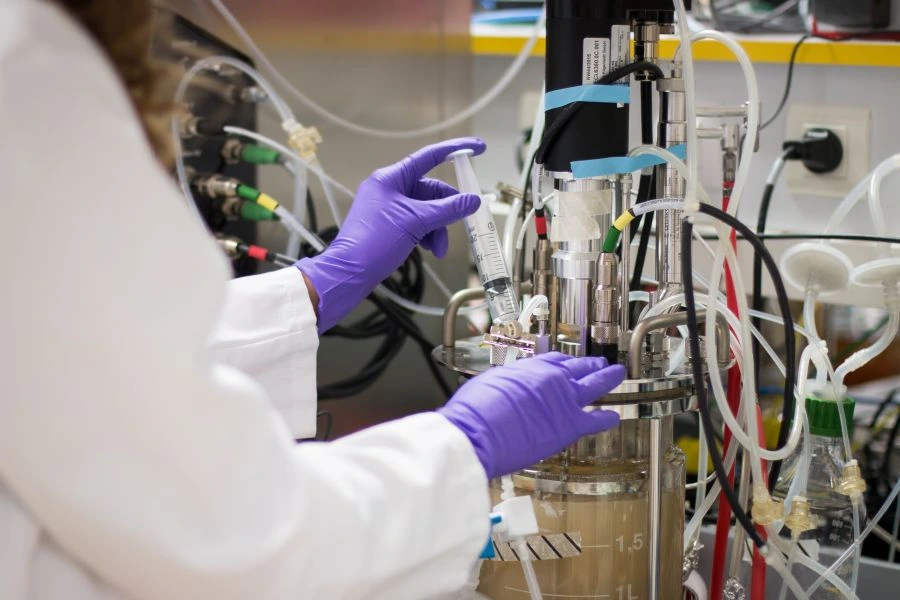 The investment will enable the company to commercialize its proteins, aiming for a first product on the US market in 2026.“In particular, we’re looking at aspects related to gut permeability, gut barrier function, and related inflammation markers, ensuring a balanced system and a healthy and diverse gut microbiome,” said Wingaard Thrane.
“This ensures beneficial taxa can proliferate without being displaced or disrupted by harmful microbes.”
Moreover, she informed us that the company’s research on these proteins helps in understanding how these ingredients bind to proteins and block their targets.
“This is very powerful, because it means we know we’re not only binding to harmful compounds, but also that we’re binding to elements in these compounds that are consistent globally. We can show through bioinformatics tools that these conserved amino acid residues are present across variants worldwide.”
Commercialization path
Bactolife will focus on its commercialization of human and animal health ingredients for dietary supplements, functional food and beverages, and feed additives. It aims to make the technology available in both developed and developing regions.
In the US, it plans to enter the market as a food ingredient under the self-affirmed generally recognized as safe (GRAS) designation.
Spence told us that demonstrating safety is critical in that process. “Beyond what’s required for self-GRAS, we’re investing in human safety trials and consumer experience studies, since this is a new ingredient.”
Moreover, she said that Bactolife is also preparing novel food dossiers for the European Food Safety Authority and certain countries in Asia.
Sophia Heyde, VP of Planetary Health Investments at Novo Holdings, the first institutional investor in Bactolife, welcomes the additional funding from Cross-Border Impact Ventures and EIFO.
“Bactolife has consistently demonstrated a strong commitment to advancing its novel precision biotechnology platform for establishing a healthy gut flora,” she notes.
“We are excited that this funding round will take the company through the commercialization of its first products, delivering meaningful benefits for both human and animal health, in line with Novo Holdings’ Planetary Health ambitions.”