



Review backs precision nutrition to improve GLP-1 therapy effectiveness


Key takeaways
- A review suggests precision nutrition could improve the effectiveness and tolerability of GLP-1 therapies for obesity and type 2 diabetes.
- Personalized plans may account for body composition, nutrition status, gut microbiome, inflammation, metabolism, and genetics.
- Larger prospective trials are still needed because direct evidence of improved long-term outcomes remains limited.

A review suggests that precision nutrition can enhance the effectiveness of GLP-1 treatments for obesity and type 2 diabetes after exploring the biological mechanisms involved in the medications.
The mechanisms studies focused on nutrition, body composition, gut microbiome, inflammation, metabolism, and genetics.
Approximately one in seven patients do not respond to GLP-1 therapies, the researchers flag. They suggest that personalized dietary interventions can improve the tolerance and effectiveness of these medications.
However, the study details: “While current evidence supports the mechanistic rationale for combining precision nutrition with GLP-1 receptor agonist (RA) therapy, it must be emphasized that direct evidence from prospective clinical trials evaluating such integrated strategies is limited.”
“Most recommendations are based on indirect evidence from general weight-loss or metabolic disease populations, and their efficacy, specifically in GLP-1 RA-treated patients, remains to be demonstrated.”
Combined approach for optimization
The multidisciplinary team from academic and health care institutions underscores that combining GLP-1s like Wegovy and Ozempic with precision nutrition could offer an innovative strategy to optimize therapeutic outcomes.
They point to the challenge of side effects or poor results that some patients experience when taking these medications, suggesting that a combined approach might help tackle these symptoms.
“Particular attention is given to protein intake optimization for lean mass preservation, micronutrient adequacy, microbiota modulation, anti-inflammatory dietary approaches, and the management of gastrointestinal symptoms,” the Pharmaceuticals review reports.
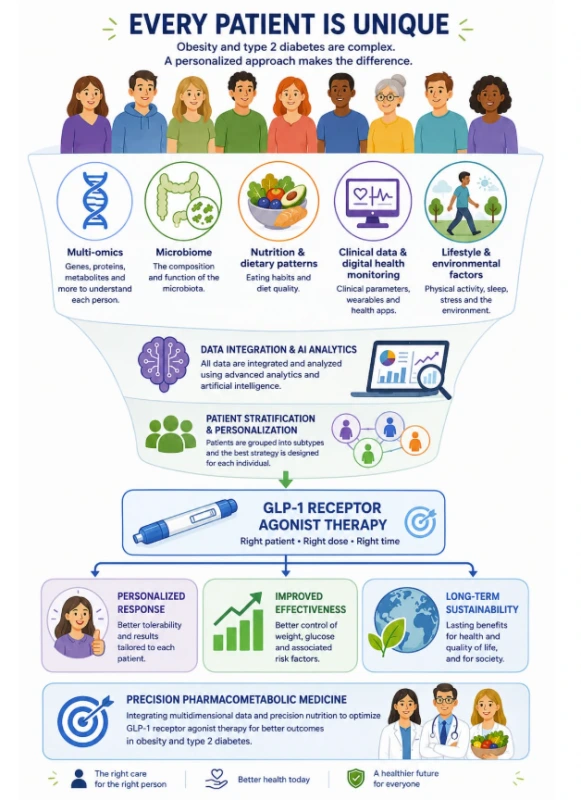 The review suggests that personalized dietary interventions can improve the tolerance and effectiveness of GLP-1 therapies (Image credit: SHRO).It examines the increasing contributions of nutrigenomics, metabolomics, multi-omics technologies, AI, and digital health in advancing personalized metabolic medicine.
“Precision medicine is not limited to only finding the right drug,” comments professor Antonio Giordano, M.D., Ph.D., president of Sbarro Health Research Organization (SHRO) in the US.
“It has the potential to integrate nutritional, biological, and metabolic knowledge and develop truly personalized therapies.” Giordano is also the director of the Sbarro Institute for Cancer Research and Molecular Medicine at Temple University.
Meanwhile, an earlier nutrition study found that personalized nutrition advice works best for people who are already goal-oriented — motivation and habit strength matter as much as the quality of the advice itself.
Economic and health care benefits
The review also addressed concerns about the economic implications of integrating precision nutrition with pharmacological treatment.
The authors find that a combined approach can help patients stick to treatments, reduce negative side effects, and lower long-term clinical complications.
Ultimately, they add that this approach enhances the cost-effectiveness and sustainability of obesity and diabetes management in health care systems.
“GLP-1 RAs have revolutionized the treatment of obesity and diabetes,” says Giordano. “However, their full therapeutic potential will only be realized through a multidisciplinary approach involving clinicians, nutrition specialists, researchers, and health care professionals.”
“This review represents an important step toward a new paradigm in metabolic medicine, in which pharmacology, precision nutrition, and innovative technologies such as AI could work synergistically to improve clinical outcomes and patients’ quality of life.”
The study calls for prospective clinical trials to be designed to evaluate the integration of precision nutrition with GLP-1 therapy.
Nutrition support for GLP-1 users
Nutrition Insight previously spoke with industry players to explore how they are creating nutrition solutions amid a data gap, as many GLP-1 clinical trials are not tracking what patients are consuming.
The suppliers highlighted that GLP-1 users risk shortfalls in protein, fiber, and micronutrients as food intake drops. Protein and muscle preservation are a central focus, while biotics, nutrient-dense formats, and fatigue support are multifunctional answers to eating less.
Amid greater convergence of the medications and nutrition innovation, a study recently warned that GLP-1 use among US adolescents is surging. However, its long-term effects in this age group are unknown.