


Royal Canin targets precision pet nutrition and ingredient science with breed-specific formulation


Key takeaways
- Royal Canin leverages a nutrient-first formulation for its pet food formulations that is tailored to pets, breeds, age, and health conditions, backed by a recent R&D investment.
- The company uses protein hydrolysis to boost digestibility, includes fibers for gut health, and adjusts kibble nutrients, size, and palatability across breeds and ages.
- Royal Canin highlights healthy aging as a growth frontier, as early interventions can help pets boost their health span.
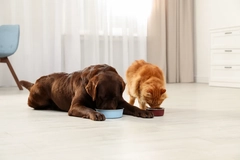
The pet food market is growing as owners prioritize the long-term wellness of their furry friends. Meanwhile, in a “humanization” of the field, owners are increasingly projecting their own dietary and health priorities onto their pets, with specific interests in healthy aging and gut microbiota becoming more important.
Royal Canin cautions that human-inspired feeding trends can make it challenging for people to distinguish evidence-based health needs for their cats and dogs from trends. The company’s global VP of R&D, Silvia Miret-Catalan, tells Nutrition Insight that the future of pet nutrition lies in nutrient science.
She says the company analyzes nutrients that are important for pets, and the scientific evidence that will make a difference for cats and dogs, as different species may not need the same nutrients depending on life stages, breeds, sizes, or activity levels.
“We make a specific link between each nutrient and the functionality it has, and the specificity for that one pet. That is the philosophy of Royal Canin: nutrients that are defined for each pet, breed, age, and health conditions.”
New product and ingredient development at Royal Canin is also based on estimates of pet population changes and evolving science, says Miret-Catalan. “All the COVID-19 pets that were purchased in 2020 are going to be seven years old next year, which means they are going to start getting into the mature and senior group.”
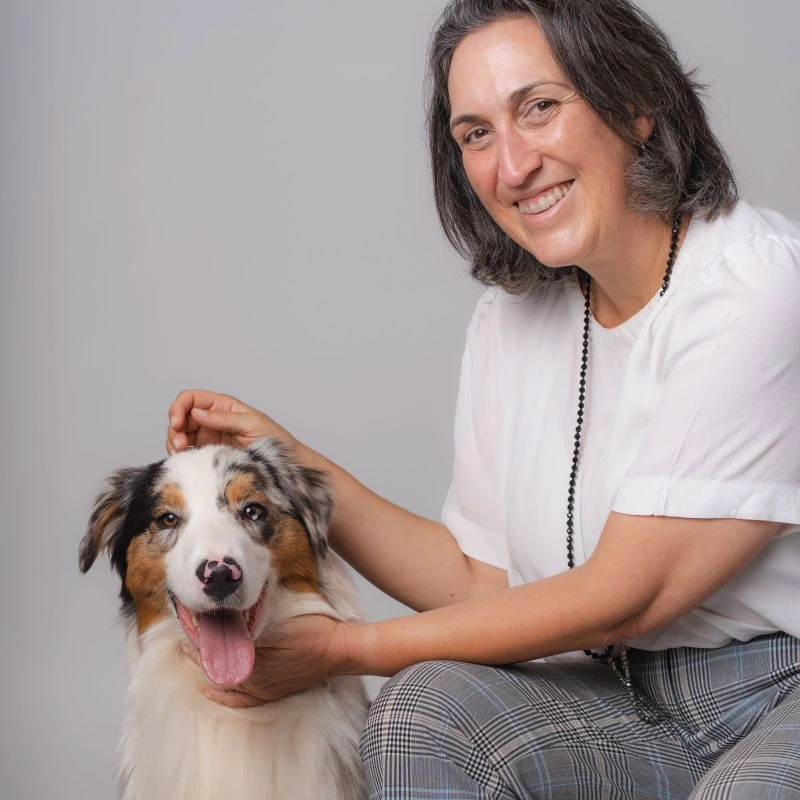 Silvia Miret-Catalan, global VP of R&D (Image credit: Royal Canin).She says the company estimates what conditions will appear more often in these changing populations, what were the most common breeds purchased, how to support those, what ingredients it offers, and what new scientific discoveries can make a difference in this population.
Precision pet nutrition
Across its global facilities, Royal Canin’s R&D departments employ 500 staff members, and it also works with veterinarians and nutrition experts. Miret-Catalan says this collective expertise and understanding of pets and ingredients enables the brand to “formulate the right thing.”
In addition, the company works with universities, food scientists, chemists, and other experts to determine the right ingredients, mix, format, palatability, and kibble shape.
“We look at whether a breed is sensitive to skin conditions, and, therefore, which ingredients we can put in for skin conditions, such as eicosapentaenoic acid (EPA) and docosahexaenoic acid (DHA).”
Additionally, the company also considers deficiencies that certain breeds could have to make sure the right vitamins and nutrients are included in the feed. “Or they could be oversensitive to certain minerals like copper, which happens in some dogs, and therefore you want to bring the copper levels down in order not to interfere with the normal metabolism.”
As another example, Miret-Catalan points to Labradors, which have a tendency to eat quickly and are prone to weight gain. “Therefore, the formulas we design for Labradors tend to have a shape that allows them to eat more slowly and feel fuller much faster. It also contains fibers that, once in the stomach, expand and allow them to feel fuller.”
Unique needs for cats and dogs
An ongoing trend in the industry is the humanization of pet nutrition. “We have this feeling as humans that if it works for me, it might work for the cat and dog,” says Miret-Catalan.
However, she cautions that this is not the case: “A cat and a dog are not a human, and a cat is not a small dog. They have quite unique needs and ways of seeing the world.”
For example, some human foods are directly toxic, such as chocolate or grapes for dogs. Beyond that, Miret-Catalan underscores the importance of adapting foods to the nutritional needs of a cat and dog, and to their size, metabolism, and diseases they may be more prone to develop.
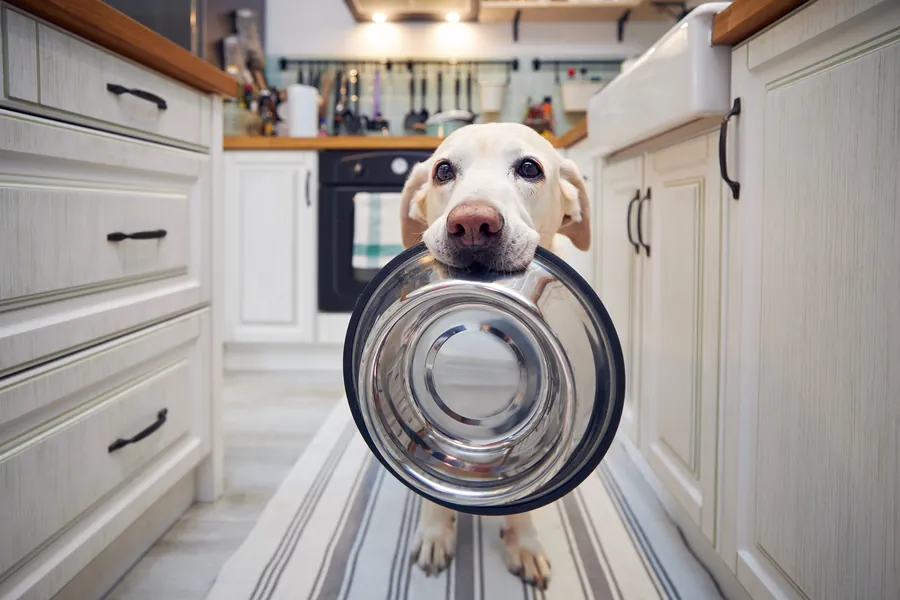 Royal Canin’s formulas for Labradors have a shape so they eat more slowly and feel fuller faster, with fibers that expand to boost satiety.“All these things need to be watched out for, and therefore all the formulations need to be tailored to those specific needs for the cat and dog,” she details. “Even when we are talking about a cat and a dog, it still needs to be adapted for kittens, puppies, adults, and seniors.”
For example, kibble size for kittens and puppies is different from that for adult pets, meaning that it could be difficult for young animals to swallow or constitute a choking hazard.
“The calorie content is different, because you have an animal that is growing really fast, so you need to make sure they get all these calories for this fast growth. An adult animal does not need a massive amount of calories, so you may be falling short in the amount of energy you are giving,” Miret-Catalan adds.
Similarly, a growing animal needs specific vitamins and minerals, such as DHA for eyesight. A deficiency in that fatty acid may result in sight issues, especially in cats, she cautions.
Another example Miret-Catalan points to is sodium. She notes that humans are reminded not to eat too much sodium, as this is linked to various health risks, such as heart disease and stroke.
But Royal Canin specifically adds sodium to some pet foods, particularly for cats. “Cats do not have a tendency to drink, and by adding a little sodium or salt, we make them a little thirsty and entice them to drink more water, which they need. However, for cats that have kidney conditions, sodium might be detrimental; there, we bring the sodium levels down.”
Healthy pet aging
Healthy aging is an increasingly important topic in pet food, says Miret-Catalan. Brands commonly offer adult and senior formulas, and in some cases, Royal Canin’s products include an age range, such as 11+ or 15+ for cats.
She adds that these pet populations will have different nutritional needs. “For example, an animal that struggles to smell and eat — you might have formulas that are a little more palatable to encourage the animal to eat, or softer so that if they have a problem with their teeth, they can still eat it.”
Much like for humans, Miret-Catalan says: “The earlier you intervene with the right diet, the healthier that animal has the possibility to be. Aging does not start the moment the animal is old. The aging process is something that is modifiable, and we can start before the animal is considered old. There is an opportunity to expand the health span.”
 Miret-Catalan underscores the importance of adapting foods to the nutritional needs of a cat and dog, and to their size, metabolism, and potential diseases.At the same time, she acknowledges that pet owners find it challenging to talk about their pets’ aging, as it brings home that their dog or cat will be gone someday. “But I think we need to educate veterinarians, breeders, and all pet owners to say it is never too early. There is always an opportunity to do something.”
Moreover, Miret-Catalan points to the possibility that by the time people observe their pet has a health condition, it is already there. For example, she notes that cats are “masters of hiding pain and any issues they may have,” which means that once an owner spots something, the condition could have been going on for a long time.
She recommends that owners schedule regular checks at the veterinarian: “The beautiful thing is that you have an opportunity to do something, through diet or other recommendations the veterinarian gives you.”
Boosting digestibility and gut health
Royal Canin tailors ingredients and nutrients to improve their digestibility and effect on pets’ microbiomes. Miret-Catalan says that high-quality protein, with all the essential amino acids pets need and that is easy to digest, is essential for these formulations.
For example, older animals or those with certain conditions may struggle to digest their food. For those pets, the company hydrolyzes protein to cut it into smaller pieces, which makes it easier to digest, so the animal can absorb the right ingredients.
Miret-Catalan notes that the understanding of the gut microbiota’s role in overall well-being is also coming to the pet food industry, having started in human health.
“Influencing the microbiome through diet, making a microbiome that is diverse and resilient, is a good way to influence digestibility and the overall health of the pet.”
The company uses fibers, particularly manno-oligosaccharides (MOS) — commonly derived from yeast — and fructooligosaccharides (FOS). “They help feed the bacteria and support the bacteria in the gastrointestinal tract, which means they help with digestibility as well as with the immune system,” says Miret-Catalan.
“These types of fibers are present in some of our products, particularly in our start-of-life products, which is a moment where the microbiome is evolving, growing, and diversifying,” she adds. “It helps not only during growth but also to sustain health over the longer term.”
 The earlier pet owners intervene with the right diet for the pet, the healthier that animal has the possibility to be when it ages.For animals with health conditions such as food allergies to proteins, Royal Canin goes a step further in hydrolysis. In such cases, an animal responds to a protein because it identifies its structure as something that “does not belong here,” explains Miret-Catalan.
“What we do in this case is use a specific protein that is not very common in the diet — feather protein. And we chop it down,” she details. “The chunks of protein are even smaller than the ones that are used for facilitating digestibility.”
As the resulting protein pieces are so small, the body does not recognize them as protein and does not have an allergic reaction, such as skin itching. Royal Canin also adds EPA and DHA to these pet foods to support the animals’ coats and skin.
Global R&D advances
As an international company, various regional demands and legislative requirements affect Royal Canin’s product development. At the same time, Miret-Catalan highlights that, in general, a cat’s and a dog’s physiology will not change dramatically from one country to another.
However, the conditions where they live are different. “It is not the same to be a husky in Canada running sleds as it is to be a cat in China that never leaves an apartment — you have to adapt to all these conditions, situations, and formats.”
In addition, regulations are different in every country, and Royal Canin collaborates with its local teams to ensure products and their quality meet legal requirements and consumer demands in terms of ingredient use, packaging, labeling, and claims. “All of it is taken into account for each region.”
Furthermore, Royal Canin has made a €100 million (US$115 million) investment in its leading R&D facility in Aimargues, France. Across 2025/2026, the company is upgrading its pilot plant as part of these investments.
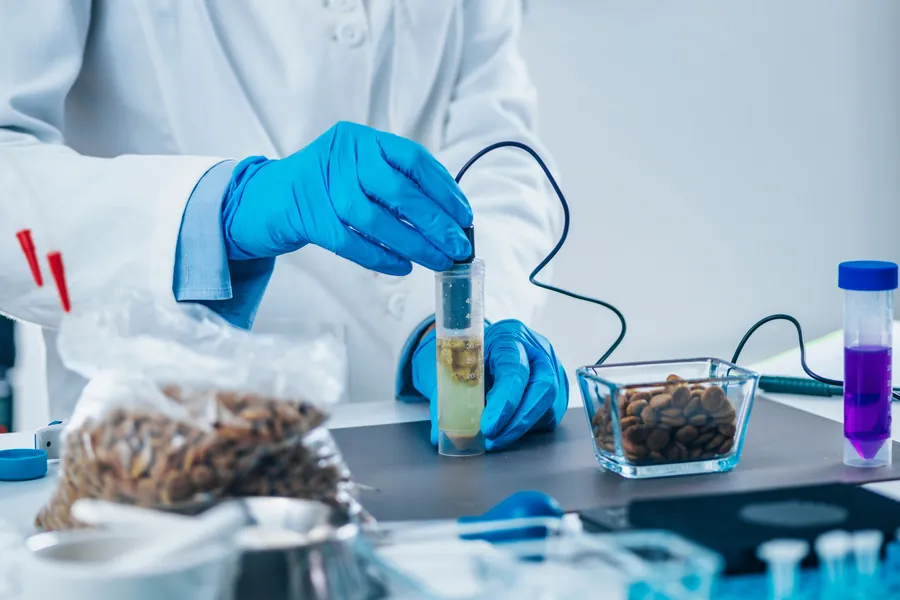 In Royal Canin’s quality control process, all ingredients entering its factories are tested before they can be used.As science and technologies are evolving, Miret-Catalan says it is important to understand which technologies the company should use, which the technical center in France will explore. For example, determining how technologies can improve the health of pets and the planet, or have a lower CO2 impact, while maintaining the same properties for the animal.
Quality control
Miret-Catalan points to the company’s quality control process, which means that all ingredients entering its factories are tested before they can be used. “We do one million quality checks every year.”
Additionally, the company ensures products have a consistent quality, which Miret-Catalan says is especially important for its substantial therapeutic diets business. “These diets are given to animals that are sick, and in some cases, they can make the difference between life and death.”
“We want to make sure that the diets we bring live up to veterinarians’ and pet owners’ expectations and, most important of all, protect the life of the pet and manage the condition it might have.”