



Clinical research backs Pathways Biosciences’ botanical formulation for blood vessel function


Key takeaways
- A study found that PB125 supplementation improves blood vessel function in older adults, boosting upper and lower limb flow-mediated dilation by around 60%.
- The botanical formulation helped preserve vascular health and antioxidant capacity in younger and older adults during periods of physical inactivity and bed rest.
- Researchers suggest these benefits stem from PB125 activating the Nrf2 pathway, which strengthens the body’s cellular defenses against oxidative stress.

New scientific evidence supports Pathways Bioscience’s proprietary botanical formulation, PB125, for its role in helping blood vessels to dilate, contract, and maintain healthy blood flow in adults. The research backs the ingredient’s ability to help preserve bodily vascular endothelial function as well as antioxidant defenses during long periods of physical inactivity, such as extended bed rest during hospitalization.
PB125 is a blend made from a specific 15:5:2 ratio of three plant extracts: rosemary (Rosmarinus officinalis), ashwagandha (Withania somnifera), and Japanese pagoda tree (Sophora japonica). These botanical ingredients deliver active compounds — specifically carnosic acid, withaferin A, and luteolin — which work synergistically to activate the Nrf2 pathway, a master regulator of the body’s cellular antioxidant defenses.
The study was jointly led by the University of Sydney in Australia plus three US universities: the University of Utah, George E. Wahlen Salt Lake City VA Medical Center, and the University of Alabama.
“Age-related vascular dysfunction is directly associated with cardiovascular disease risk that is accelerated by periods of disease,” highlights senior author Joel Trinity, Ph.D., associate professor at the University of Utah.
Brooks Hybertson, Ph.D., president of Pathways Bioscience, adds: “Healthy blood vessels play a vital role in all aspects of human biology, physiology, and wellness, so it is very important to support vascular health during normal aging and during disuse challenges.”
Randomized study results
The randomized, double-blind, placebo-controlled study evaluated the effects of PB125 in 20 younger adults and 24 older adults. The participants received PB125 or a placebo for two weeks, followed by experimental periods of physical inactivity.
Findings reveal that PB125 boosted vascular endothelial function in older adults and also helped preserve vascular function and antioxidant capacity during periods of physical inactivity for younger and older groups.
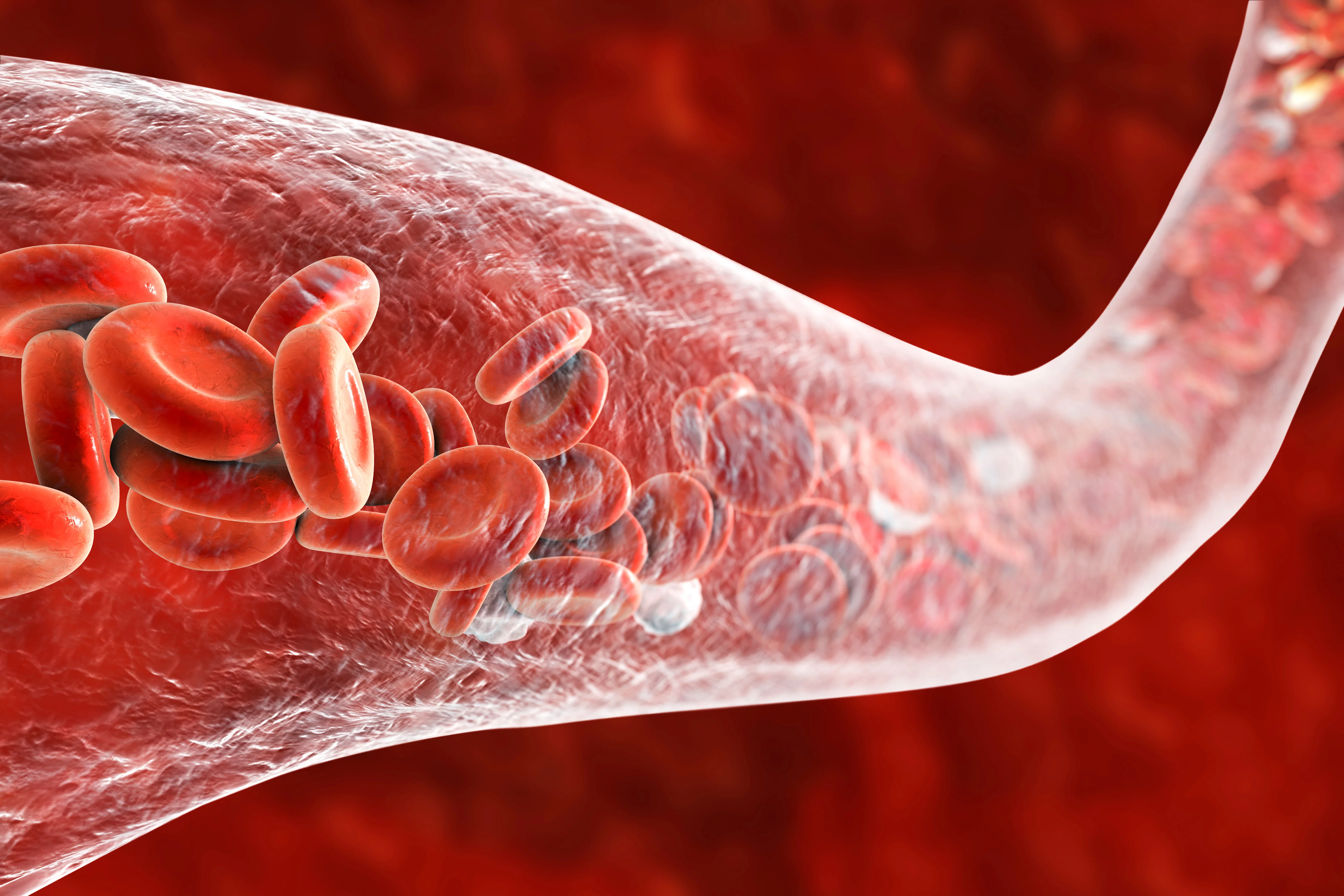 PB125 was found to improve vascular function and antioxidant defenses in adults during induced physical inactivity , simulating hospital bed rest.After the two weeks of supplementation, older adults taking PB125 showed “substantial improvements” in flow-mediated dilation (FMD), which is a noninvasive measure of vascular endothelial function.
Notably, brachial artery FMD (a test of upper-arm blood vessel health) increased approximately 65%, while popliteal artery FMD (the equivalent test in the lower leg) increased approximately 57%.
The researchers say that the magnitude of these improvements was comparable to changes reported in previous studies of longer-term interventions. However, they acknowledge that the study’s modest sample size and the inherent variability of FMD require further validation through larger future clinical trials.
Preserved vascular function during inactivity
The study also examined whether PB125 could help maintain vascular function during a period of physical inactivity.
Older adults were assigned five days of bed rest in a model intended to mimic the circumstances of acute physical inactivity patients experience during hospitalization.
In placebo-treated participants, bed rest significantly reduced vascular function. Meanwhile, participants receiving PB125 maintained brachial and popliteal artery FMD, as well as leg vascular conductance, which is the ease with which blood flows through the legs.
Additionally, PB125 appeared to preserve circulating levels of superoxide dismutase, which is a component of the body’s antioxidant defense system, during bed rest.
Younger adults underwent two weeks without limb mobility, as another model of inactivity. In this participant group, PB125 protected lower-limb endothelial function against the decreases caused by limb immobilization.
Antioxidant defenses
The researchers suggest that PB125’s vascular effects may be related to activating the Nrf2 pathway — a cellular mechanism that triggers the body’s natural defense against oxidative stress — and enhancing Nrf2-related antioxidant defenses.
Nrf2 is a key regulator of the body’s cellular response to oxidative stress, the research team explains. They note that aging and physical inactivity are associated with impaired redox balance — which is the crucial equilibrium between health-damaging free radicals and protective antioxidants — and lowered antioxidant defenses.
Therefore, they say that PB125’s ability to activate Nrf2 may help support the body’s endogenous antioxidant response under conditions of increased oxidative stress. Their study builds upon earlier research showing that PB125 activates Nrf2 and protects cells from oxidative injury.




Upcoming webinars

Pure love deserves a pure start: Solutions that give the best start from day one
dsm-firmenich

Magnesium bisglycinate in focus: why full chelation matters
Jungbunzlauer

Bifidobacteria and Healthy Ageing: New Insights into Ageing and Immunity
Morinaga