



Those Vegan Cowboys leads €1.3M project on animal-free casein for sports protein


Key takeaways
- A Dutch consortium secured a €1.29 million OPZuid subsidy to create sports nutrition using animal-free casein.
- The project combines technical fermentation, market analysis, and consumer research to develop commercial protein products by 2028.
- Matching partner contributions bring the total initiative budget to approximately €2.58 million.
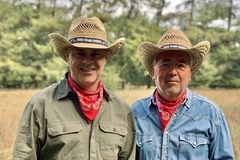 (Image credit: Those Vegan Cowboys).
Four Dutch food organizations have jointly secured more than €1.29 million (US$1.5 million) in capital from the subsidy program Operational Programme South Netherlands (OPZuid).
The food innovation collaborators — Those Vegan Cowboys, Interfood, HAS green academy, and XXL — will direct this capital toward developing protein-rich sports nutrition using animal-free casein from precision fermentation.
Conventionally sourced from milk, casein is used in various food and beverage products for emulsifying, stabilizing, and slow-digesting nutritional properties. Those Vegan Cowboys produce this protein using bacteria, eliminating the need for cows.
Running until 31 March 2028, the project headed by the industry partners looks into the technical possibilities and consumer acceptance of new innovations based on this ingredient. It will encompass fermentation-based casein production, nutritional research, and consumer insights for commercializing this next generation of food products.
“With our stainless steel cow, Margaret [a large fermentation system], we’re showing that casein can be made without animals too. The next step is translating that protein into products people actually want to use: nutritious, tasty, and affordable,” says Hille van der Kaa, CEO of Those Vegan Cowboys.
“In this consortium, we’re bringing together the knowledge to take that step. In doing so, we’re also building a new source of protein for a world where food security matters more every day.”
Amounting to €1,290,185.87 (US$1.5 million), the subsidy is awarded by the European Regional Development Fund, led by the Dutch national government and the province of North Brabant, through the OPZuid program. Together with the partners’ contributions, the total project budget to date has reached approximately €2.58 million (US$2.9 million).
New protein project
Within the project, headlined as “Pioneer, Pilot, Powerhouse — Brabant Breaking New Ground in Precision Fermentation,” the partners are exploring how the protein behaves in food products and developing prototypes for protein-rich sports nutrition products.
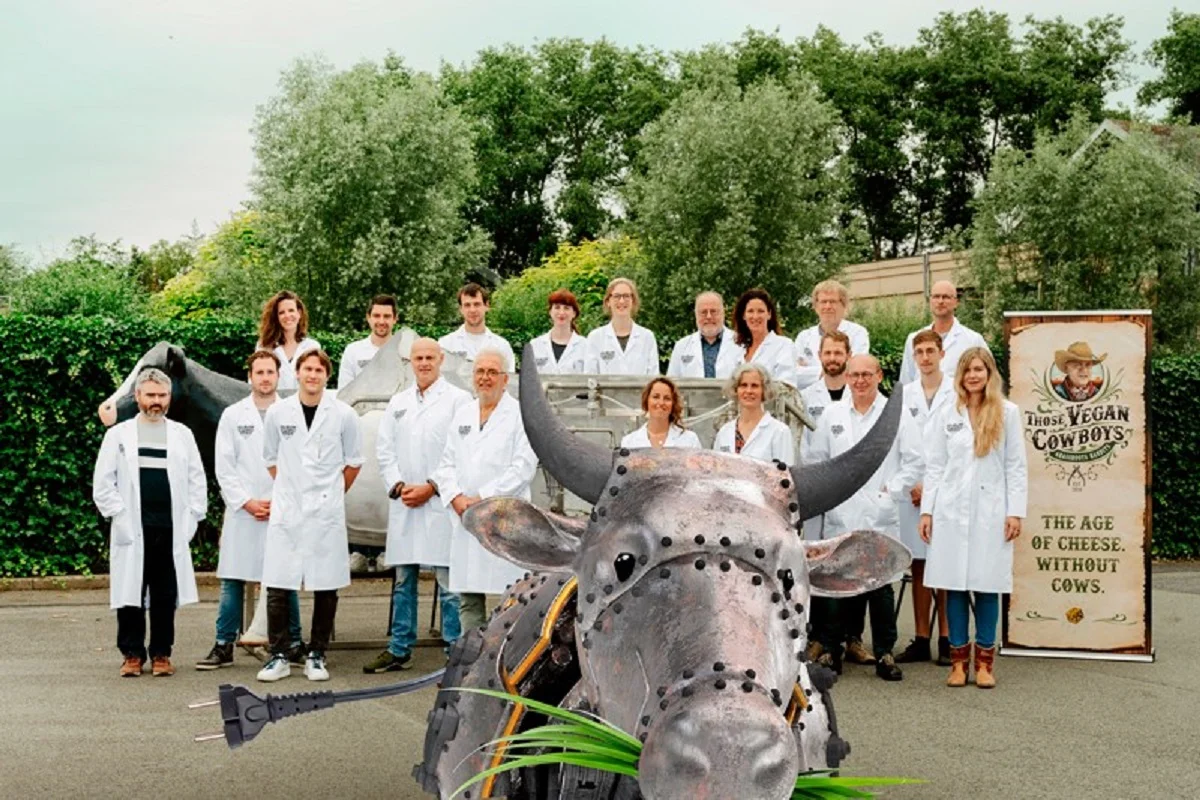 Margaret the Cow is a fermentation system demonstrating the cow-free production of casein by Those Vegan Cowboys.Through market analysis, they are examining what consumers expect from these products to determine which applications are the most promising.
Each partner contributes its own expertise, highlights Those Vegan Cowboys. Focused on casein production and further scale-up, global dairy trader Interfood is gathering knowledge about dairy proteins and product development with insights from the global nutrition market.
HAS Green Academy, a Dutch university of applied sciences, is contributing its practice-based research and knowledge exchange. Meanwhile, XXL Nutrition shares its expertise in sports nutrition and direct insight into consumer needs.
“Global demand for protein is growing faster than supply,” stresses Wouter Berendsen, global R&D Director at Interfood. “That’s why we’re proud to be part of this consortium, which is working on the capabilities that will be needed in the future. From our R&D department, we’re looking forward to connecting market insights with science.”
Bridging industry and academia
The project is consolidating information between companies, researchers, and students in the Dutch region of North Brabant. Interfood oversees a pilot facility where the partners will pool together and apply their knowledge about precision fermentation and product development.
“At HAS Green Academy, we develop, share, and apply knowledge for sustainable, future-proof food systems. Within our Protein Transition in Nutrition research group, we study how animal proteins and promising sustainable alternatives can complement each other in a more balanced food system,” says Ingeborg Haagsma-Boels, a professor of Protein Transition at HAS Green Academy.
“We want to translate that knowledge into practical solutions together with companies. That’s why this project fits our ambition so well: it connects research and practice and lets us work together on the food chains of the future.”




Upcoming webinars

Pure love deserves a pure start: Solutions that give the best start from day one
dsm-firmenich

Magnesium bisglycinate in focus: why full chelation matters
Jungbunzlauer
Bifidobacteria and Healthy Ageing: New Insights into Ageing and Immunity
Morinaga