



El Niño omega-3 shock and EU botanical scrutiny push supplement decisions earlier


Key takeaways
- El Niño has disrupted Peru’s anchoveta fishery, creating an omega-3 shortage where availability now matters more than price.
- The EU is tightening supplement rules through Article 8 botanical scrutiny, maximum vitamin and mineral levels, and the PPWR packaging timeline, while national authorities increasingly question whether consumers “need” supplements.
- Brands are responding by diversifying omega-3 sources, moving beyond pill formats, and building resilience into products from the start.

Supplement brands now have to make key decisions on sourcing, stability, and packaging at the start of product development rather than late in the pipeline, according to speakers at the seventh Innovation for the Future Summit, organized by Sirio. Considerations of supply availability and product stability are taking priority amid regulatory pressure and climate volatility.
Nutrition Insight attended the September 22 event in Amsterdam, the Netherlands, where industry players discussed current challenges, such as omega-3 supply limitations and EU botanical and packaging regulations.
However, event speakers analyzing market trends also highlighted opportunities to address these obstacles, including delivery format innovation and alternatives to fish oil sourcing.
Omega-3 supply shock
One part of Sirio’s summit focused on omega oils, as shortening El Niño cycles threatens Peruvian stocks of anchovies, which are a traditional source of omega-3s eicosapentaenoic acid (EPA) and docosahexaenoic acid (DHA).
El Niño is also shifting fish routes due to impacts on the Humboldt Current ecosystem, which powers the marine ingredients industry, explained Rafael Hinojosa, director of Specialty Sales EMEA at KD Pharma.
The 2026 season did not recover after the June fishing suspension, and there is a 12- to 18-month supply chain lag, he added.
Additionally, Hinojosa pointed out that juveniles made up 65% of the catch, oil yield fell to 1.6% against a normal 3–4.5%, and over 100,000 jobs are at risk.
“We thought that 2023 was really bad, but for me, in about thirty years in this industry, I think this is the worst time I’ve ever seen.”
“The most important thing is not the price now, it’s the availability of the oil. We know that there is some oil in the market, but some are not approved for human consumption. So there could be feed-grade oils coming from sources we are not aware of,” warned Hinojosa.
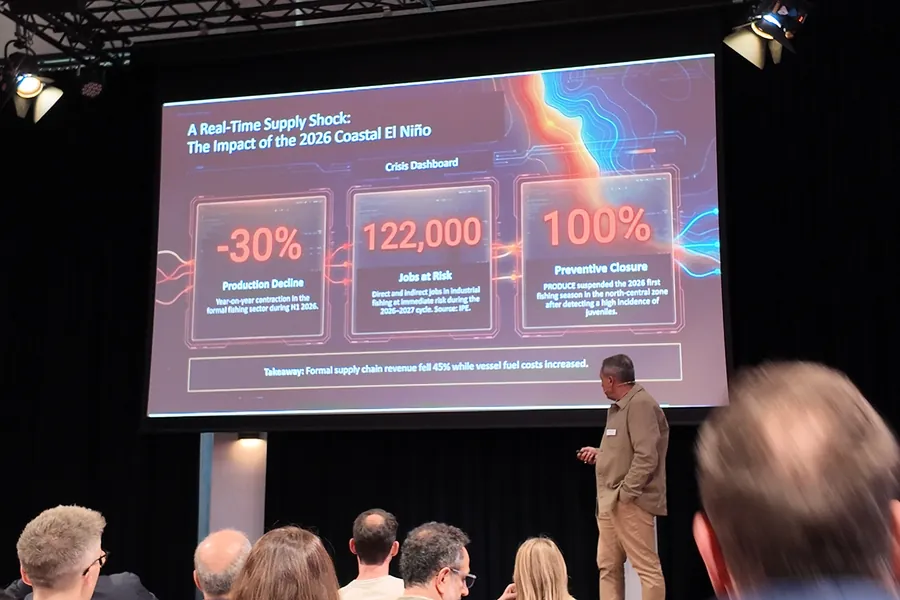 El Niño is shifting fish routes due to impacts on the Humboldt Current ecosystem, which powers the marine ingredients industry, explained Rafael Hinojosa at KD Pharma.He added that if prices spike or if there is no available oil, consumers could abandon the category, which would be a “real problem” for the industry. The seriousness of climate impacts means that supply resilience has to be part of the product design from the start, underscored Hinojosa.
Diversifying omega-3 sources
Amid the regulatory and climate challenges European brands face, Aker BioMarine’s business development director of human health ingredients, Michael Hempel, pointed out that consumers are “loyal to the omega-3 category, but not necessarily loyal to fish oil.”
Hempel warned that there is insufficient fish oil in the market, and the demand continues to grow, driven by aquaculture and GLP-1 companion supplement needs. “It’s not going to be about the price in the future. It’s going to be about availability. Whatever you want to pay, if there’s no fish, you won’t get fish.”
He pointed to alternatives to Peruvian anchovy fisheries, such as krill, algae, tuna, cod, and salmon, which can also be blended in a supplement. Peter Carlsson, international sales manager at Zooca, presented zooplankton calanus oil as an alternative to traditional fish oil.
Marie-Jane Fallourd, Marketing & Products director at Fermentalg, said: “The sources are not against each other; they’re complementary, and the idea is to diversify.” She called for sourcing omega oils from algae — the primary source of omega-3s — bypassing the food chain via fermentation.
Highlighting a more sustainable origin, Fallourd underscored that one ton of the company’s algal DHA Origins — which carries health claims authorized by the European Food Safety Authority (EFSA) — preserves “44 metric tons of anchovies.” Fallourd argued that fermentation-derived omega oils provide long-term predictability, which she said translates to long-term cost predictability.
Shift away from pill formats
In the supplements industry, Innova Market Insights’ senior consultant, Akhil Aiyar, said that the “pill is losing its monopoly” as “supplements shift from intervention to daily infrastructure.”
Aiyar underscored that brands need to think about which moments of a consumer’s life they are owning, since there is a shift away from standalone product benefits toward occasions, according to Innova data. “Consumers don’t really reject supplements. They don’t reject the science behind them. What they reject is the friction.”
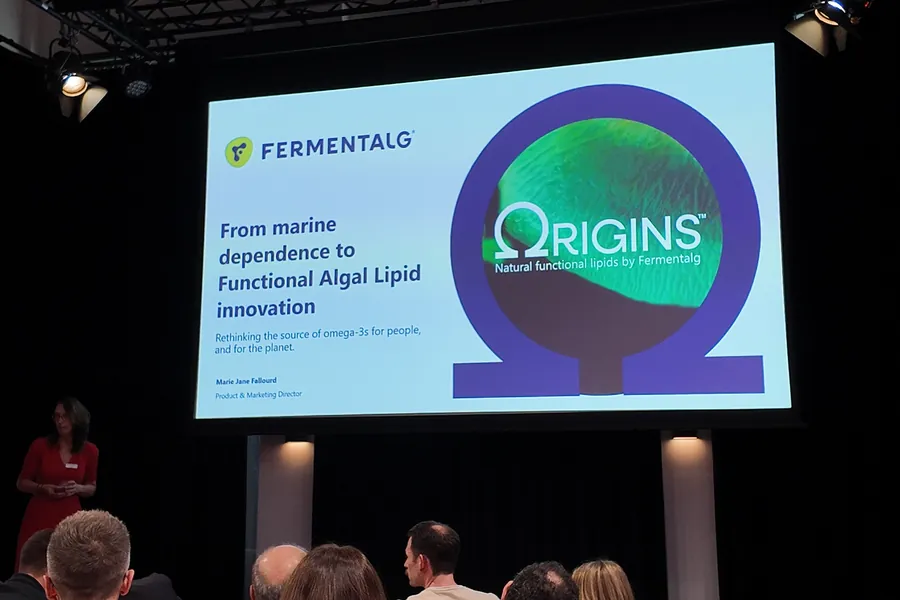 Marie-Jane Fallourd at Fermentalg said that that one ton of the company’s algal DHA Origins — which carries health claims authorized by EFSA — preserves “44 metric tons of anchovies.”“The pill is not going to suddenly disappear overnight. It still remains the most prevalent delivery format when it comes to supplementation. What we want to talk about here is how the pill is losing its monopoly on what a supplement is, how it is taken, and when it is taken.”
As an example, the fastest-growing supplement format in Europe doesn’t call itself a “supplement,” said Aiyar, referring to functional hydration — “when supplementation becomes the water itself.”
Furthermore, Innova data shows that the US is driving the future of formats and Asia is honing the future of benefit narratives, while European brands have to translate both. “Europe hasn’t picked a lane yet. The question isn’t who to follow, it’s about what to build,” stated Aiyar.
Highlighting opportunities, he said Innova data shows that mental acuity product launches grew at a CAGR of 19% versus 5% for all supplements in Europe (2020–2025), and women’s health grew at 12% versus 6% (2021–2025).
“A lot of people do tend to think of regulations as being a constraint. When used well, they are really the moat, and it is what differentiates the European supplement market from the US or Asian market.”
Rising skepticism from EU regulators
In European food and supplement regulations, Livia Menichetti, director general at the European Federation of Associations of Health Product Manufacturers (EHPM), said that skepticism is rising. “Even markets where there were very open markets are becoming more and more skeptical.”
“[Setting] maximum permitted levels of vitamins and minerals in food supplements is the hot topic in Europe at the moment. Additionally, Article 8 of Regulation (EC) No 1925/2006 is a very hot topic because it can lead to the prohibition of certain ingredients used in food supplements,” she said.
Monacolins from red yeast rice have already gone through the process, with member states voting for a full ban in May. At the moment, under Article 8, green tea catechins are being discussed, with a decision expected by December 21 this year.
 Innova Market Insights’ Akhil Aiyar, said that the “pill is losing its monopoly” as “supplements shift from intervention to daily infrastructure.”Menichetti also discussed the Heads of Food Safety Agencies (HoA) list of 12 priority substances, including ashwagandha and curcumin, that ask the Commission to launch an Article 8 procedure, though no timeline has been set.
An Article 8 launch means that the EU Commission would review non-vitamin/mineral substances used in food supplements due to concerns about health risks.
EFSA has postponed its scientific opinion on fennel tea to November this year, while the EU Commission initially backed a full ban on alpha-lipoic acid but is now testing whether a label warning could secure a qualified majority among member states.
Menichetti underlined that the EU wants to limit the use of botanicals in supplements. She argued that national authorities in Europe are shifting from evaluating safety to questioning whether consumers actually “need” supplements. “Does the consumer need sugar? They are not going to do a campaign against sugar, right?”
“The need is not foreseen in the regulations. It’s only the safety that matters. The problem is that many national authorities have shifted the point from safety to the need,” said Menichetti. She argued that the supplement industry faces a “communication and image issue,” which is worsened by the rise of influencer marketing.
Also speaking on the EU Packaging and Packaging Waste Regulation 2030 deadline, she pointed to the implementation timeline as a crucial challenge for the nutrition industry. Pharma blisters are getting a grace period until 2035, while supplement blisters must comply with requirements by 2030.
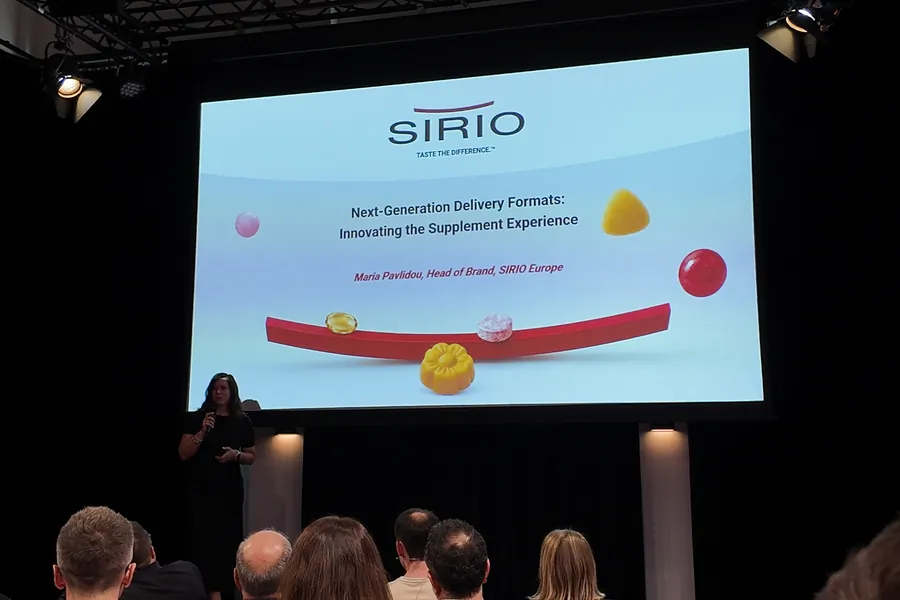 Chris Mare Agenbag at Sirio Europe, said active stability needs to be considered from the start of formulation development.Stability testing for supplements takes 24 to 36 months. “The issue is that there are no validated industrial-scale solutions that are currently available for several stability-critical applications. And this is therefore a structural challenge and not an industry delay,” warned Menichetti.
Formats and formulation
The emphasis on design extended to formulation. Chris Mare Agenbag, Technical Solutions and Commercial Formulation manager at Sirio Europe, said active stability needs to be considered from the start of formulation development rather than left to the testing stage. “The solution is not always just to add additional overages.”
Will Falleyn, sales manager at Sirio Europe, presented the company’s plant-based formats, including LifeChews gel tablets and pectin gummies, which he said offer better heat resistance and shelf stability than gelatin-based alternatives. He noted that pectin is the most stable base for creatine gummies, a segment that has been “an incredible story over the last 18 months.”
ADM’s VP of medical affairs, Dr. Richard Day, presented company-sponsored trials, one of which tested a single dose of its Lactobacillus gasseri CP2305 postbiotic, which was linked to changes in brain activity and lower self-reported stress within 60 minutes.
Maria Pavlidou, director of Marketing & Communications at Sirio Europe, said the company is developing soft chews for the European market, with a first launch planned for Vitafoods Europe next year. “If the consumer doesn’t enjoy the experience of taking the supplement, at the end of the day, it’s not going to stick. It’s not going to become a habit.