





How multi-omics and AI are revolutionizing nutrition research for sustainable precision diets


Key takeaways
- Multi-omics and AI revolutionize dietary assessment, replacing error-prone food diaries with biomarkers and wearable sensors for causal diet-health links.
- Precision nutrition shows promise in small trials but needs large, long-term studies with hard endpoints like mortality before global scaling in the next decade.
- China’s EAT-Lancet diet adaptation aims to balance obesity and undernutrition while cutting planetary harm through culturally relevant staples and proteins.

A review has explored how multi-omics and AI have accelerated the evolution of nutritional epidemiology. The research outlines next-generation methods for creating precise and sustainable diets to improve health outcomes at scale for people and the planet.
The paper outlines the main challenges and advances to dietary assessment methods, observational study design, and multi-omics technologies. Future directions point to multidimensional precision nutrition based on stage-specific management alongside sustainable nutrition, such as the EAT-Lancet Planetary Health Diet.
Nutrition Insight speaks with the corresponding author, professor An Pan, dean of the School of Public Health at Tongji Medical College, China, who discusses what needs to happen before precision nutrition can be scaled, how AI can provide accurate reporting tools, and culture-sensitive, sustainable diets in China.
“Our mission is to leverage technological innovation to address the complex diet-health-environment nexus,” she comments.
The publication in The Innovation Nutrition underscores the importance of causal inference — the ability to prove that a specific food actually causes a health outcome — in establishing dietary impacts on health. Although new methodologies, such as objective biomarkers and efficient dietary monitoring tools, are already strengthening causal inference, traditional methods of dietary reporting are prone to inaccuracies.
Enhanced dietary assessments
Pan points out that self-reported tools, such as diaries, 24-hour recalls, and Food Frequency Questionnaires, have remained the most widely used dietary assessment tools in nutritional epidemiology.
“However, they share a weakness: they depend on memory and on participants’ willingness to report honestly. They are inherently prone to systematic error due to recall bias, social desirability bias, and inaccurate portion size estimation, which can substantially distort diet-disease associations.”
“Meanwhile, circulating and urinary biomarkers provide objective, physiology-based measures of dietary exposure by reflecting what has actually been absorbed and metabolized in the body. These include recovery biomarkers (e.g., urinary nitrogen for protein intake), concentration biomarkers (e.g., plasma carotenoids for fruit and vegetable intake), and metabolomic signatures that capture complex dietary patterns.”
Although these options bring more accuracy than traditional dietary assessment tools, Pan adds that biomarkers alone are often restricted by “short half-lives,” which do not cover the completion of the diet, and assay costs.
“Additionally, image-recognition systems and Large Language Model-based tools can estimate food type and portion size from photographs under standardized criteria, while wearable biosensors (such as continuous glucose monitors and electrochemical sensors) provide real-time metabolic readouts.”
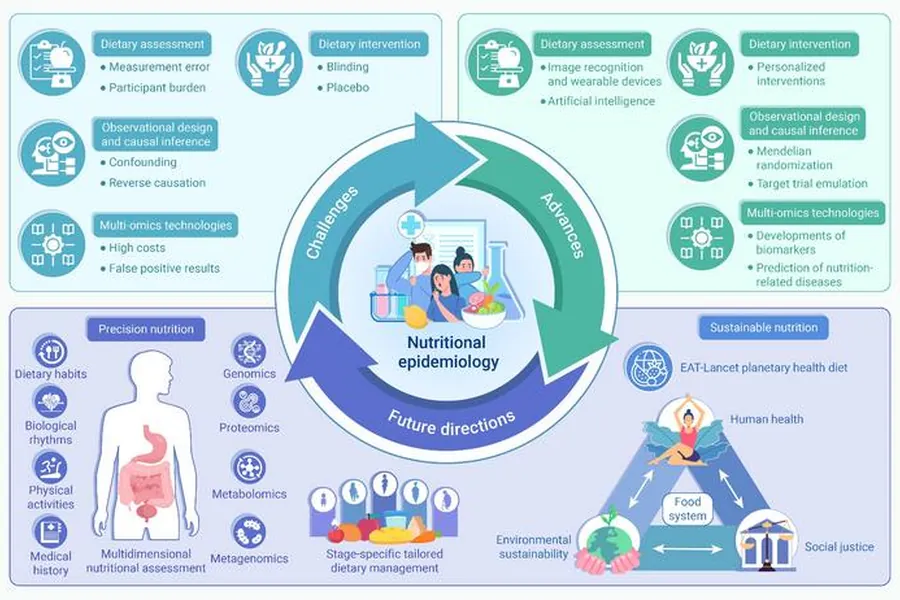 Challenges, advances, and future directions in nutritional epidemiology (Image credit: Zhang J., Geng T., Wang Y., et al. (2026)).“In addition, the integration of AI has significantly advanced this field by enabling the analysis of high-dimensional biomarker data and linking them to specific foods or dietary patterns,” says Pan.
A recent paper setting 2030 nutrition science goals for resilient food systems highlighted that nutrition has been lagging in AI adoption compared to other fields because it lacks a foundational big-data layer, calling for updates so that it reflects modern nutrition science.
Scaling precision nutrition
Precision nutrition is highlighted as one of the key transformative pillars of nutritional epidemiology’s future. The approach integrates genetic background, metabolic profile, and gut microbiota with wearable sensor data to provide personalized guidance.
“Trials such as Food4Me, the postprandial-glucose program, and microbiome-tailored interventions have consistently shown that personalized advice outperforms generic guidelines on diet quality, glycemic control, and short-term weight outcomes,” says Pan.
“The caveat is that most of this evidence comes from small, short-duration trials with intermediate endpoints, like HbA1c, triglycerides, and waist circumference, rather than hard outcomes like cardiovascular events or mortality.”
On how close we are to scaling precision nutrition, Pan outlines three points that need to happen first.
“Large long-term trials with hard endpoints, standardized and affordable multi-omics profiling, and equity-focused implementation so that the technology does not simply widen existing health gaps. A realistic horizon for broadly validated, genome- and microbiome-informed plans is the next decade.”
In other developments in the field, the Innovation Institute for Food & Health at the University of California Davis, US, recently partnered with AG1 to accelerate new product development in nutrition and metabolic health. The organizations will combine advanced omics analytics with product development to match nutrients from ingredients with a target population’s specific needs.
Emerging technologies
The review highlights the growing applicability of “digital twin” technology, creating virtual replicas of individuals to stimulate the long-term effects of diets before individuals start it in real life.
 Digital twins model lifelong nutrition impacts from infancy to adulthood.“Our review discusses digital twin technology as an emerging direction rather than reporting novel modeling results from our group,” says Pan. “What strikes me most in this space is the disproportionate long-run signal from very short early-life windows.”
“Chinese famine-exposure cohorts show that nutritional insult in the first 1,000 days is associated with elevated diabetes and cardiovascular risk decades later. Conversely, UK sugar rationing during the same window is linked to lower later-life risks of cardiovascular disease, metabolic-dysfunction-associated steatotic liver disease, asthma, and Chronic Obstructive Pulmonary Disease.”
She further explains that digital twins modeling infant developmental windows (critical early growth periods) consistently show that brief diet changes lead to outsized adult health effects — like reduced disease risk — per the simulation results.
“For me, that reframes precision nutrition as a lifelong, not adult-only, project,” Pan adds.
Sustainable diets within cultural contexts
The EAT-Lancet Commission underscores that food production drives 30% of global greenhouse gas emissions, transgressing the planetary boundaries.
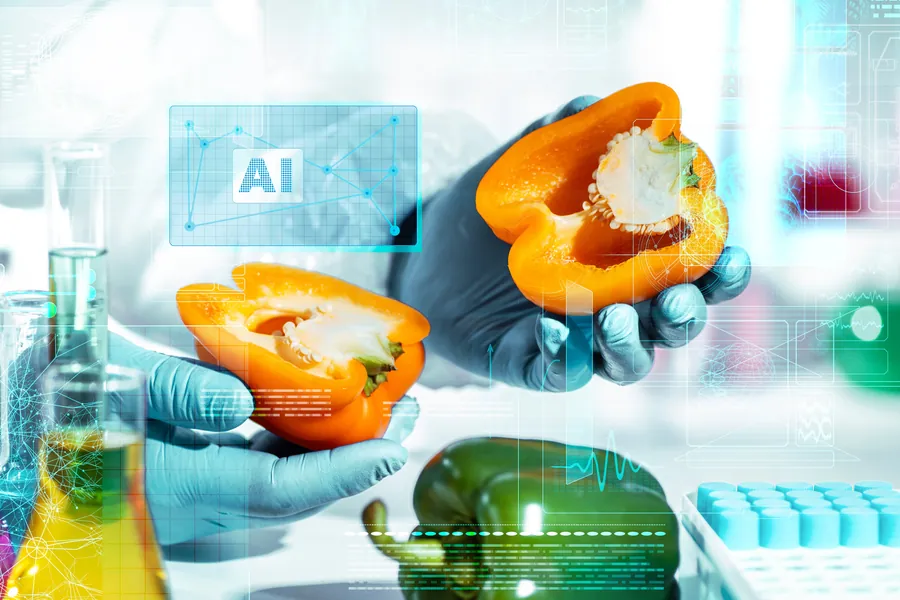 AI and biomarkers have the potential to transform nutritional epidemiology for precision diets.Looking at the case of China, which faces the dual burden of rising obesity and persistent undernutrition, Pan reflects on how sustainable diets like the EAT-Lancet guidelines could be adopted to reflect local realities.
“China’s dual challenge means that any sustainable dietary framework must simultaneously address excess and deficiency. While the planetary health diet proposed by the EAT-Lancet Commission provides a scientifically grounded global template, its direct transplantation into China should highlight critical local realities.”
“The Chinese food system already accounts for a substantial environmental footprint, underscoring the urgency of dietary transformation. At the same time, evidence from large Chinese cohort studies suggests that higher adherence to the Planetary Health Diet is associated with reduced risks of cardiovascular disease, diabetes, hypertension, steatotic liver disease, and cognitive impairment, indicating that its core nutritional principles are broadly applicable.”
However, Pan adds that some aspects of the Planetary Health Diet do not fit the nation’s food basket. She mainly points to the region- and culture-specific adaptations, which should be carefully and precisely created to reflect China’s diverse culinary traditions, agricultural systems, and nutritional needs.
“This includes tailoring staple foods, protein sources, and cooking practices to local contexts while preserving cultural acceptability and affordability. In this sense, sustainable diets in China should not be a direct replication of a global model, but rather a context-sensitive reinterpretation — one that integrates environmental sustainability with nutritional adequacy and cultural relevance to achieve both health and ecological goals.”
Various emerging research papers find that vegan diets can reduce carbon footprints by up to 35–51%, lower land and water use, and cut communicable disease risks.