




Cargill showcases nutrition concepts to support active lifestyles at Vitafoods Europe 2026

Key takeaways
- Cargill is featuring active nutrition concepts beyond sports performance, addressing broader health trends like reduced sugar and GLP-1-driven dietary changes at Vitafoods Europe 2026.
- The company emphasizes the importance of delivering integrated solutions that combine nutrition, taste, and texture to meet evolving consumer expectations.
- Cargill is innovating with bite-sized formats that provide concentrated nutritional value for flexible eating occasions without compromising sensory performance.

At the upcoming Vitafoods Europe 2026 trade show (May 5–7), Cargill will highlight how active nutrition is expanding beyond sports performance to address broader health trends, such as gut health, reduced sugar, and GLP-1-driven dietary changes.
In Barcelona, Spain, the company will display a 30% reduced-sugar isotonic hydration drink, sugar-free gummies with the EpiCor postbiotic, a performance bar combining plant and dairy proteins, a high-protein nutrition shake, and bite-sized formats designed for portion flexibility.
Cargill notes that these prototypes demonstrate how integrated ingredient systems can deliver meaningful nutritional benefits but maintain taste, texture, and formulation performance.
Nutrition Insight meets with Aysegul Ozcan, Enhanced Nutrition commercial marketing director at Cargill, to discuss how the company translates nutrition science and trend research into everyday products.

Cargill is exhibiting at Vitafoods Europe 2026 under the theme “Empowering active lives, together.” Ozcan says this reflects a shift in how consumers approach health.
“It is no longer viewed as a short-term objective, but as something that needs to be actively managed over time.”
“Consumer expectations are becoming both more proactive and more holistic. Cargill’s TrendTracker research shows that 82% of consumers say wellness is a top or very important priority, and 58% are prioritizing it more than they did a year ago. At the same time, 70% say it is extremely or very important to focus on long-term health outcomes, not just immediate needs.”
 Enabling active lifestyles requires integrated solutions that combine nutrition, functionality, and sensory performance, says Ozcan.These trends are driving a move from food as fuel toward food as part of a broader well-being strategy, she adds. Consumers look for support across various health areas, including energy, hydration, gut comfort, and immunity. At the same time, they seek nutrition that supports performance, recovery, and body composition — all delivered in familiar formats.
“It is not just about delivering nutrients, but about enabling active lifestyles in ways that are practical, enjoyable, and aligned with how people actually live,” Ozcan elaborates. “Increasingly, that requires integrated solutions that bring together nutrition, functionality, and sensory performance, rather than focusing on individual ingredients in isolation.”
Formulating for the active consumer
Ozcan says consumers increasingly seek products that support specific health outcomes but in different delivery formats, pointing to insights from Cargill’s TrendTracker 2025.
“For example, 43% say they are extremely or very interested in functional food and beverages, while 35% are actively choosing foods to support digestion and gut health. At the same time, there is clear pressure to reduce sugar, with Cargill research showing that 76% of consumers are actively trying to avoid it.”
She says the concepts are designed to address both dynamics. For example, the EverPlenish sugar-reduced sports drink delivers functional hydration with 30% less sugar than typical sports drinks, enabled by EverSweet. This stevia sweetener is a product of Avansya, a joint venture between Cargill and dsm-firmenich.
The drink responds to a key tension in the category, says Ozcan. “While hydration beverages are often high in sugar and carbohydrates, consumers increasingly want to reduce sugar intake — not only for calorie control, but also to help avoid potential gut discomfort during exercise or everyday use.”
“Importantly, the formulation is not just about reducing sweetness; it’s about achieving a more balanced nutritional profile. A key differentiator is the beverage’s inclusion of TruSweet, an optimized glucose-fructose syrup with a 1:0.8 ratio, supporting efficient carbohydrate utilization and energy delivery.”
 According to Ozcan, functionality is not enough, but needs to be delivered in formats that work in real life.Similarly, Cargill’s Yummy postbiotic gummy taps into growing interest in gut and immune health, delivered in a format that is both familiar and easy to incorporate into daily routines. Ozcan notes that, instead of requiring behavior change, this concept focuses on embedding functionality into formats that consumers already enjoy, while maintaining the taste and texture they expect.
“Ultimately, functionality alone is no longer enough. It needs to be delivered in formats that work in real life — both from a sensory and a usability perspective.”
GLP-1 product development
As access to GLP-1 medications continues to expand globally, Ozcan says the medications are starting to influence formulation beyond weight management.
“What we are seeing is a shift in eating behavior, with consumers prioritizing protein, fiber, and nutrient-dense foods, often in smaller portions. TrendTracker data shows that among GLP-1 users experiencing side effects, 25% are increasing fiber intake, 24% protein, and 21% are moving toward smaller, more frequent meals.”
Cargill experts developed the VitalFuel cocoa drink to address these evolving needs. Ozcan explains that it delivers key nutrients in a smaller, more manageable serving, rather than a traditional high-volume meal replacement. It focuses on nutrient density and ease of consumption, with a “familiar and enjoyable taste experience.”
“The opportunity for brands is clear,” she says. “There is space to develop products aligned with these new consumption patterns, whether that is higher-protein beverages, smaller-format snacks, or more balanced nutritional systems. The constraint remains unchanged: products still need to deliver on taste and enjoyment to succeed at scale.”
Flexible eating occasions
GLP-1 use and lifestyle changes are also driving portion flexibility, which Ozcan says is becoming increasingly important in line with evolving eating patterns. She notes that consumers are moving away from fixed meal structures toward smaller, more flexible eating occasions.
 Bite-sized nutrition formats respond to a consumer shift toward more flexible eating occasions, combining portion control and nutritional value.“At the same time, 65% of consumers report changing how they eat due to economic pressures, often shifting toward more controlled and efficient consumption patterns.”
“Bite-size formats respond directly to this shift,” she details. “They enable portion control while still delivering meaningful nutritional value, whether that is protein, fiber, or targeted functional benefits. The challenge is ensuring these smaller formats still deliver impact, which requires concentrating nutritional value without compromising taste, texture, or stability.”
Cargill’s VitalBite concept at Vitafoods Europe 2026 reflects this approach. Ozcan notes it delivers high-protein, high-fiber nutrition in a flexible, bite-sized format. It allows consumers to adjust portion size based on their needs, while benefiting from concentrated nutritional value in each serving.
Nutrition, taste, and texture
Balancing nutrition and sensory performance remains one of the most consistent challenges in protein formulations, says Ozcan.
“Demand for protein continues to rise, with 71% of consumers actively trying to increase their intake, while taste remains the leading driver of food choice, cited by 85% of consumers.”
She notes there is an emerging hybrid approach as a practical way to address this tension. For example, combining different protein sources enables brands to deliver strong nutritional value and a more appealing sensory experience.
“Plant proteins offer clear nutritional and sustainability advantages, while dairy proteins typically provide superior taste and texture performance,” she highlights.
 While 71% of consumers actively try to increase their protein intake, Ozcan says taste remains the leading driver of food choice, cited by 85% of consumers.Ozcan underscores that the focus is on designing systems that leverage the strengths of both plant and dairy proteins, rather than replacing one with the other. “This requires careful attention to texture, flavor masking, solubility, and overall product structure, supported by integrated formulation approaches.”
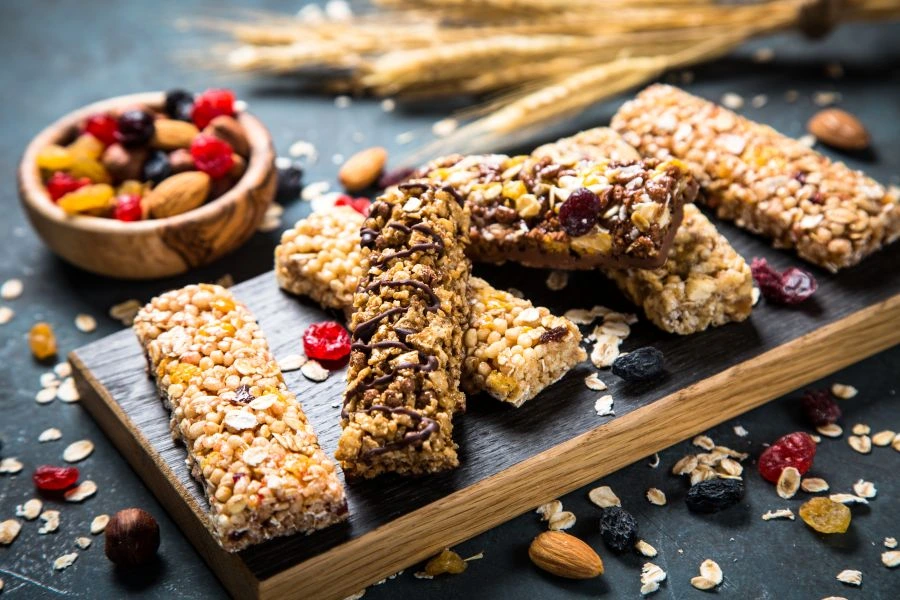
She says the company’s SmartFuel protein bar concept exemplifies this thinking. It complements a core of plant-based protein and fiber with a dairy protein chocolate coating. “The result is a hybrid format that delivers on nutritional expectations while maintaining the taste and texture consumers associate with indulgent protein products.”
Focus on integrated solutions
Ozcan observes that the food and nutrition market is shifting from a focus on individual ingredients to integrated solutions.
“Manufacturers are under pressure to deliver across multiple dimensions at once, including sugar reduction, protein enrichment, and improved nutritional profiles. At the same time, 60% of consumers report actively avoiding certain ingredients, reinforcing the need for reformulation.”
“Integrated systems simplify that process by combining complementary functionalities into application-ready solutions,” details Ozcan. “This helps manufacturers manage complexity more efficiently while ensuring consistent performance across nutrition, taste, and texture.”
For example, she says fibers can support sugar reduction but also help maintain mouthfeel. Moreover, proteins can be combined with texturizers to improve texture, while functional ingredients can be incorporated into formats that still meet expectations on taste and convenience.
“The advantage is both technical and commercial,” she concludes. “It reduces development time and supports faster speed to market, which is increasingly critical in a fast-moving category.”