


Review links low-protein diet to longevity, but scientists question the evidence base


Key takeaways
- A review of 350 studies points to health benefits from lowering protein intake, such as longevity by improving metabolism and reducing cellular damage.
- Independent scientists have cautioned that the majority of studies reviewed come from rodent and insect studies, limiting conclusions about these findings for humans.
- The authors suggest that protein recommendations should be personalized according to age, activity level, and different health needs, such as those of athletes or pregnant women.

A review covering 350 studies suggests that consuming less protein may bring multiple health benefits and promote longevity. The authors link macronutrient restriction to slowing aging by improving metabolism, reducing cellular damage, changing how cells respond to nutrients, and preserving healthy cells.
“It’s absolutely crystal clear that there are benefits of protein to muscle growth and exercise response of active individuals,” says study co-author Dudley Lamming, professor of Endocrinology, Diabetes, and Metabolism at the University of Wisconsin-Madison, US.
“But because most people are relatively sedentary, many people are likely consuming more protein than they actually need, which probably has negative health consequences.”
The findings coincide with the nutrition industry’s current “protein boom,” which has seen product innovations fortified with proteins move beyond traditional formats, such as bars and shakes, to include water, coffee, cereal, and more.
These findings have sparked reactions from independent scientists, who stress that most of the studies in the review are animal studies with questionable relevance for human health.
Increasing the lifespan
The review, published in Cell Press Blue, notes that scientists have known for decades that a diet low in calories may extend lifespans and reduce the risk of age-related diseases such as cancer.
 The authors note that these updated US recommendations are also what caught the interest in researching protein and longevity.The authors point to multiple studies demonstrating that reducing protein intake results in an extended lifespan for rodents and flies, without reducing calorie intake.
Additionally, they note that human clinical trials have shown that reducing protein intake may reduce fat mass and body weight, while improving fasting blood sugar.
However, they flag other studies demonstrating that protein intake could boost weight loss and reduce the risk of age-related muscle loss when exercising. These findings brought the US authorities to update the Dietary Guidelines for Americans this year with an increased recommended daily protein intake of 1.2–1.6 g of protein per kg of body weight, which is almost double the amount compared to its previous guidance (0.8 g daily per kg of body weight).
The authors note that these updated US recommendations are also what caught their interest in researching protein and longevity.
Down to the mechanisms
The authors detail underlying mechanisms that could explain these findings, mentioning the hormone fibroblast growth factor 21 (FGF21) as a “key player.” FGF21 increases when protein intake is low, and can also increase the body’s energy expenditure, reduce inflammation, and improve blood sugar control.
The researchers point to mouse studies that found higher levels of FGF21 were linked to living longer, with a more profound effect observed in males compared to females. They note that eating less protein also raises this hormone level in humans.
Additionally, amino acids such as methionine, isoleucine, and valine also play an important role. Being the building blocks of protein, overconsuming these may trigger negative health effects such as increasing obesity risk, inflammation, and other age-related diseases.
“These studies show that the amount of protein sedentary people are eating today may have negative health consequences, at least at the population level,” says Lamming.
Some population groups, such as pregnant women and older adults, have an increased protein need. Athletes consuming high amounts of protein in combination with regular exercise do not develop metabolic diseases. Lamming says this might be explainable by the protein being used to build muscles and protect them from negative health effects.
“Recent recommendations have encouraged people to eat more protein, but they’ve also encouraged people to exercise more,” he says. “We probably need to personalize protein recommendations based not just on age, but also on how physically active people are.”
Skepticism from experts
Independent experts have commented on the review, expressing skepticism of the results as most of the reviewed literature was studies based on animals rather than human subjects.
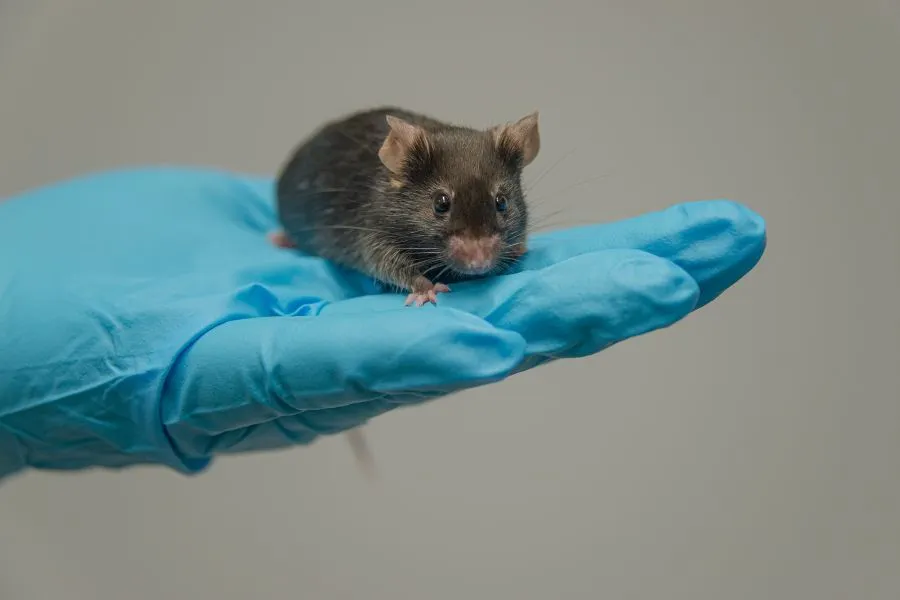 Independent experts have expressed skepticism about the results, as most of the reviewed literature was studies based on animals rather than human subjects.Paul Greenhaff, professor of Muscle Metabolism at the University of Nottingham, UK, says the review is primarily based on evidence from rodent and insect research, adding that the central question of whether protein restriction positively impacts healthy aging and longevity for humans has not been addressed.
“Of course, such human volunteer studies are very difficult to deliver. However, it is essential that this is achieved because rodents and insects are not representative models of human aging. The trajectory of body composition change over the lifespan is different for humans, and insects and rodents have greater metabolic rates relative to humans, alongside poorer metabolic stability,” he says.
Similarly, Kevin McConway, emeritus professor of Applied Statistics at the Open University, UK, says the review draws conclusions about the effects on human health of restricting protein intake. “But to label a paper as being about people typically means that the research reported in the paper was carried out using human subjects.”
“That’s not the case here. Many of the studies that are reviewed did use human subjects, but the review also covers a lot of studies that were carried out using experimental animals,” he says. “That raises another question that I’m not competent to answer — can the findings from these animal studies really be carried over to humans?”