



US dietary guidelines overhaul sparks debate over saturated fat and protein


Key takeaways
- The US has updated its dietary guidelines with a push to “eat real food,” prioritizing protein, full-fat dairy, and whole foods while limiting processed products and added sugars.
- Health organizations welcome parts of the guidance but question its scientific basis, especially its promotion of meat, dairy, saturated fat, and processed foods.
- Critics argue the final guidelines diverge sharply from the 2025 advisory committee’s recommendations, raising concerns about industry influence and transparency.
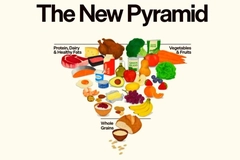 (Image credit: www.realfood.gov).
The US has released the Dietary Guidelines for Americans 2025–2030, marking the “most significant” reform of nutrition policy in decades. It sends a simple message: “Better health begins on your plate — not in your medicine cabinet.”
However, some experts critique the guide for oversimplifying recommendations such as increasing meat and dairy, which are high in saturated fat and contribute to chronic diseases amid a health emergency.
“These guidelines return us to the basics,” says Health and Human Services (HHS) Secretary Robert F. Kennedy, Jr. “US households must prioritize whole, nutrient-dense foods and dramatically reduce highly processed foods. This is how we Make America Healthy Again.”

US Department of Agriculture (USDA) Secretary Brooke Rollins comments: “At long last, we are realigning our food system to support American farmers, ranchers, and companies that grow and produce real food. Farmers and ranchers are at the forefront of the solution, and that means more protein, dairy, vegetables, fruits, healthy fats, and whole grains on American dinner tables.”
Some experts critique the scientific basis of some recommendations, blaming ideological bias. Others flag the guide for rejecting several proposals made by the 2025 Dietary Guidelines Advisory Committee (DGAC).
Guidelines in summary
With the new guidelines, the HHS says it seeks to simplify guidance based on modern nutrition science.
The report says that people should prioritize protein at every meal, consume full-fat dairy without added sugars, and eat fruits and vegetables daily.
Additionally, the guide advises people to include healthy fats from whole foods, such as meats, seafood, eggs, nuts, seeds, olives, and avocados. It also suggests significantly reducing refined carbohydrates and increasing whole grains.
Processed foods, added sugars, and artificial flavors should be limited. For hydration, the guide recommends water and unsweetened beverages while limiting alcohol consumption, although the guidelines no longer recommend a clear limit.
The publication also outlines guidelines for various population groups to ensure nutritional adequacy throughout life. This includes infants, pregnant and lactating women, people with chronic diseases, and vegetarians and vegans. Food should be tailored to age, sex, size, and activity level.
 The 2025–2030 Dietary Guidelines for Americans aim to simplify nutrition advice but have sparked debate among health experts over protein sources, saturated fat, and processed foods.The new guidelines advise people to “eat real food,” while warning that the US is facing a health emergency.
Health emergency and military motivation
According to the HHS, approximately 90% of health care spending is linked to preventable chronic diseases tied to diet and lifestyle. Over 70% of US citizens are overweight or obese, with 1 in 3 prediabetic adolescents.
The department is worried that more young people will not be eligible to join military service, hindering “national readiness and limiting opportunity” as diet-driven chronic diseases disqualify them.
The Trump administration refers to the update as “common sense,” where food, not pharmaceuticals, is reestablished as the foundation of health.
Questioning the science
The Physicians Committee for Responsible Medicine flags that some recommendations require “serious improvement.” For instance, the guidelines rightly limit cholesterol-raising saturated fat but fail to mention that it is mainly derived from dairy and meat.
The organization’s president, Neal Barnard, M.D., FACC, points out: “Americans already get enough protein. If the guidelines are going to push for increased protein consumption, it should come from plants.”
“The guidelines have unjustly condemned highly processed foods and exonerated meat and dairy products. They should have done the reverse. And here the guidelines err in promoting meat and dairy products, which are principal drivers of cardiovascular disease, diabetes, and obesity,” adds Barnard.
 US health officials say the updated dietary guidelines address rising diet-related chronic diseases, but critics question if the recommendations match scientific evidence.Additionally, he highlights the issue of “sledgehammering” all processed food as unhealthy. Plant-based and vitamin-fortified processed foods have been shown to reduce birth defects and diabetes, heart disease, and cancer risks.
Compared to 2025 DGAC
Like the Physicians Committee, the Center for Science in the Public Interest (CSPI) states the new guidance’s advocacy of animal protein, butter, and full-fat dairy undermines the saturated fat limit and the 2025 DGAC advice on promoting plant-based proteins to reduce cardiovascular disease risk.
CSPI president Dr. Peter G. Lurie says: “While the meat and dairy industries may be excited about the new food pyramid, the American public should not be; the guidance on protein and fats is, at best, confusing, and, at worst, harmful to the 1 in 4 Americans who are directly impacted by the guidance through federal nutrition programs.
“In addition to contradictory guidance, the document spreads blatant misinformation that ‘healthy fats’ include butter and beef tallow. This level of contradiction is unacceptable given the secretaries had clear, transparent, evidence-based recommendations at their disposal,” he says, referring to last year’s guidance.
The two-year scientific review, led by 20 independent nutrition experts working with federal scientists and informed by public comments and meetings, has been dismissed, flags Lurie. “All because it incorporated health equity and, they allege, ‘ideological bias, institutional conflicts, or predetermined conclusions.’”
“Secretaries sought out a separate group of nutrition scientists, many with ties to the meat and dairy industries, evading public and transparent processes, to create a new ‘scientific’ report that props up the meat and dairy industries at the expense of human and environmental health and undermines established processes for setting recommended daily allowances for nutrients, like protein, in service of Secretary Kennedy’s predetermined beliefs,” says Lurie.
 CSPI and the Center for Biological Diversity have created the Uncompromising Dietary Guidelines for Americans, reflecting the 2025 dietary guideline review.“The new guidance completely rejects more than half of the DGAC’s recommendations.”
Improving the guidelines?
To illustrate what the new guidelines should have looked like, CSPI and the Center for Biological Diversity have created the Uncompromising Dietary Guidelines for Americans, reflecting the 2025 dietary guideline review. Recommendations of this version have already been widely approved by health and nutrition experts.
The Physicians Committee, representing 17,000 doctors, also suggests the guidance should clarify myths surrounding saturated fat, found in high amounts in dairy and meat, with links to heart disease, Alzheimer’s disease, and breast and prostate cancers. Thus, animal protein and dairy should be avoided.
Additionally, the guide should inform that vegetarian and vegan diets can be nutritionally complete with a vitamin B12 supplement and that plant-based processed foods are often fortified with key nutrients while being healthier than animal products.
The Physicians Committee notes that the guidance should acknowledge that some processed foods are healthful, such as breakfast cereals and breads that are fortified with folic acid, vitamin B12, or other nutrients that can prevent birth defects and reduce the risks of diabetes and cardiovascular disease.
Finally, the organization suggests that water should be recommended as the beverage choice instead of milk, as it has been linked to lactose intolerance and prostate and breast cancer.
Supplements get greenlight
Meanwhile, the Council for Responsible Nutrition (CRN) praises the HHS and USDA for recognizing the role of dietary supplements in helping individuals achieve their nutrient needs. In 2024, the organization urged that the guidelines include more supplement recommendations.
“For many Americans, meeting nutrient recommendations through food alone is challenging — sometimes due to limited food sources, increased nutritional needs during certain life stages, or other real-world barriers,” says the organization’s CEO and president, Steve Mister.
CRN highlights previous research showing that US citizens lack key nutrients, including vitamin D, calcium, potassium, and dietary fiber.