



Leonie Health’s bioactive colostrum targets infant nutrition safety gaps amid ARA scandal

Key takeaways
- Cereulide-linked recalls exposed major supply chain vulnerabilities and safety gaps in infant formula, including ingredient sourcing and delayed risk reporting.
- Leonie Health positions bioactive colostrum as a functional solution for premature and vulnerable infants without access to their mother’s colostrum.
- The company’s CEO calls for pharmaceutical-level regulation and validation of novel ingredients like precision fermentation to protect medically fragile newborns.

The recent infant formula recalls linked to the cereulide toxin in arachidonic acid (ARA) oil highlight structural vulnerabilities in the industry, says Leonie Health. The company’s CEO tells us that new production methods can address these challenges, but require a different manufacturing and oversight model.
Leonie Health creates bioactive human milk products from donor milk that are formulated to match colostrum — concentrated breast milk produced during the first 48–72 hours postpartum. In this time frame, colostrum provides infants with the nutritional foundation for immune and gut development.
The US company says its solution makes this nutrition available to infants who cannot access their mother’s colostrum during their first days of life.

Nutrition Insight meets with Elena Medo, the CEO and founder of Leonie Health, to discuss what it would take to build a safer infant formula supply chain and how alternative solutions can improve nutrition options for infants, especially fragile, premature babies.
Medo says that a more rigorous regulatory framework is urgently needed for novel production methods aimed at premature and fragile newborns.
“This includes fermentation-derived ingredients, bioreactor-produced proteins and lipids, and precision fermentation components. These components are marketed as functionally equivalent to bioactives in human milk, yet they are entering the commercial pipeline more rapidly than scientific validation can confirm their claims.”
“The most significant risks to critically ill newborns arise from the discrepancy between available nutritional products and the optimal requirements for this population.”
Medo advocates that the US FDA, US Department of Agriculture, European Food Safety Authority (EFSA), and all neonatal nutrition oversight bodies mandate that any ingredient derived from fermentation or bioreactors must meet the stringent pre-market evidence standards required for pharmaceuticals before being approved for use in newborns.
She explains that this necessitates functional validation, clinical safety data testing, independent expert review, and eliminating self-certification by financially interested manufacturers.
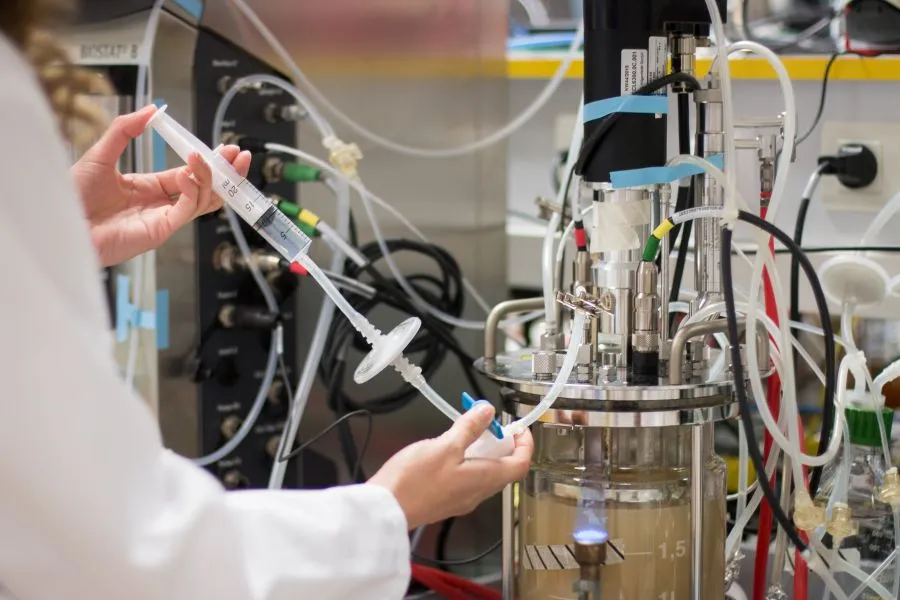 Medo urges that ingredients derived from fermentation or bioreactors meet pharmaceutical pre-market evidence standards before they are approved for newborns.“These are the youngest, most medically fragile patients we have. They cannot advocate for themselves and, right now, we are not doing our job to protect them.”
How do you think the recent cereulide contamination recalls impacted the perception of infant formula safety?
Medo: I’ve spent forty years in this industry. I’ve lived through the Cronobacter outbreaks, the Abbott shutdown, and the Mead Johnson contaminations. Each time, the industry promised systemic reform but delivered little more than incremental paperwork.
What makes cereulide different, and far more dangerous, is its extreme heat resistance. It survives temperatures that easily kill bacteria. Once this toxin is present in a product, there is no simple fix: you cannot boil it out, cook it away, or destroy it with standard processing. The entire batch must be discarded. Even Holder pasteurization (62.5°C for 30 minutes), which is the standard method used for donor human milk, fails to destroy Bacillus cereus spores or neutralize the toxin.
We must permanently change how the industry evaluates the risk of added ingredients.
Records indicate that Nestlé’s lab detected contamination on November 26, 2025, and didn’t notify Dutch authorities until December 9, 2025. Thirteen days passed during which the product was still in distribution, while the company conducted its own health risk analysis.
As far back as 2010, I raised concerns to the US FDA about the potential danger of the cereulide toxin produced by B. cereus at a Pediatric Advisory Committee meeting. It is unrealistic to expect milk banks to detect cereulide before processing, largely because most do not conduct any pre-process microbiological testing.
We must find ways to preserve the biologically valuable components of human milk while making it safe enough and stable enough to reach the most vulnerable infants who need it most.
What are the most critical structural weaknesses of the infant formula supply chain?
Medo: First, ingredient provenance. The cereulide contamination was traced back to a single Chinese ARA oil supplier. From that one point of failure, every formula manufacturer in the world using that supplier had to scramble. One supplier impacted 60 countries. That concentration of risk is, unfortunately, the predictable result of a cost-optimization industry model followed for decades, with regulators aware and largely silent.
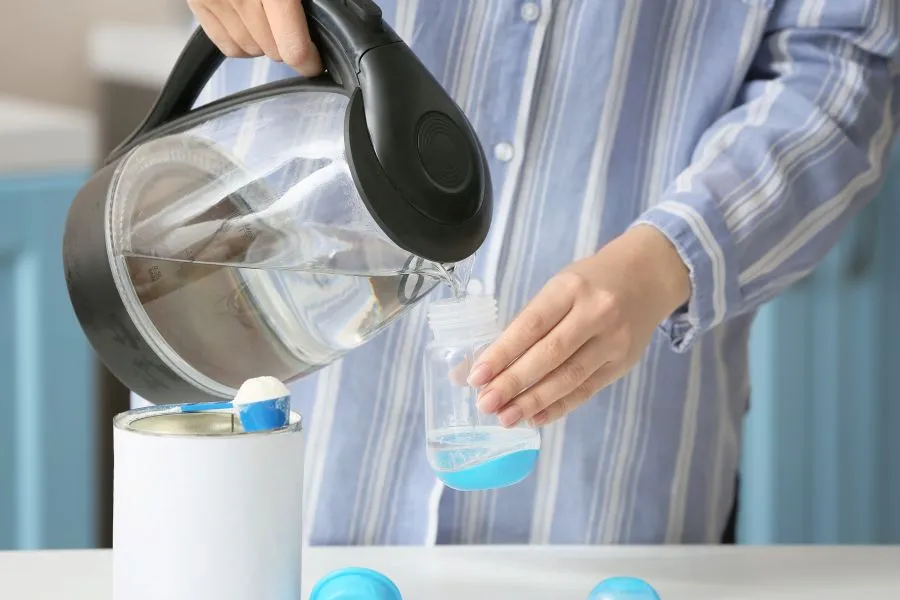 Cereulide in infant formula cannot be destroyed with standard processes, nor can it be boiled out or cooked away.Second, disclosure structure. The entity that profits from not recalling a product cannot be the entity that decides whether to report contamination. That is clearly a structural conflict of interest that needs to be addressed legislatively, and fast.
Third, and what the industry least wants to acknowledge, is that the assumption that formula is an adequate nutritional substitute for human milk for medically fragile preterm infants is not supported by evidence and hasn’t been for years. The B. cereus crisis is fundamentally a formula supply chain failure, and this risk can also extend to donor human milk. Without mandatory reporting, the true prevalence remains unknown.
While every dollar invested in making formulas safer is worthwhile, the industry overall should be asking with equal urgency why access to high-quality, safe donor human milk for preterm infants is still rationed by geography, logistics, and cold chain infrastructure. We must address this imbalance.
Why do premature and medically fragile newborns need more tailored solutions than those currently provided by donor milk or traditional formulas?
Medo: Throughout my career, I’ve watched the distance grow between what science says these infants need and what the industry actually delivers. It’s time to stop allowing that gap.
A 26-week preterm infant in the Neonatal Intensive Care Unit (NICU) is not simply a “nutrition consumer.” This is a critically ill patient receiving a vital medical intervention. The nutrition delivered through the feeding tube is performing the complex work that the placenta once did, supporting growth while the infant’s immature gut, immune system, and developing brain are still unable to do so on their own.
Human milk and processed donor milk are the most effective ways to reduce health risks due to their essential bioactive components (secretory IgA, lactoferrin, human milk oligosaccharides, lysozyme, and transforming growth factor-β₂), which are functional medicine for the developing gut.
High-Pressure Processing (HPP) preserves more of this bioactive activity by using pressure instead of heat, and the science is compelling. However, HPP has unresolved gaps for preterm infants. Viral safety data for enveloped viruses is incomplete at commercial pressure levels, and the protective “matrix effect” of milk fat means common parameters may fail. There is no validated, accepted protocol for preterm infant feeding, and milk banks lack the infrastructure and financing to absorb the high capital costs of HPP equipment.
 Nutrition for premature infants is critical as these are vulnerable patients, with an immature gut and unprimed immune system.While we are actively pursuing this food preservation method as a promising scientific direction, it is not yet suitable for use in the NICU. Significant validation, regulatory approval, and a revised economic model are necessary before it can be responsibly implemented. I believe in the value of this ongoing work, but I cannot tell the parent of a premature infant that it’s ready when it isn’t.
How could closing the gap between food- and pharmaceutical-grade manufacturing standards elevate product safety?
Medo: Food-grade manufacturing is designed for acceptable risk in a general population, but a premature infant at 26 weeks of gestation is a uniquely vulnerable patient. This infant has an immature gut, an unprimed immune system, and a clinical trajectory that can be permanently altered by what it’s fed in the first two weeks of life. Consequently, the standards that govern what goes into the feeding tube have not kept pace with our current biological knowledge.
The cereulide recall took thirteen days before a single regulatory authority was notified — an unacceptable delay. For novel production methods, such as those using fermentation-derived ingredients or bioreactor-produced components, the standard must be even higher.
Closing this gap requires mandatory quantification of bioactive content on every lot, not just proof of pathogen absence. It demands validated functional assays, not merely compositional analysis. Furthermore, chain-of-custody documentation must be stringent enough to trace an adverse event back to its source in days, not months.
What are the challenges associated with precision fermentation for infant nutrition?
Medo: Leonie Health is not a precision fermentation company, and it’s important not to confuse the two when caring for our most vulnerable patients.
Precision fermentation, which produces isolated proteins like lactoferrin in a bioreactor, is technically interesting. However, the approach remains unproven and is therefore not appropriate for a 24-week preterm infant with an immature gut barrier.
 Human milk and processed donor milk are the most effective ways to reduce health risks for preterm infants due to their essential bioactive components.The regulatory challenge is significant. Prior to this crisis, no coordinated safety standard for cereulide in infant formula even existed. EFSA only began developing one after the recalls had started. This highlights a deeper problem: our regulatory framework is reactive, slow, and built primarily for ingredients with long histories of safe use in the general population. Novel production methods simply do not fit a system designed for populations with no margin for error.
Why do bioactive proteins like lactoferrin require a different manufacturing model compared to conventional ingredients?
Medo: Every generation of infant nutrition innovation has promised to replicate what human milk does. None have. This is not because scientists weren’t talented, but because human milk is not just a list of ingredients; it is a biological system.
Lactoferrin in human milk is far more than just a protein. It is a nutrient in a specific conformational state, with a precise iron-saturation ratio, functioning within a complex biological context. Its iron-binding capacity, which gives it powerful antimicrobial properties and enables it to act as a signaling molecule in gut development, depends entirely on that native structure.
You can measure what appears to be the correct protein concentration in a finished product, yet the biologically meaningful activity may already be substantially degraded. Whether fermentation-derived lactoferrin produced at a commercial scale truly replicates this activity in the fragile gut of a preterm infant remains uncertain, and that question must be rigorously answered before it is ever used in a NICU feeding tube.