



MaiaMilk launches clinical-grade powdered human donor milk for infants, for home use


Key takeaways
- MaiaMilk has launched the first shelf-stable, clinical-grade human donor milk powder available for at-home use.
- The product uses proprietary freeze-drying technology to preserve bioactive nutrients and antibodies without requiring refrigeration or thawing.
- Every batch undergoes rigorous hospital-level screening and third-party testing to ensure it remains free of synthetic additives and contaminants.
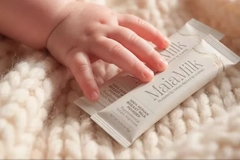 (Image credit: MaiaMilk).
In the US, MaiaMilk has launched shelf-stable, medical-grade human donor milk powder for infants, previously available only in neonatal intensive care units. Unlike formulas based on synthetic ingredients to approximate breast milk, MaiaMilk is 100% human donor milk and can be used at home after transitioning from the hospital.
Through proprietary freeze-drying technology, the brand notes that it preserves breast milk’s bioactive compounds, antibodies, and nutrients while making it shelf stable and portable.
MaiaMilk is the new consumer brand of Ni-Q, which has been supplying medical-grade human donor milk to hospitals across the US. MaiaMilk claims to deliver the same rigorously tested nutrition in a standardized format.

“For more than a decade, we’ve seen how essential donor milk is for the most vulnerable infants,” says Tara Overton, head of operations for MaiaMilk. “But we’ve also seen the limitations of a system where access is confined to hospitals.”
“MaiaMilk exists because families deserve the same level of safety, rigor, and clinical oversight at home. Making donor milk shelf-stable and standardized wasn’t just a technical challenge; it was a responsibility.”
Decade of safe supply
Ni-Q discloses it has supplied more than four million ounces of donor milk to premature and medically vulnerable infants and has reported zero adverse outcomes over the past 10 years. The company maintains it will extend the same safety, oversight, and quality beyond the hospital.
Each packet of MaiaMilk delivers standardized 20-calorie donor milk with no synthetic additives, fortifiers, or preservatives. The product is made from pure human milk, pasteurized, freeze-dried, and ready to mix with warm water in seconds.
The product delivers shelf-stable, convenient storage with no refrigeration required until it is opened.
MaiaMilk is produced under the same rigorous protocols implemented at neonatal intensive care units, including comprehensive donor screening, including medical history review, lifestyle evaluation, and blood testing.
The company performs multiple testing checkpoints along its supply chain, including pre-processing analysis and post-processing batch verification.
MaiaMilk powders are manufactured in a US FDA-registered facility following clinical-level current Good Manufacturing Practices. Every batch also undergoes dependent third-party laboratory verification prior to release.
Lifting barriers to access
Donor human milk has been a clinical standard of care in hospitals for decades, says Ni-Q. However, the company highlights that access at home has remained limited by logistical constraints.
The product is designed to support infants when milk is delayed postpartum. It is flexible for use for travel, partner feeds, and busy schedules.
In other advances in medical-grade infant nutrition, Prolacta Bioscience’s PreemieFort Enteral Solution received the world’s first prescription drug approval for a nutritional fortifier for low-weight infants made from human breast milk earlier this month.
While regulated as infant formula in the US and Europe, the product is now considered a pharmaceutical product in Japan, marketed specifically for the “nutritional management of neonates and infants presenting with weight gain failure.”
In Portugal, the start-up CarboCode is scaling its synthetic form of ganglioside GM3, which is “identical” to that found in human milk. An international team of Dutch and Portuguese scientists recently launched a study to determine how this essential breast milk compound influences early brain development.