



EFSA to advise on toxin contamination threshold in infant nutrition amid global product recalls


Key takeaways
- EFSA is providing scientific advice on thresholds for toxin contamination in infant nutrition products amid global recalls following the detection of cereulide.
- Multiple brands, including Nestlé and Danone, have voluntarily recalled affected batches of infant formula as a precautionary public health measure.
- The European Commission, EFSA, and ECDC are coordinating efforts to manage the multi-country recall event and ensure infant safety.

Amid multi-country recalls of infant nutrition products following the detection of a toxin, the European Food Safety Authority (EFSA) is developing scientific advice on the contamination threshold above which products should be recalled.
Companies have voluntarily recalled different batches and brands of infant nutrition products around the world due to the detection of cereulide, a toxin that is produced by Bacillus cereus. This toxin can cause sudden nausea, vomiting, and stomach pain 30 minutes to six hours after ingestion.
According to EFSA, it can also change the body’s salt balance in younger infants and lead to complications such as dehydration.
However, the authority notes that possible negative health effects are considered “low to moderate” and depend on an infant’s age, as newborns and infants up to six months old are at higher risk of severe disease.
Moreover, as products are being withdrawn and recalled in several countries, EFSA says the likelihood of further exposure is decreasing.
The European Commission has requested that EFSA provide scientific advice to inform risk management decisions by establishing an acute reference dose for cereulide in infants and providing information on typical and higher-end consumption levels of infant formula.
Although the source of the contamination has not been confirmed, safety authorities such as the Food Safety Authority of Ireland and news agencies such as Euronews report that the recalls are associated with a contaminated raw ingredient, arachidonic (ARA) oil, manufactured in China.
Voluntary recalls
The global precautionary and voluntary recalls and withdrawals of infant nutrition started in December 2025 and continue this month as a “preventive public health measure,” says EFSA.
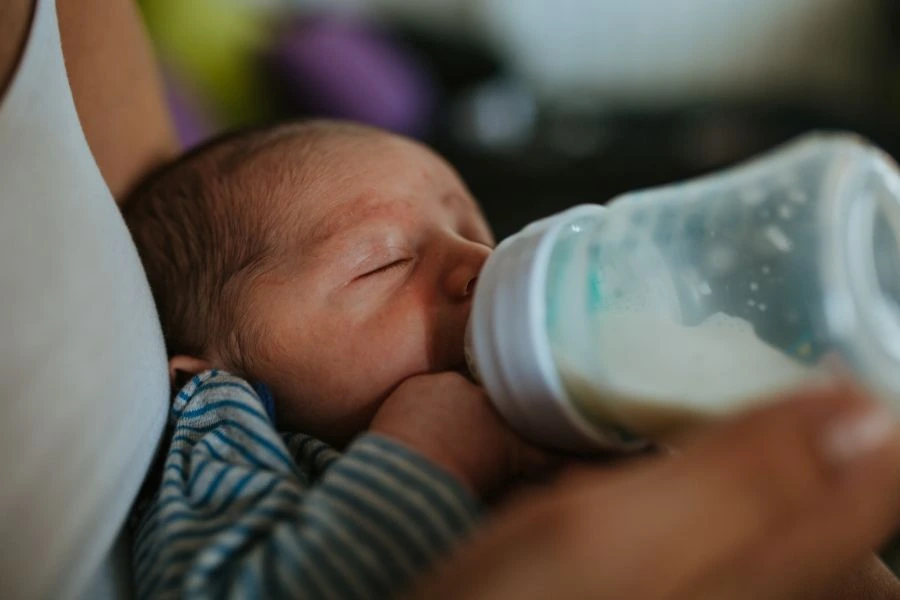 EFSA notes that newborns and infants up to six months old are at higher risk of severe disease.Earlier this month, Nestlé voluntarily recalled batches of its SMA infant and follow-on formula due to a potential presence of cereulide.
Moreover, last week, Danone stated it is withdrawing a limited number of specific batches of Aptamil First Infant Formula from targeted markets.
Lactalis Nutrition Santé and Hochdorf have also recalled batches of infant formula in recent weeks as a precautionary measure.
National food safety authorities are also directing product recalls. For example, the Singapore Food Agency has detected cereulide in formula products from Nestle and Dumex, while the UK’s Food Standards Agency said the toxin was found in a batch of Danone’s Aptamil First product.
According to Reuters, French investigators are examining the deaths of two infants who had consumed products subject to the precautionary recall earlier this month. The news agency reports that one of these babies has been fed Nestlé’s Guigoz powdered milk.
The European Centre for Disease Prevention and Control (ECDC) urges caregivers not to give recalled products to infants or young children and advises consumers to follow instructions and guidance issued by national food safety authorities.
Coordinated efforts
The ECDC, EFSA, and European Commission are collaborating to ensure a “coordinated and effective response to this multi-country event.”
 Nestlé, Danone, Lactalis Nutrition Santé, and Hochdorf have all recalled batches of infant formula as a precautionary measure.The EU’s Rapid Alert System for Food and Feed (RASFF) lists multiple instances of cereulide detected in infant formula or possible contaminations with the toxin, resulting in recalls. The countries of origin of these contaminations include France, Switzerland, the Netherlands, Germany, Ireland, and China.
RASFF has been established to enable the exchange of information between EU member countries and to support swift reactions by food safety authorities in the event of public health risks.
The system’s first notification highlighted the presence of cereulide in infant formula from the Netherlands, linked to ARA oil, which was notified by Italy.
Infant health impact
The ECDC states that it has received reports of diarrhea in infants following consumption of the recalled products. In light of ongoing national investigations, the ECDC says it has not been informed of any severe cases related to the event so far.
The center says that, in one case, an infant, who is now recovered, had consumed formula from a recalled batch that tested positive for cereulide and developed vomiting and diarrhea.
“It is important to note that vomiting and diarrhea in infants are common symptoms and can be caused by many different factors, including viral infections such as norovirus,” cautions the ECDC.
The organization recommends seeking medical advice from a healthcare professional if infants develop vomiting or diarrhea after consuming products included in the recall. If the symptoms are severe, caregivers should seek emergency care, as gastrointestinal symptoms in infants can rapidly lead to complications, regardless of the underlying cause.