


Supplements top social media misinformation themes, EU Infoodmation finds

Key takeaways
- Infoodmation analyzed more than 540,000 social media posts, with supplements as the main misinformation theme, while weight loss was prominent, and few food influencer posts carried an advertising disclosure.
- In a sample of 322 posts, the food industry was the largest source of potentially misleading content, which relied on suggestion and “natural” or “superfood” narratives.
- Much of this content is likely legal, so the researchers urge companies to go beyond compliance.
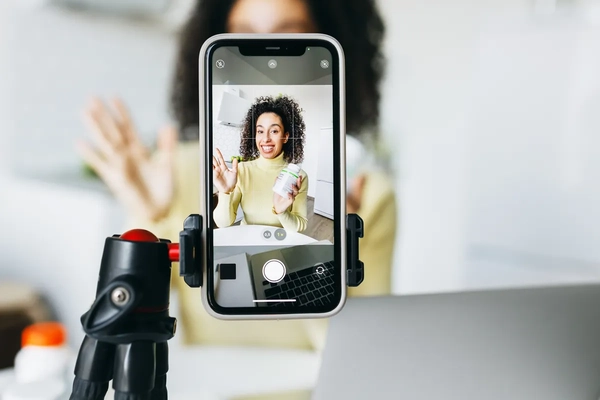
An EU-funded Infoodmation analysis of more than 540,000 social media posts, including around 24,000 food-related posts, found that supplements were the most common misinformation theme. Supplements appeared in 474 posts, followed by weight loss (256), superfoods (242), and detox (76). However, the researchers note that these figures do not imply that every discussion of supplements or weight loss is misleading.
In a separate sample of 322 potentially misleading food communication examples, social media accounted for 63.4%, with short videos as the leading format, and the food industry as the largest source (52%).
To learn more, Nutrition Insight speaks with consortium members involved in the project, coordinated by the European Food Information Council (EUFIC).

“We cannot specify how many of the 474 posts were paid collaborations, as our analysis did not make that distinction. What we do know from the influencer monitoring data is that 9% of all food influencer posts included an advertising or marketing disclosure,” says Dr. Sophie Boerman, associate professor at Wageningen University & Research, in the Netherlands, who conducted the Influencer Monitor analysis.
“Thus, the majority of the posts that involved food did not seem to be commercial or advertising.”
According to the white paper, influencer content often exaggerates the health benefits of specific supplements, such as collagen improving skin and hair, protein shakes to increase fitness, and electrolytes to make water extra hydrating.
The posts were collected from Instagram, TikTok, and YouTube (predominantly Instagram) across 16 countries between June and August 2025 and were detected using AI grounded in a curated evidence base, followed by human review.
Food industry tops potentially misleading content
Celia Ramos, an academic research officer at the nonprofit Fundación Maldita.es, spotlights potentially misleading content by analyzing a sample of 322 posts collected across 13 countries. This includes potentially misleading sources of food communication, from mainstream media to packaging and advertising.
 Boerman says only 9% of food influencer posts carried an advertising disclosure.“In this sample (which is limited in size, meaning no broad generalizations can be drawn from it), we also encountered claims targeting people with health concerns; for instance, one person — who refers to themselves as a ‘human biologist’ — asserted that amino acid supplements can reverse cellular aging,” she details.
“In this sample, only one of the influencer posts coded as promotional clearly stated that it was an ad or sponsored, and some of the others promoted the influencer’s own brand or products. Most influencer content, however, was not coded as promotional at all: it was framed as information, advice, or entertainment, which makes any commercial or persuasive intent less visible.”
Ramos underscores the key finding: the food industry is the dominant source (52%) and accounts for 78% of potentially misleading promotional content, concentrated on “natural” and “superfood” narratives. She details that industry content is overtly promotional (92%) compared to influencer content (20%).
She adds that influencers produce more alarmist content than other actors, especially on topics such as supplements, weight loss, superfoods, and detox. Ramos notes the analysis did not cover botanical claims, which remain pending under EU rules.
What this means for industry
Reacting to the finding that the food industry accounted for 52% of potentially misleading examples, Pablo Hernández-Escayola, an academic research coordinator at Fundación Maldita.es, says that this content does not have to lie to mislead..
“Its effectiveness lies in what it suggests, e.g., a health claim alongside a logo or certification, but without information to back it up; a product promoted as ‘high in protein’ or ‘no added sugars’ while omitting the rest of its nutritional profile; or the use of terms like ‘natural’ as a synonym for ‘healthy.’ Much of this is likely legal,” shares Hernández-Escayola.
“That’s why we believe that mere compliance with regulations isn’t enough.”
At a September 15 workshop where the findings were presented, industry representatives discussed the need to improve products aimed at children, label responsibly, and exercise restraint in marketing strategies, says Hernández-Escayola.
 Ramos cautions that many claims lacked the information needed to evaluate them.He also points out that EU laws on food and supplement health claims and advertising already exist. “Where those rules are not followed, the issue is enforcement. Going beyond compliance applies to everything that is legal but can still mislead.”
“For supplement and ingredient companies, our findings suggest some simple steps: not using terms such as ‘natural’ (which has no legal definition in EU food law) or a product’s origin or quality seals as a stand-in for health; making sponsored content easy to recognize, not just technically labeled; and showing particular restraint with products aimed at children.”
Legal content with transparency issues
The analysis found that misleading communication was often not a straightforward false statement, but worked through suggestion, exaggeration, or missing content.
“The specific finding is that ‘67% of the examples coded as including a health or sustainability claim did not provide the information needed to evaluate them,’” shares Ramos. “For example, packaging for children’s fruit snacks featuring cartoon characters and the claim ‘made with 99% fruit,’ without additional information that would allow us to confirm whether or not that claim is true.”
“Another includes a supermarket sign advertising organic citrus fruit, promising to ‘produce better, preserve the environment, and eat well,’ without any information to back up these claims.”
Ramos notes that most such content is likely legal, but that is where the problem lies. She adds that misleading communication can take advantage of gaps in legislation, such as the absence of nutrient profiles (thresholds used to determine whether a food can carry claims), which are distinct from the nutrition information on labels.
“The EU has not yet adopted these ‘nutrient profiles,’ which are intended to prevent products high in fat, sugar, or salt from carrying nutrition claims (e.g., low fat, high in fiber, or source of vitamins) and health claims,” says Ramos.
“The absence of these profiles could explain why many products can legally project a ‘health halo’ despite poor nutritional quality. Perhaps it is because there are fewer controls over the information that companies voluntarily add to their labels.”
For influencers, the 322-item sample gives only a limited picture and raises questions about transparency since only one post had a clear sponsorship label; the rest cannot be determined, Ramos says.
“EU consumer law requires commercial intent to be made clear when it isn’t obvious from the context, and we did not assess individual posts against that standard,” notes Ramos.
 Hernández-Escayola argues mere compliance with regulations isn’t enough.“The number of cases is small, so this can’t be read as a general trend, but it is consistent with what we heard at our stakeholder workshops, where participants called for tighter controls on ‘influencer marketing’ and stricter disclosure requirements.”
Protecting vulnerable populations
At the workshop, people with chronic conditions and young people were flagged as those more vulnerable to social media content.
“According to participants, children and teenagers find it harder to recognize when they’re being sold something,” says Hernández-Escayola. “For example, they may see influencers as friends rather than advertisers, and they’re reached through content about body image, the gym, and protein or other purported sports supplements (which implicitly promise better physical results in terms of appearance and performance).”
“People with chronic illnesses or mental health conditions are vulnerable for a different reason; when you’re unwell, a promise of relief could be hard to resist. We found an influencer claiming a carnivore diet had reversed his chronic eczema, for example. In these cases, the risk goes beyond a poor food choice; it can mean dangerous dietary restrictions or putting off medical treatment.”
He highlights that EU law does not permit food and supplement products to make claims that they prevent, treat, or cure disease and cautions against presenting before-and-after transformation results. Health claims must be authorized and paid influencer content must be identifiable, he adds.
“We believe the measures must be equally rigorous for all groups. Transparency matters for every audience, but with these groups, and particularly with children and teenagers, industry representatives at our workshops acknowledged the need for restraint in marketing and for better products aimed at children.”
Meanwhile, Ramos notes that AI was not part of the data-collection design of the analysis, but the team considers it a priority for future oversight and regulation, especially since AI chatbot use among younger populations is rising as a source of information.
The team shares that the headline recommendations will be available in December 2027, while the open-access hub is already available and is gradually being updated.