





High-dose folic acid during pregnancy linked to increased vaginal bleeding risk

Key takeaways
- An observational study links high-dose folic acid in early pregnancy to a greater vaginal bleeding risk, especially with a male fetus.
- Senior author Claire Roberts says the findings don’t challenge folic acid’s birth-defect benefit but question whether higher doses add value.
- She notes that women in countries with mandatory fortification may already exceed the 1,000 mcg tolerable limit, raising fortification-plus-supplementation questions.

An observational study has linked women taking high-dose folic acid supplements during early pregnancy to an increased risk of vaginal bleeding than those taking lower doses. However, it urges further research into optimal folic acid intake levels, especially in regions where the nutrient fortification is mandatory.
Researchers from Flinders University in Adelaide, Australia, analyzed data from over 2,400 first-time mothers in the south of the country. They reported that those taking folic acid at 800 mcg or more daily were linked to a higher bleeding risk, especially if pregnant with a boy.

Folic acid is known to be an essential nutrient for preventing congenital anomalies, such as neural tube defects. The Australian government says the minimum recommended daily dosage of folic acid is 400 mcg daily, from at least one month prior to conception until the end of the first trimester. Instead of challenging this known fact, the new research suggests that higher doses may not result in additional benefits.
Nutrition Insight speaks with the paper’s senior author to learn more. The researchers explain that one in five pregnant women experiences vaginal bleeding, which does not always signify a serious issue but is a distressing experience for expectant women. It has been linked with increased risk of pregnancy complications, they add.
Pre- and post- folic acid fortification mandate
The Reproductive Health study examined two prospective cohorts, Screening for Pregnancy Endpoints (SCOPE) and Screening Tests to identify poor Outcomes of Pregnancy (STOP), from the Lyell McEwin Hospital.
The SCOPE cohorts were recruited between 2005 and 2008, who gave birth before the 2009 folic acid fortification mandate in Australia. To study the effects of this ruling, the STOP prospective cohort study was conducted between 2015 and 2018.
 Professor Claire Roberts (Image credit: Flinders University).“Women in both cohorts were recruited prospectively from 9–16 weeks’ gestation, long before complications manifested. They were all nulliparous (they had not given birth previously) and apparently at low risk with pre-existing medical conditions such as hypertension and diabetes in the exclusion criteria,” Claire Roberts, professor at Flinders Health and Medical Research Institute and the College of Medicine and Public Health, tells us.
“Folate supplementation and blood samples for folate, vitamin B12, and homocysteine were taken at recruitment. Therefore, it is highly unlikely that women with complications would supplement differently.”
Since the study was observational, Roberts explains how her team determined that folic acid was driving the bleeding association rather than other differences between the cohorts.
“We have used Ordinal Logistic Regression to analyze the data. Therefore, our data show associations but cannot show causation. In our modeling, we have accounted for the cohort, as despite both cohorts being recruited at the same hospital that serves a disadvantaged community 10 years apart, there are some differences.”
“Having said that, the modest but statistically significant differences, such as maternal age, body mass index, socioeconomic status, ethnicity, and early pregnancy cigarette smoking between cohorts, were not associated with vaginal bleeding. However, the percentage of women in the second cohort (~60% STOP) who used 800 mcg folic acid or more daily was a lot higher than in the pre-fortification cohort (~26% SCOPE).”
She adds that when both the cohort data were analyzed, vaginal bleeding was more severe and longer in women who used 800 mcg than in those who used 400 mcg, and 800 mcg versus zero. “At this stage, our data needs to be replicated if possible.”
Sex-based risk
The study points out a new interaction between folic acid intake, sex of the baby, and pregnancy health. Male-fetus pregnancies were linked to double the bleeding risk.
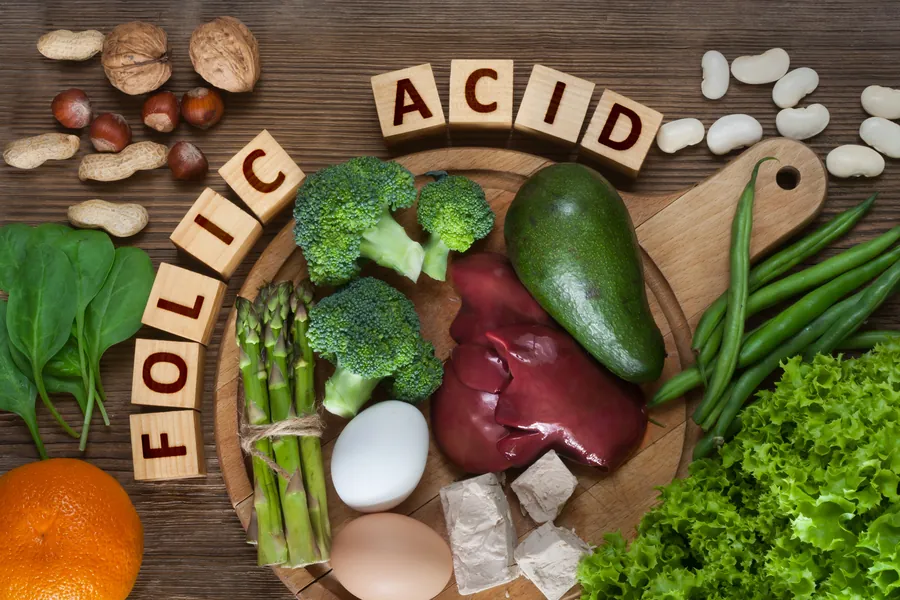 The study found that those taking folic acid at 800 mcg or more daily were linked to a higher bleeding risk, especially if pregnant with a boy.“At present this is an unexplained association,” notes Roberts, “However, for over a decade we have been studying fetal sex differences in pregnancy outcomes and placental function at the population, cohort, transcriptome, and cell or molecular levels.”
“It is now accepted that there are differences, many of which are orchestrated by the placenta, which shares its genome with the fetus. Our investigation into the mechanisms for the fetal sex differences in response to folic acid supplementation is ongoing.”
The researchers found that women taking at least 800 mcg of folic acid daily were more likely to report spotting and mild bleeding during the first 16 weeks of pregnancy. This risk more than doubled in male-fetus pregnancies than in women who did not take folic acid supplements.
“At present, we recommend that women comply with their national guidelines, which do vary somewhat between countries. We are building evidence of the adverse effects of taking too much folic acid in supplements and fortified food,” says Roberts.
“For example, we have published [research] on increasing risk for gestational diabetes with high folic acid supplementation in the context of pre- and post-food fortification and have shown that this appears to be mediated by perturbed expression of placental hormones that govern maternal insulin resistance and glucose tolerance in pregnancy.”
Navigating supplements and fortification
The study raises a broader question about the interaction between fortification and supplementation.
 The study raises a broader question about the interaction between fortification and supplementation.“There is strong evidence that women in countries with mandatory food fortification are getting more folic acid than guidelines assume,” says Roberts. “A systematic review showed that many women are getting more than the tolerable limit of 1000 mcg folic acid per day.”
“In addition to mandatory fortification of bread-making flour in Australia, the population is getting abundant folic acid from many other foods, that is, from voluntary food fortification. We have just submitted another manuscript for publication on which foods and how much folic acid is added to supermarket foods in Australia.”
She suggests women speak with health care providers about whether they need to continue taking the recommended 400 mcg/day after the first trimester.
“The companies selling supplements often recommend continuing throughout pregnancy and during lactation, but evidence does not support this unless women are actually folate deficient, which is rare post food fortification,” says Roberts.
Outside Australia, to promote higher intake of folic acid to lower neural birth defects, the US-based Center for Science in the Public Interest has urged the food industry to fortify corn products.
By the end of this year, the UK will mandate folic acid fortification of non-wholemeal wheat flour, but misinformation linked to processed food debates has created consumer confusion.