



Aker BioMarine presents krill oil and omega-3s for metabolic health and longevity at Expo West 2026

Key takeaways
- At Expo West 2026, Aker BioMarine positions krill oil and marine omega-3s as science-backed solutions for metabolic health, cognition, and longevity.
- Ingredients like Lysoveta and Revervia reflect a shift toward high-absorption, next-generation formats that target brain delivery and performance outcomes.
- With rising GLP-1 use, the company highlights clinical data showing krill oil may support fat-focused weight loss while helping preserve lean muscle mass.
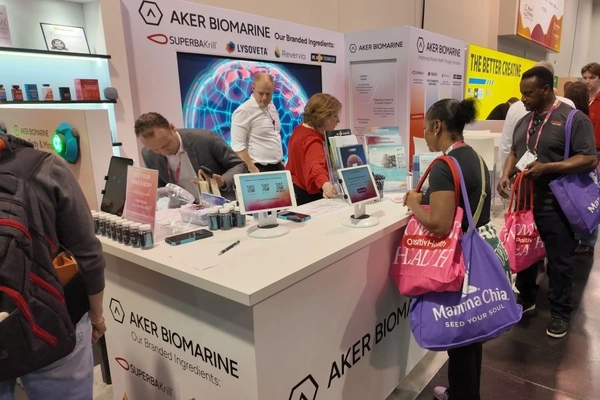
At Natural Products Expo West 2026, Aker BioMarine is spotlighting next-generation performance, cognitive, and metabolic health formulations with marine-based ingredients like Superba Krill and omega-3 eicosapentaenoic acid (EPA) and docosahexaenoic acid (DHA).
On the show floor in Anaheim, California, US, Nutrition Insight speaks with Jaroslava Juricova-Olsen, chief marketing officer of Human Health Ingredients at Aker BioMarine, about the company’s sustainability initiatives and innovation strategy, moving beyond krill oil ingredients and new health benefits.
“At this year’s Natural Products Expo West, the focus is on supporting both body and mind, recognizing that modern consumers understand that physical and mental health are inseparable. They’re looking for integrated, science-backed solutions that address strength, energy, focus, and resilience together.”
Juricova-Olsen says the company has expanded its portfolio with next-generation ingredients to meet these evolving expectations.

“Revervia delivers exceptionally pure, high-concentration DHA through a low-impact fermentation process, offering a sustainable, high-performance omega-3 solution tailored to modern wellness demands.”
Another featured ingredient at Expo West 2026 is Lysoveta for brain health. Juricova-Olsen underscores that this is the first commercially available lysophosphatidylcholine-bound EPA/DHA that delivers DHA across the blood-brain barrier, which can support healthy aging by helping to reduce oxidative stress and protect the neurons.
Furthermore, she says the company’s PL+ Technology serves as a natural marine phospholipid delivery platform that enhances nutrient absorption, particularly for ingredients that are traditionally difficult for the body to absorb.
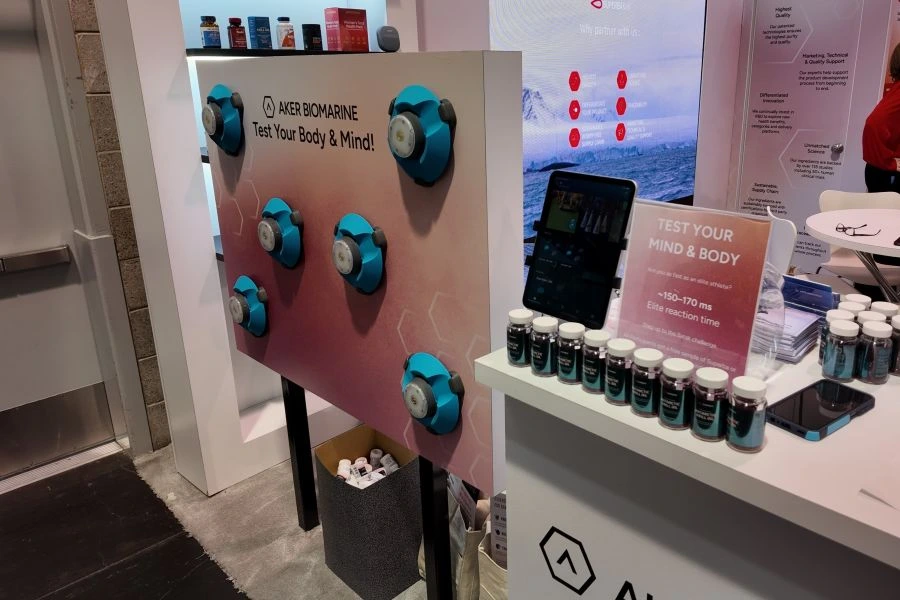 At Expo West 20206, Aker BioMarine highlights the benefits of krill oil and marine omega-3s in metabolic health, cognition, and longevity.“Together, these solutions reflect a strategic shift from single-ingredient benefits to synergistic platforms that help brands create differentiated, future-focused products. In fact, today’s wellness landscape is an opportunity for brands to move beyond single metrics and deliver holistic solutions that support active bodies and minds alike.”
Beyond brain, joint, and heart health, where are marine-based ingredients starting to make an impact?
Juricova-Olsen: Consumers are now thinking about wellness more holistically and actively seeking preventive wellness solutions that offer a wide range of potential health benefits. Focus has shifted from simply living longer to living better, prioritizing healthspan and overall quality of life. People increasingly recognize that mobility, brain health, metabolism, and emotional well-being are interconnected rather than separate concerns.
Older generations are looking for products that help them stay healthier for longer without relying on “anti-aging” claims. At the same time, younger, health-conscious individuals are taking a proactive approach, seeking preventative support for metabolic balance and overall well-being.
At Aker BioMarine, we are exploring several emerging health areas for our ingredient portfolio that align with these shifts.
In metabolic health and body composition, consumers are focusing more on maintaining energy balance and metabolic resilience, and marine-based phospholipid omega-3s are being studied for their role in supporting healthy lipid metabolism and insulin sensitivity.
For emotional and cognitive resilience, there is growing consumer interest beyond traditional cognitive function to focus more on stress response, mood balance, and mental clarity.
 Juricova-Olsen points to 2025 clinical research finding that, when taking krill oil, 96% of study participants’ weight loss came from fat, not muscle.In healthy aging and cellular functions, the emphasis is on maintaining vitality, mobility, and function over time, rather than “anti-aging.”
How does krill oil support weight management and GLP-1 users?
Juricova-Olsen: The rapid adoption of GLP-1 medications has ushered in a new era of weight management, one that extends beyond simply losing pounds. While these therapies are highly effective for weight reduction, an emerging challenge is the unintended loss of lean muscle mass, which can weaken strength, reduce mobility, and slow metabolism.
As GLP-1 use accelerates, preserving muscle has become a critical unmet need, opening new territory for companion nutritional solutions. This shift represents a significant innovation opportunity for nutraceutical leaders such as Aker BioMarine to develop science-backed products that complement pharmaceutical weight-loss treatments.
Krill oil is emerging as a compelling companion solution in the GLP-1 phase. With its naturally balanced combination of choline and omega-3s (EPA and DHA) delivered in a highly absorbable phospholipid form, krill oil supports protein synthesis, energy production, inflammation management, and, importantly, lean muscle preservation.
New clinical research published last summer demonstrated that participants taking krill oil lost approximately 10 lbs — similar to a placebo — but 96% of that loss came from fat rather than muscle.
In contrast, the placebo group derived 27% of their total weight loss from muscle and showed weaker outcomes in strength, mobility, and inflammation markers. As the GLP-1 category evolves, krill oil’s capacity to promote fat-focused weight loss over muscle loss positions it as a leading option in next-generation companion nutrition.
With growing concerns over ocean health and the environmental impact of marine harvesting, how do you ensure your krill oil doesn’t harm the ecosystem?
Juricova-Olsen: As the global leader in krill oil, Aker BioMarine has embedded sustainability into its DNA from day one, treating it as both a responsibility and a strategic growth driver.
 Aker BioMarine uses sustainably sourced krill harvested from a Marine Stewardship Council-certified fishery.The company differentiates itself through premium, sustainably sourced krill harvested from a Marine Stewardship Council-certified fishery and aligned with the Sustainable Fisheries Partnership, enabling B2B partners to offer scientifically validated, responsibly harvested ingredients to increasingly conscious consumers.
Traceability measures from ocean to finished product ensure transparency and build brand trust, while active collaboration with scientific communities and NGOs strengthens its environmental stewardship credentials. By supporting ecosystem conservation initiatives, including Marine Protected Areas around the Antarctic Peninsula, the company demonstrates a tangible commitment to biodiversity protection.
Sustainability also guides innovation, allowing partners to develop cleaner, greener products that meet rising demand for environmentally responsible solutions. Rather than viewing sustainability as a compliance requirement, Aker BioMarine leverages it as a platform for premium differentiation and long-term growth — ensuring that the benefits of marine-based ingredients are delivered without compromising ocean health.
What opportunities and challenges do you see in navigating the global regulatory landscape?
Juricova-Olsen: As Aker BioMarine expands its global footprint, we see a unique opportunity to differentiate through scientific rigor and compliance excellence. The growing consumer interest in combination and condition-specific supplements — particularly in areas such as eye health, heart health, and cognitive support — creates demand for innovative, personalized nutrition solutions.
Krill oil, while a strong stand-alone ingredient, is also highly versatile in multi-nutrient formulations and novel delivery formats, offering opportunities for product innovation.
In navigating the global regulatory landscape, a proactive strategy and robust scientific documentation are critical. By working closely with local partners and aligning with regional requirements, we can ensure compliance while accelerating market entry.
Companies that successfully manage these regulatory complexities are not only able to bring innovative, personalized products to consumers more efficiently but are also well positioned to capitalize on the expanding global demand for condition-specific nutrition solutions.