




Danone opens medical nutrition production line for Europe’s aging population


Key takeaways
- Danone opens its production line in Steenvoorde, France, designed for specialized nutrition, also producing infant formula and dairy ingredients.
- Medical nutrition becomes a key strategic focus for the company amid Europe’s increasing aging population and chronic disease rates.
- The company seeks to increase France’s industrial, healthcare, and economic sovereignty through investments.
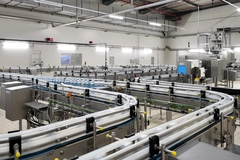
Danone has inaugurated its largest medical nutrition production line in Steenvoorde, France, to develop its European capacity as the aging population and chronic disease in the region rise. Nutrition Insight attended the launch event.
The company made the €70 million (~US$81 million) investment for its facility in 2024, which can now serve as a key hub for specialized nutrition, producing 150 references of its medical nutrition Fortimel range.
The facility can also produce nearly 20 million liters of oral nutritional supplements annually, infant formula, and specialty dairy ingredients while applying advanced filtration technologies.
“Steenvoorde embodies Danone’s global strategy to advance health through food: investing in science, manufacturing, and local ecosystems to grow specialized nutrition and help address some of the world’s most pressing health challenges across all stages of life,” says Antoine de Saint-Affrique, CEO of Danone.
“This is a very old site, 115 years old, and it has kept pace with every change in food. It is a site that has built its expertise in health and infant nutrition. Today is a major transformation, a change, a new expertise, and a new chapter with medical nutrition.”
He adds that the new production line reflects what guides Danone, “bringing health through food to as many people as possible.”
Medical nutrition as strategic pillar
According to the WHO, people aged over 60 are expected to double by 2050, which Danone sees as an indication that more medical nutrition solutions required.
Presently, disease caused by malnutrition is already affecting 30–50% of hospitalized patients, according to WHO Europe. Danone’s chief medical and scientific officer previously told Nutrition Insight that patient-centric medical nutrition, featuring familiar and varied flavors, can significantly improve adherence and nutritional outcomes.
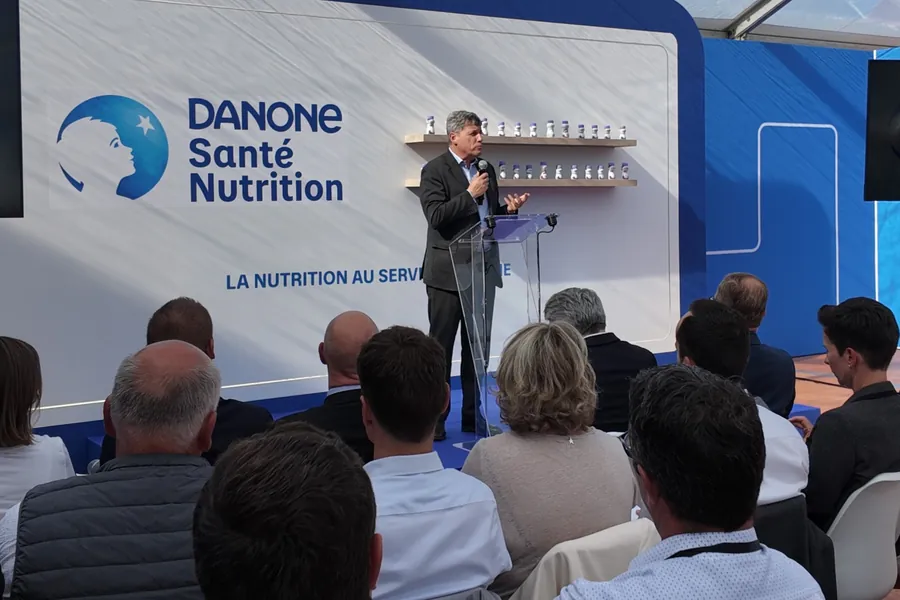 Antoine de Saint-Affrique, CEO of Danone, speaking at the inauguration of Steenvoorde's medical nutrition production line.“Nutrition is not an accessory or an add-on to care, but an essential component of it,” says De Saint-Affrique. “In a health system like ours, which is under strain, it is not a cost but an investment, an investment both in prevention and in the quality of care pathways.”
Based on the rising demand in the aging population, Danone is positioning medical nutrition as the key pillar of its Renew Danone strategy, launched in 2022.
The company says it is strengthening its production capabilities and scientific expertise and innovating further to meet patient demands.
On World Cancer Day this year, Danone became the first food business to join forces with the Union for International Cancer Control to advocate for the recognition of nutritional care as an essential component of cancer treatment. It also strengthened workplace protections for its employees with a diagnosis.
Advancing medical nutrition
Danone touts Steenvoorde as one of Europe’s leading specialized nutrition sites, and France’s largest medical nutrition production line.
The company says its new plant has unique industrial expertise for specialized nutrition, producing diverse formats, textures, and recipes, including plant-based alternatives.
The investment project includes a biomass boiler inaugurated in February this year, helping to slash the site’s carbon footprint.
Danone further points out the importance of the facility’s location in France, supporting the nation's industrial, health, and economic sovereignty. The company adds that the investment solidifies Danone’s presence in the Hauts-de-France region, its “historic home” and a major dairy-producing area.
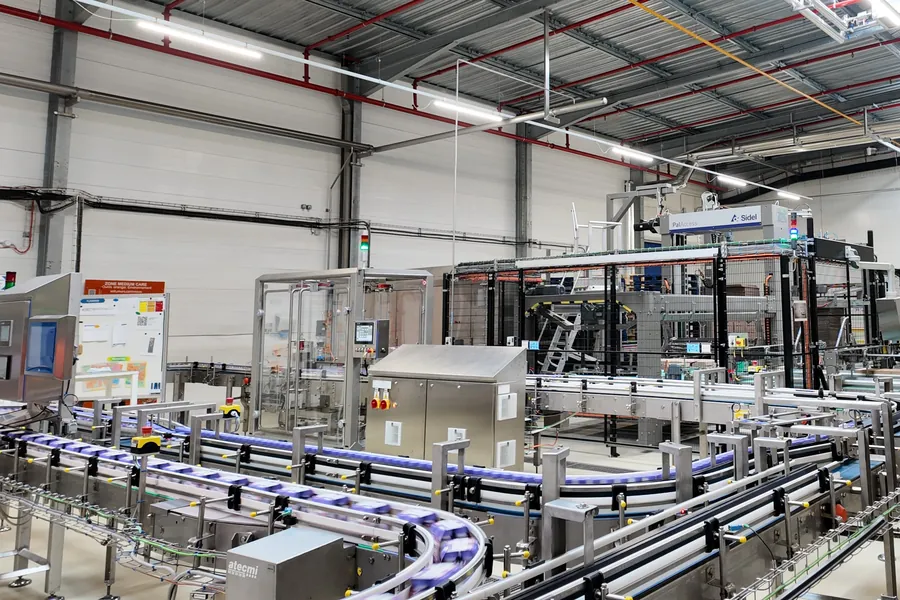 The Steenvoorde facility can produce nearly 20 million liters of oral nutritional supplements annually.The site has over 400 partner farms, while regional milk collection increased sixfold in four years, notes the company.
In addition to the new production line, De Saint-Affrique says the company will continue the transformation of Steenvoorde.
“We are in the process of creating a facility equipped with extremely advanced technologies that make it possible to process milk, separate its components, and turn them into high-quality nutritional ingredients. We are celebrating both the completion of one project and the continuation of a project that is already underway.”
With that additional project, Steenvoorde will be able to produce locally ingredients that are key to making Fortimel, and that can be exported across Europe.
While the investments at Steenvoorde over the past five years have been considerable, De Saint-Affrique adds: “Investments are nothing without the commitment of the teams, and without the teams’ ability to orchestrate years and years of experience and to turn this investment into a machine that is meant to shine across Europe.”
In terms of jobs, the site has over 400, while Danone employs 700 people in the region.
“In just a few years, Steenvoorde has moved to a new scale. Thanks to the investments made and the expertise of our teams, the site has become a key player in specialized nutrition in Europe, supporting the development and production of increasingly innovative solutions for patients,” comments Emmanuel Varigas, Steenvoorde site director.
Danone’s French investments
As part of its investment trajectory across its French sites, Danone says it has put in over €600 million (~US$693 million) between 2021 and 2027, aimed at helping reinforce France’s industrial, healthcare, and economic sovereignty, alongside increasing European production capabilities.
Earlier this March, France and the Netherlands signed a Letter of Intent at Danone’s Utrecht R&I center to deepen collaboration on sustainable food, nutrition, and health.
Last year, the company opened its OneBiome Lab in Paris-Saclay, advancing microbiome science by combining microbiology, clinical research, and AI to drive nutrition-focused health innovation.