



Chemical pollutants found in human milk, yet it remains best for infants

Key takeaways
- Researchers detected new chemical pollutants in human breast milk, including pesticides, antimicrobials, and plastic additives, using advanced non-targeted analysis.
- Despite these findings, experts stress that breast milk remains the gold standard for infant nutrition, providing essential nutrients and antibodies.
- The study highlights the need for stronger chemical safety regulations, further research on human chemical metabolism, and baseline data to reduce infant exposure.
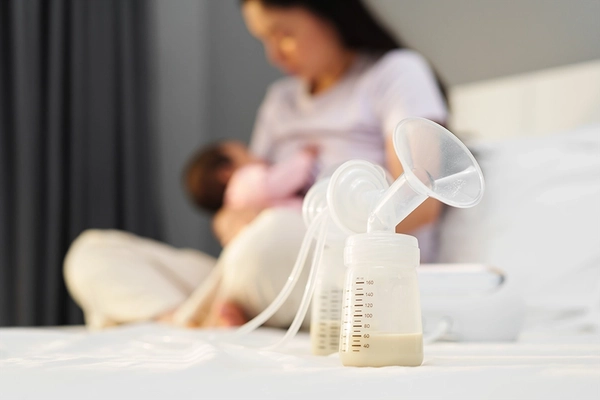
New research has found traces of pesticides, antimicrobials, and additives used in plastics and personal-care products in human milk samples from Canada and South Africa. Despite the alarming finding, the McGill University researchers in Canada stress that breast milk remains ideal for infants.
“It is important to note that these chemicals were detected at low concentrations, and we do not fully understand the health effects of many of them,” says study co-author Stéphane Bayen, associate professor from Food Science and Agricultural Chemistry.
He adds that breast milk retains nutrients and antibodies that infants need to develop and protect against diseases.
The researchers urge stronger chemical safety regulations to improve infant and parental health, alongside more research on how chemicals are metabolized.

Detection of new chemicals
Previous findings focused on individual substances and their health consequences. But the new studies employed non-targeted analysis to broaden the search for unusual chemical residues.
Through this method, researchers identified many new compounds in human milk, such as antimicrobial preservatives — 2-ethylhexyl 4-hydroxybenzoate and phenyl paraben — that are commonly added to soaps, disinfectants, and personal care products.
Additionally, plastic-related antioxidant additives — Irganox 1010 and BHT-COOH — used in plastics manufacturing and packaging materials, were detected.
Pesticides include an agricultural herbicide (propanil), while the antimicrobial compound (chloroxylenol), used in disinfectants and household products, was also found in breast milk.
Samples from South Africa contained 8-hydroxyefavirenz, a breakdown product of efavirenz, a medication used to treat HIV.
“To our knowledge, the compound had never before been identified in human milk. Its presence suggested that the mothers in South Africa used efavirenz during or prior to the sample years. This treatment was replaced by another regimen after 2019,” comments Bayen.
Furthermore, the team found that milk concentrated with certain chemicals, such as bisphenol A and bisphenol AF, was linked to altered growth in South African infants.
 The researchers believe the chemical residues may pose health risks, prompting a call for further investigation.However, Jonathan Chevrier, associate professor of Epidemiology, cautions: “This is the first study of this type, and so results need to be replicated before any conclusion can be drawn.”
“Human milk is considered the gold standard for infant nutrition. It is therefore essential to understand everything infants are exposed to during this critical window of susceptibility in development.”
Sampling and research details
The analysis of 594 samples from Montreal, Vhembe, and Pretoria revealed the diversity of chemical residues linked to diet and environment. The researchers believe these chemicals may pose health risks, prompting a call for further investigation.
The study involved samples between 2018 and 2019. Data mining strategies were used with high-resolution mass spectrometry for identifying molecules in human milk.
“Our results highlight — perhaps unsurprisingly — that populations are exposed to a complex cocktail of chemical residues, reflecting each individual’s diet, environment, and lifestyle,” says Bayen.
He adds that baseline data should be created to help reduce exposure to harmful chemicals.
The findings are published across five papers in Environmental Research, Exposome, Nature: Journal of Exposure Science & Environmental Epidemiology, Chemosphere, and Environmental Pollution.
In related news, technological advances enabled scientists to identify specific bacteria in breast milk that help build infants’ gut microbiomes, where bifidobacteria were dominant.
Meanwhile, a separate study suggests shortening storage durations of donor human milk to help reduce gastrointestinal complications in premature infants, including necrotizing enterocolitis.
Other research found that breast milk from women with HIV contains significantly lower levels of tryptophan, an essential amino acid likely necessary for infant immune function, growth, and brain development