



Breast milk analysis reveals diverse microbiome transference shapes infant’s health

Key takeaways
- Advanced metagenomic analysis reveals that bifidobacteria dominate the breast milk microbiome, challenging earlier studies that identified other bacterial groups.
- B. longum was the most prevalent species, with evidence showing direct transmission of bacterial strains from mother to infant during breastfeeding.
- The findings highlight breast milk as an important source of microbes that help shape infant gut development, immunity, and metabolism.

Technological advances have enabled scientists to identify specific bacteria in breast milk that help build infants’ gut microbiomes. The researchers point out that very few studies examine the breast milk microbiome and instead tend to focus on nutrients, antibodies, and bonding time.
Contrary to previous research, which identified other species of bacteria, the new study in Nature Communications found bifidobacteria dominated breast milk.
Bifidobacterium longum was especially noted for its high presence among 507 analyzed breast milk and infant stool samples from 195 mother-infant pairs.
Researchers highlight that these microbes can shape nutrient absorption, metabolic regulation, immune system development, and more. The study is touted to be one of the most detailed studies on bacterial combinations in human milk.

“Breast milk is the recommended sole source of nutrition for an infant’s first months of life, but important questions about the milk microbiome remained unanswered because the analytical challenges are intimidating,” says first author Pamela Ferretti, Ph.D., postdoctoral researcher in the Blekhman Lab at the University of Chicago, US, who previously studied how maternal body sites shaped infant microbiomes.
“We decided to tackle this endeavor because our collaboration presented a unique opportunity to combine key resources.”
Bacterial diversity
Human breast milk is typically difficult to analyze because of its high fat content and relatively low bacterial load, explain the researchers, which complicates the extraction of genomic material.
The research team traced specific bacterial strains shared between mothers and their infants using advanced metagenomic techniques. This revealed bacteria were vertically transmitted during breastfeeding.
B. longum and other bacteria help infants with digestion, despite the researchers finding the presence of pathogens like Escherichia coli and Klebsiella pneumoniae, showcasing the diversity of microbes transmitted in the milk. All participants were deemed to be healthy.
From the new analysis, the team also found B. breve and B. bifidum in high numbers, with B. longum making up over half of the strains. This species is found in over 98% of infants’ guts.
“Even though B. longum is well-documented as being highly prevalent in the infant gut, it was surprising to find such a strong signature of that species in the breast milk samples because previous milk studies mostly reported other bacterial taxa like Staphylococcus and Streptococcus,” says Ferretti.
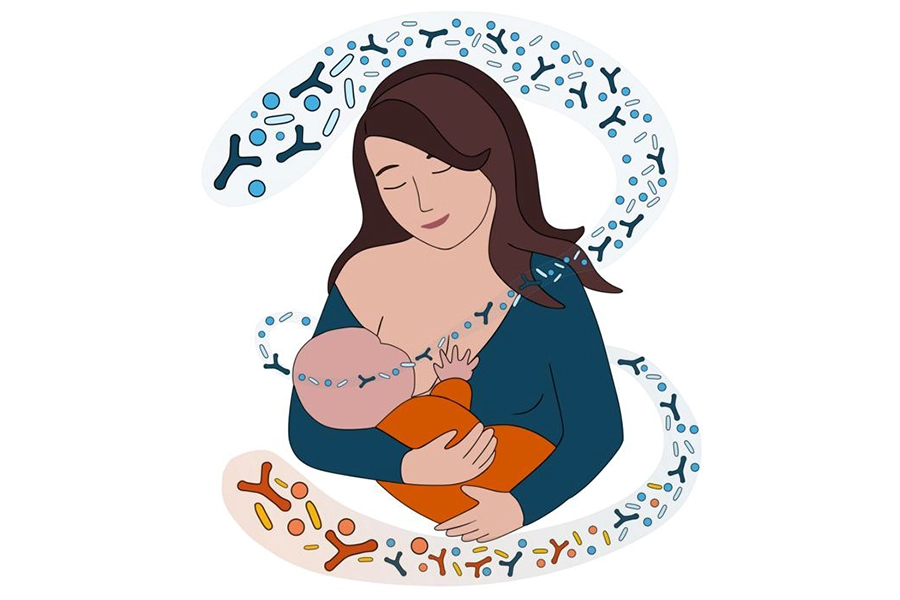 Advanced metagenomic techniques find bifidobacteria dominate the breast milk microbiome and are transmitted to infants during breastfeeding (Image credit: Ferretti).“We think these results will prompt some reevaluation in the field.”
Mother-to-baby-to-mother transference
According to the researchers, previous studies mainly used a relatively inexpensive and fast technique called amplicon sequencing to analyze bacterial DNA in breast milk. However, since this method only targets a limited number of specific genomic regions, it leaves more of the bacterial genome unexamined.
“Metagenomic analysis is trickier and more complicated, but it really paid off because it allowed us to obtain information at the level of different bacterial strains — which is key, because that’s the only level where we could actually claim to know about transmission,” explains Ferretti.
In the study, there were 12 times when the same strain was found in a mother’s breast milk and their infant’s gut, indicating vertical transmission.
Some strains were beneficial, aiding the infant in digesting milk sugars and supporting healthy gut development. Still, others were pathogens that live harmlessly in healthy people but carry the potential to cause infections. These do not automatically signal disease but reflect microbial diversity transference during breastfeeding, note the researchers.
Strains typically associated with the mouth, such as Streptococcus salivarius and Veillonella species, were also detected in milk samples. The researchers suggest this is evidence of a “retrograde flow” during breastfeeding, so that when the baby feeds, small amounts of oral bacteria travel back into the nipple and ducts, becoming part of the milk microbiome.
Growing scientific data
According to Ferretti, the study reveals new details about microbial transmission and also fills a major data gap in studying early-life health.
“This study nearly doubled the number of metagenomic breast milk samples that are publicly available and pairs them with extensive information on mothers’ health and lifestyle. We’re hopeful that our findings and future analyses that use this dataset will push the field forward.”
The researchers hope their analysis can be used in further research employing a multi-omic approach, such as analyzing metabolites like human milk oligosaccharides and environmental factors like PFAS and antimicrobial resistance, which can be transmitted through milk.
“Ultimately, we’re interested in looking at longer health trajectories to see if factors in breast milk and early life are predictive of health outcomes later in life,” Ferretti concludes.
Infant health and research
According to recent studies, probiotic supplementation can help restore the gut microbiomes of infants who have been exclusively breastfed. The research comes amid alarming trends in infants in high-resource regions, where beneficial bacteria are in decline.
Persephone Biosciences recently found that 76% of US infants’ gut microbiomes put them at risk for developing allergies, asthma, eczema, and dermatitis due to a deficiency in Bifidobacteria.
In other breast milk findings, scientists discovered that breast milk variations in melatonin and cortisol levels may impact babies’ circadian rhythms. Others found that longer storage of donor breast milk increases the risk of necrotizing enterocolitis and other gut diseases in premature infants.
Meanwhile, in industry developments, Valio touts the potential of exosomes in infant formula innovation and future directions for milk science.